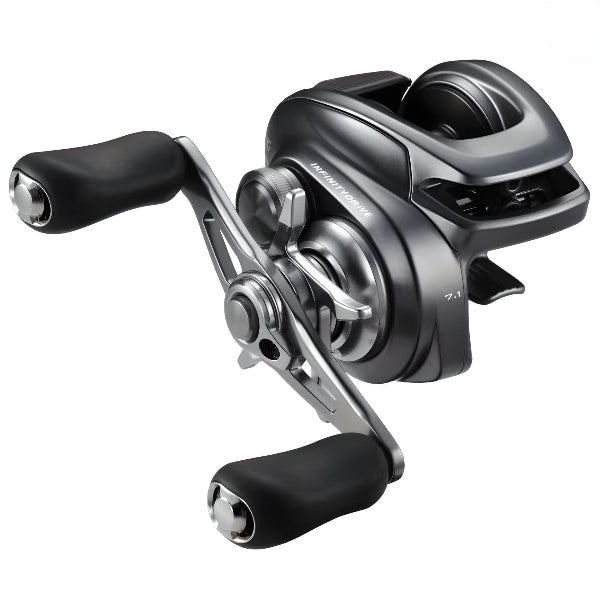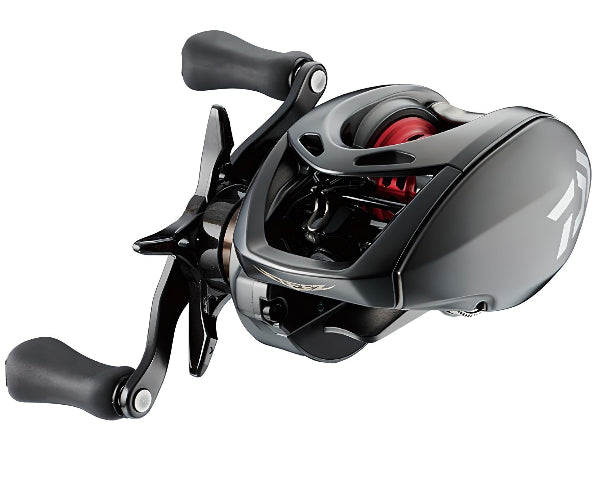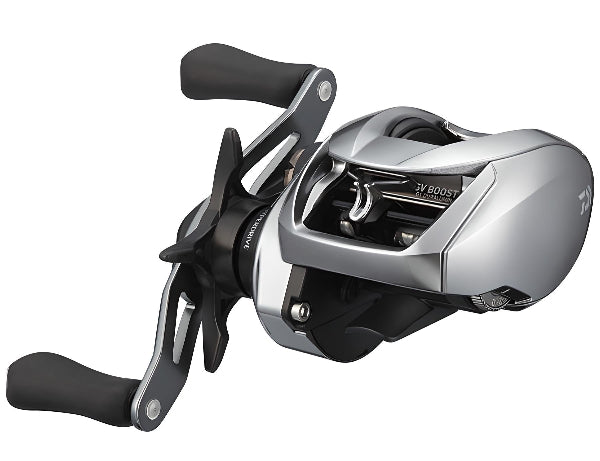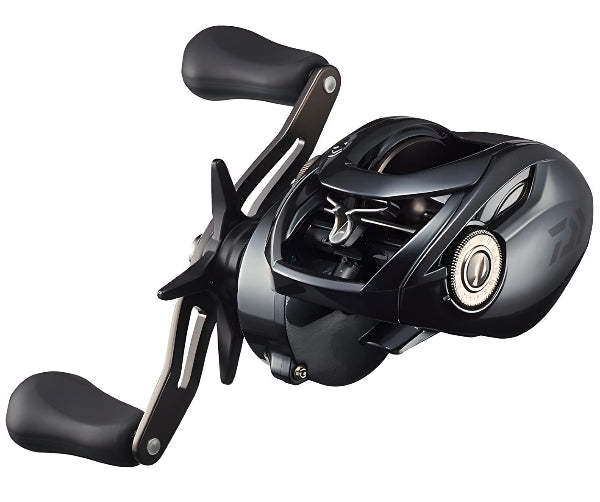
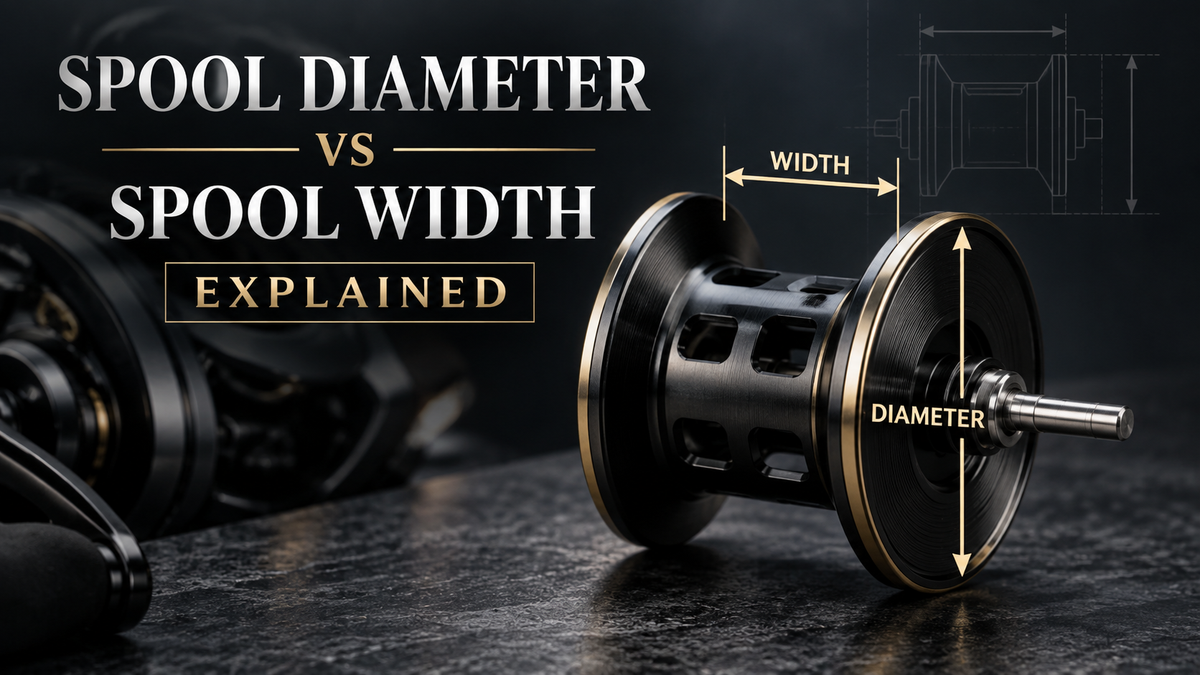

Baitcasting reels with the same nominal size can use very different spools. Diameter and width help explain the design direction, but neither dimension can predict casting performance alone. Spool mass, line load, braking, bearings, line guide geometry and the lure’s acceleration all interact.

What spool diameter changes
Diameter changes how far line sits from the spool axis. All else equal, moving rotating mass farther outward raises rotational inertia, while a larger effective line radius increases the line recovered per revolution. In a real reel, however, wall thickness, porting, shaft design and the amount of line can outweigh diameter alone.
A small, light spool can require less energy to accelerate, which is useful when the lure supplies limited startup energy. A larger spool can preserve a useful effective diameter as line leaves the reel and may pair well with higher-capacity or higher-energy applications. These are tendencies, not fixed lure-weight limits.
What spool width changes
Width contributes to capacity and changes how line is distributed across the spool. A wider spool may hold more line at a given diameter and groove depth, but it can also place more line mass away from the center plane. A narrower spool can reduce the travel required from side to side, yet its actual behavior still depends on line-guide distance, levelwind movement and braking calibration.
For that reason, “wide equals stable” and “narrow equals fast” are not reliable rules. Compare the complete spool system and the capacity required for the intended line.

Why installed line changes the spool
The rotating system includes the line. Filling a spool adds mass, and much of it sits near the outer radius where it has a strong effect on inertia. It also increases the effective diameter, changing line pickup for each spool revolution. The same reel can therefore feel different with a short, light fill than with a full load of heavier line.
Capacity should be selected from the actual working requirement, including casting length, reserve line and any backing. Excess line is not free performance: it adds rotating mass and can alter brake behavior.
Diameter cannot be separated from braking
Centrifugal, magnetic and digitally controlled brakes apply force differently across the cast. Spool construction is designed around that brake system. Two reels with identical dimensions can respond differently because their spool mass distribution, inductor or brake block, brake profile and line guide are different.
This is why a dimension chart should be used to locate comparable architecture—not to declare a winner or assign an exact lure range.
Shop the Gear
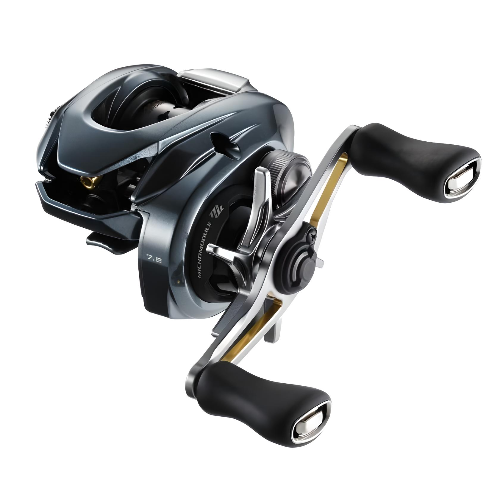
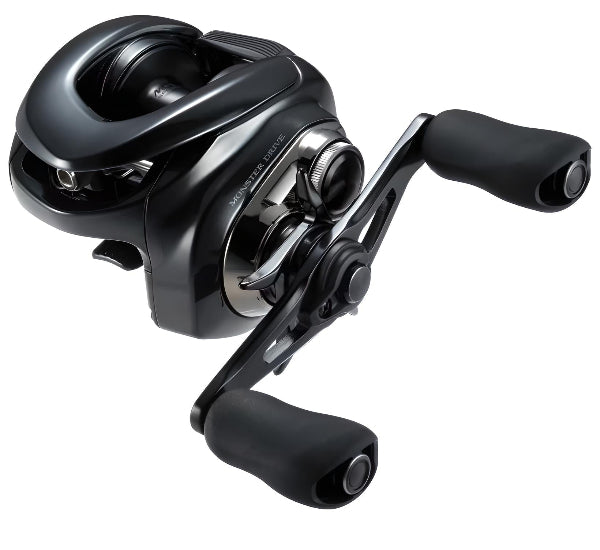
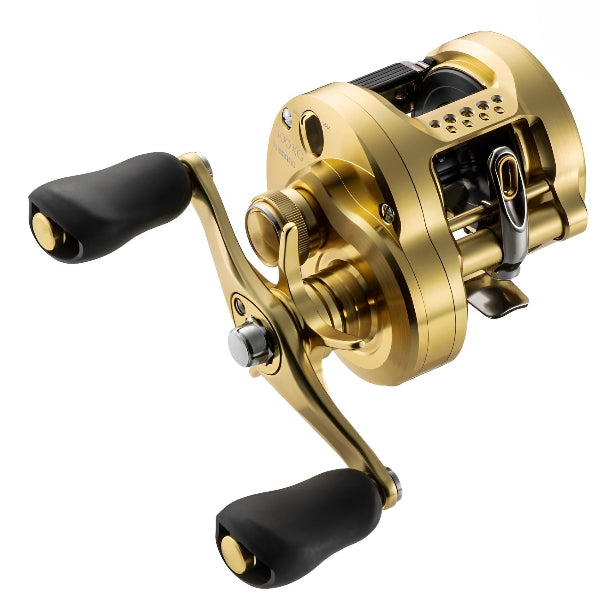
Representative Daiwa and Shimano spool dimensions
The models below show how manufacturers combine diameter and width. Dimensions apply only to the named generation. Product revisions can change spool geometry even when a familiar model name returns.
Representative Metric Comparison
| Brand / model | Diameter | Width | Design context |
|---|---|---|---|
| Daiwa Steez AIR TW | 28 mm | 21 mm | Compact AIR spool |
| Shimano Aldebaran BFS | 29 mm | 19 mm | Compact BFS spool |
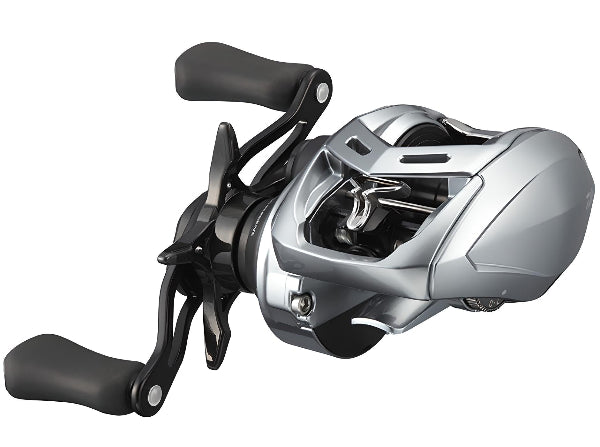
| Daiwa Alphas SV TW | 32 mm | 21 mm | Compact SV format |
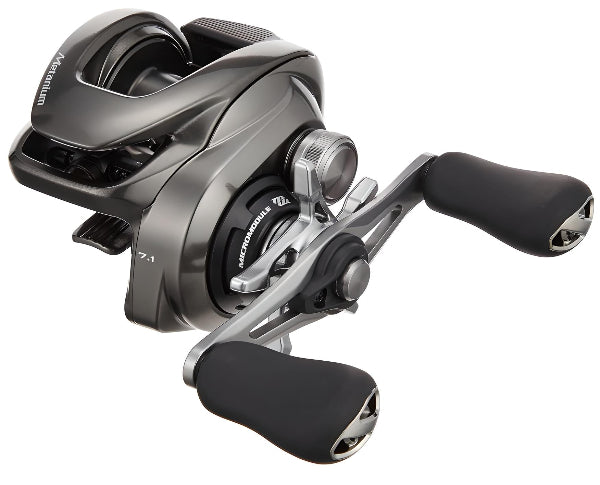
| Shimano Metanium | 34 mm | 19 mm | Narrow MGL spool |
| Daiwa Zillion SV TW | 34 mm | 24 mm | Wider SV spool at the same diameter |
| Shimano Bantam | 35 mm | 19 mm | Larger narrow spool |
| Shimano Antares DC MD | 38 mm | 21 mm | Large DC spool |
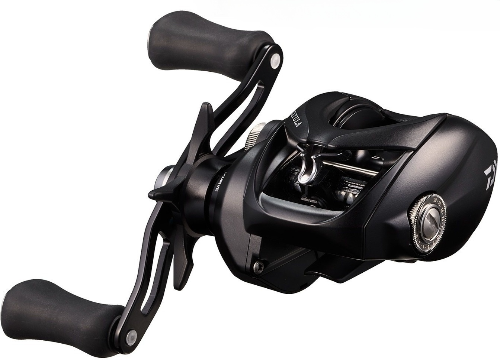
| Daiwa Tatula TW 200 | 38 mm | 24 mm | Wider high-capacity spool |
| Shimano Calcutta Conquest MD 300 | 43 mm | 22 mm | Large round-reel spool |
| Daiwa Tatula TW 300 | 43 mm | 27 mm | Wider large-capacity spool |
Specifications in Pounds, Yards & Inches
| Brand / model | Diameter | Width | Design context |
|---|---|---|---|
| Daiwa Steez AIR TW | 1.10 in | 0.83 in | Compact AIR spool |
| Shimano Aldebaran BFS | 1.14 in | 0.75 in | Compact BFS spool |
| Daiwa Alphas SV TW | 1.26 in | 0.83 in | Compact SV format |
| Shimano Metanium | 1.34 in | 0.75 in | Narrow MGL spool |
| Daiwa Zillion SV TW | 1.34 in | 0.94 in | Wider SV spool at the same diameter |
| Shimano Bantam | 1.38 in | 0.75 in | Larger narrow spool |
| Shimano Antares DC MD | 1.50 in | 0.83 in | Large DC spool |
| Daiwa Tatula TW 200 | 1.50 in | 0.94 in | Wider high-capacity spool |
| Shimano Calcutta Conquest MD 300 | 1.69 in | 0.87 in | Large round-reel spool |
| Daiwa Tatula TW 300 | 1.69 in | 1.06 in | Wider large-capacity spool |
Specification sources: official Daiwa and Shimano product pages for the named generations. Some manufacturers do not publish every spool dimension consistently; only representative values corroborated for these models are used.

How to choose without relying on a category label
- Define the line type, strength and working length.
- Choose a spool with enough verified capacity, without adding unnecessary line mass.
- Use diameter and width to identify the broad physical format.
- Check the actual empty-spool construction and the mass of the intended line load.
- Match the brake system and available adjustment range to the lure and conditions.
- Confirm line-guide geometry, retrieve rate, handle length and body capacity for the expected load.
The takeaway
Spool diameter and width are valuable comparison tools, but they are coordinates rather than conclusions. Read them together with spool mass, installed line, capacity and brake design. That approach explains why two 34 mm reels can feel different and why a larger spool is not automatically a better long-caster.