
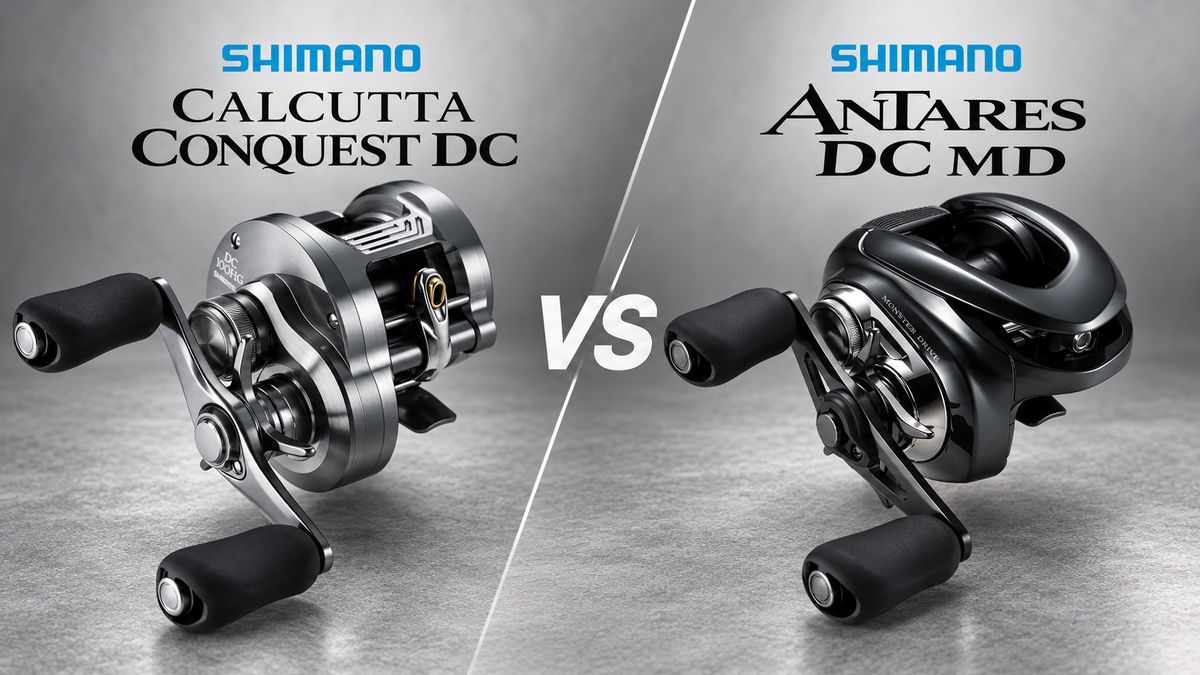

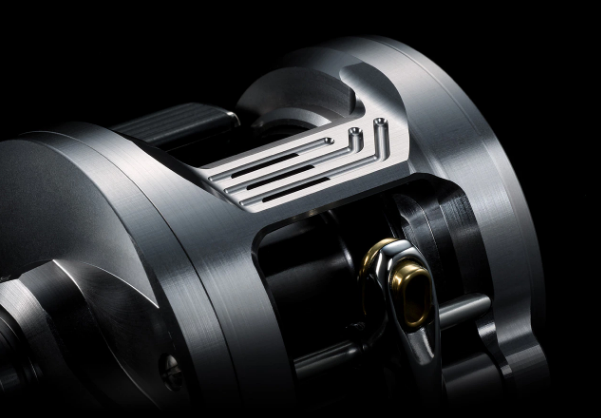

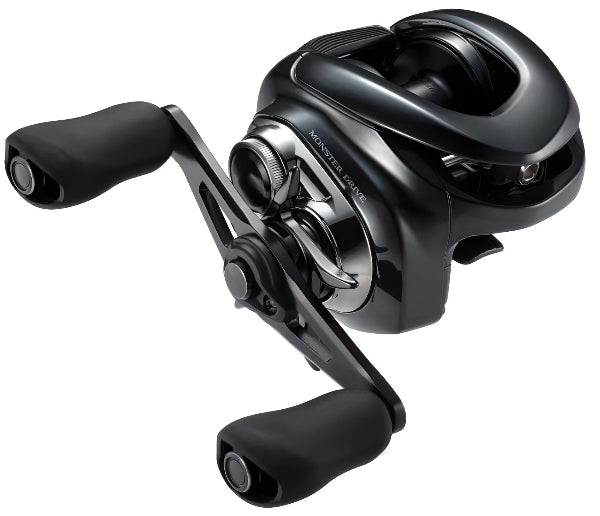
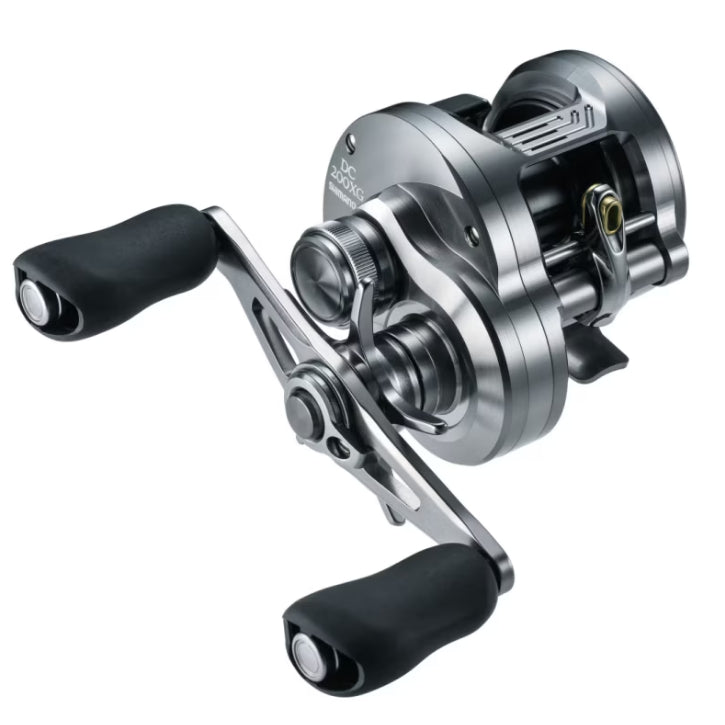
The Shimano 2026 Calcutta Conquest DC and 2023 Antares DC MD are flagship electronically controlled baitcasters with very different shapes. In their 200-class comparison, both use a 38 × 21 mm spool and publish the same mono capacity. Calcutta builds around a round S-Compact metal body, I-DC5, MagnumLite Spool IV, Infinity Drive, and 13 bearings. Antares uses a low-profile frame, 4×8 DC MD Tune, MagnumLite Spool III, and faster gearing at lower mass.

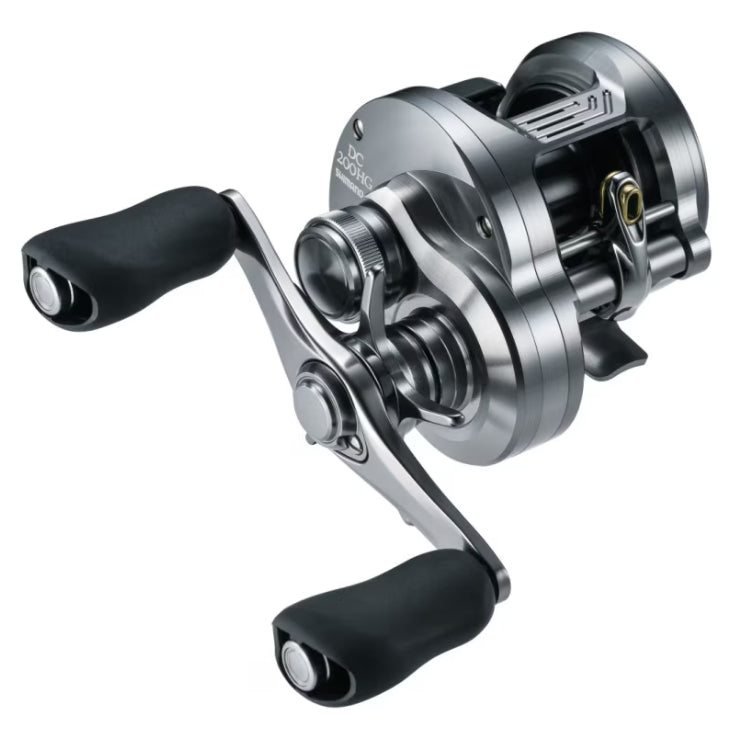
2026 Calcutta Conquest DC 200HG.

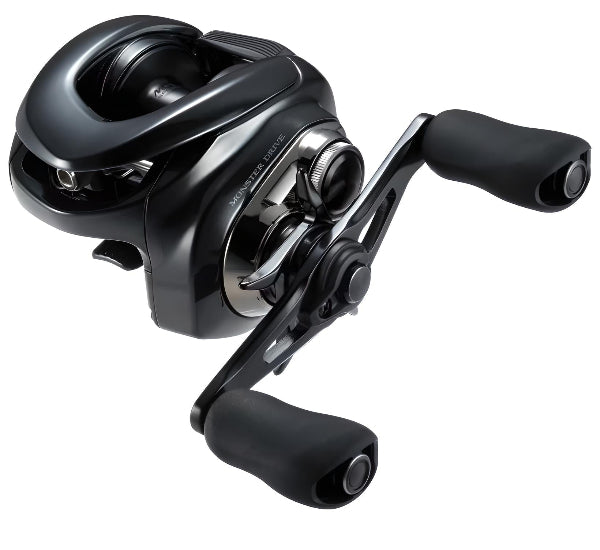
2023 Antares DC MD HG.
The Short Answer
Choose Calcutta Conquest DC when round-reel rigidity, stable winding, Infinity Drive, audible drag feedback, and a broad choice from compact 100 size to 200PG matter most. Choose Antares DC MD when a lower 235 g (8.3 oz) low-profile body, faster pickup, and more granular brake adjustment fit repeated casting and varied heavy-lure aerodynamics. The 200-size reels do not differ in published line reserve; their real separation is body format, brake interface, retrieve speed, and winding character.
Same 200-Class Spool, Different Platforms
Calcutta 200HG and Antares HG share a 38 mm diameter, 21 mm width, and mono capacities of 14 lb × 145 m, 16 lb × 120 m, and 20 lb × 100 m. That exact match removes a common source of confusion: Antares is not automatically the deeper-spool choice, and Calcutta is not automatically the larger-capacity choice when the 200 size is selected.
The form factor still changes how the reel sits in the hand and balances on a rod. Antares is 20 g (0.7 oz) lighter and uses a low-profile frame. Calcutta places more metal around a round housing and carries two additional ball bearings. Hand size, reel-seat shape, rod weight, and grip style can make that difference more important than the specification sheet suggests.

I-DC5 Versus 4×8 DC MD Tune
Calcutta Conquest DC uses the current I-DC5 arrangement with three line ranges and five dial positions. The interface is designed to make line-based setup direct while still allowing fine changes from the external control. Its MGL Spool IV adds a reverse-taper profile intended to improve the wound-line shape and reduce rotational vibration.

Antares DC MD uses four internal modes—fluorocarbon, PE braid, nylon, and XB for large or high-air-resistance lures—plus eight external settings. That wider adjustment matrix is useful when the same reel moves among line types and lure profiles. MGL Spool III emphasizes low inertia. Neither brake label guarantees more distance in every setup; line diameter, spool fill, lure shape, rod loading, and casting technique remain decisive.

Winding and Gear Choices
Calcutta adds Infinity Drive and SilentDrive to its round platform. Infinity Drive changes pinion support to reduce drivetrain resistance under load, while SilentDrive reduces play around the pinion and spool-shaft interface. The family also includes a slow 200PG, balanced 200HG, fast 200XG, and smaller 100MG/HG models. This range makes the platform particularly flexible for moving baits and resistance-heavy retrieves.
Antares DC MD is offered in HG and XG. HG retrieves 88 cm (34.6 in) per turn, ten centimeters (3.9 in) more than Calcutta 200HG. Antares XG reaches 93 cm (36.6 in), while Calcutta 200XG reaches 89 cm (35.0 in). Anglers prioritizing rapid slack recovery may prefer Antares; anglers who want a deliberately slow ratio can only get that choice from Calcutta in this comparison.
Drag and Control Under Load
Both matched 200HG reels publish 6 kg (13.2 lb) maximum drag. Calcutta adds exciting drag sound, giving audible feedback as line leaves the spool. Antares instead emphasizes the rigid low-profile drivetrain and eleven-bearing support. Maximum drag is not a complete measure of fighting performance; line strength, rod power, hook gauge, drag smoothness, and heat matter more than operating at the limit.

