
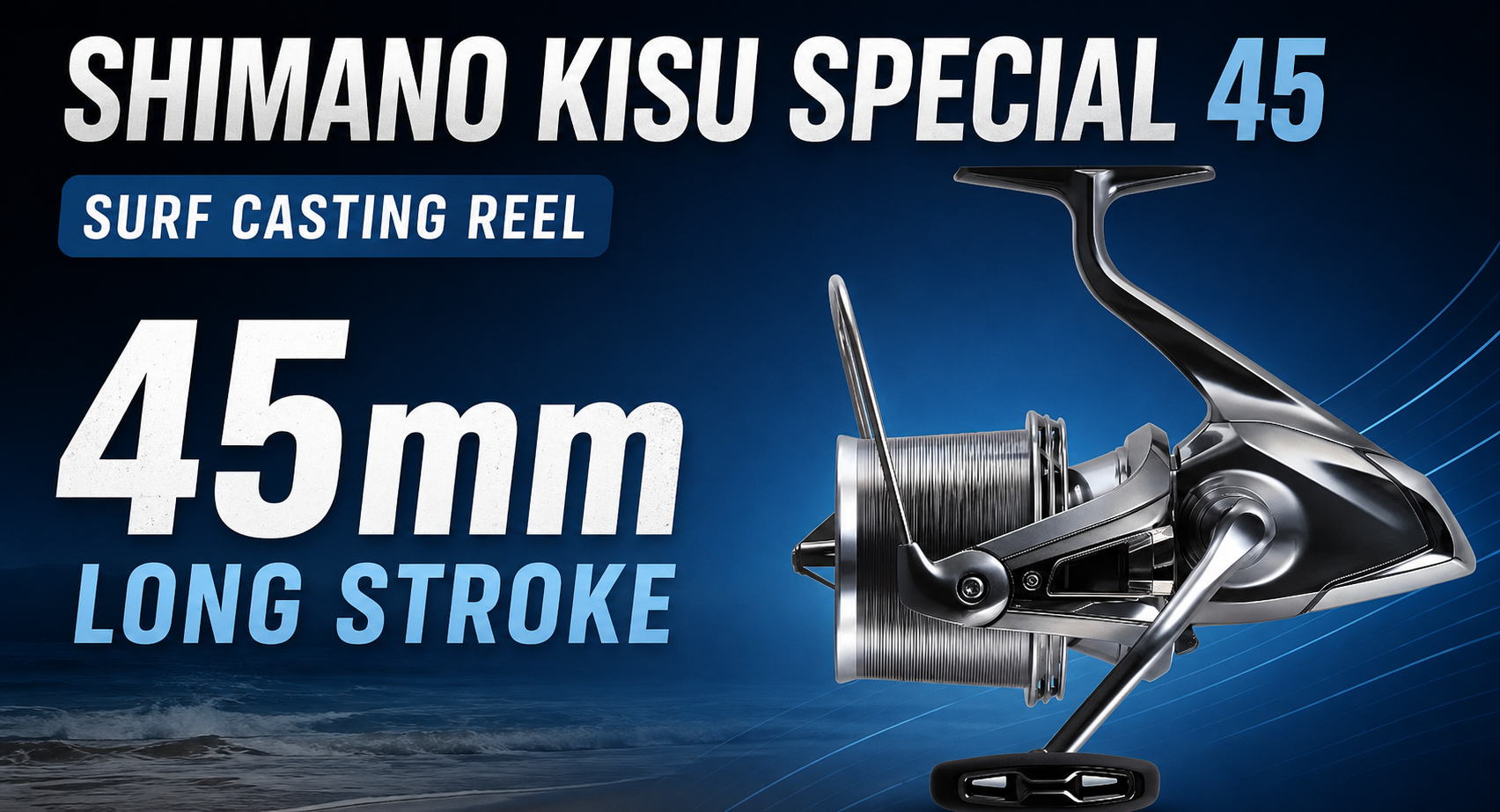
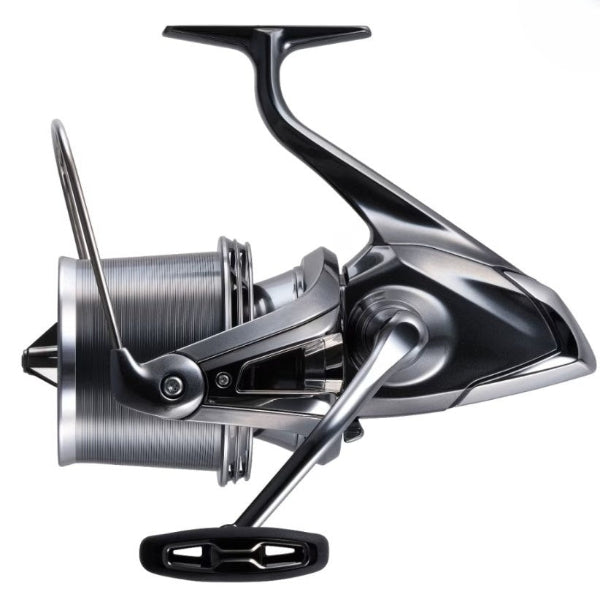
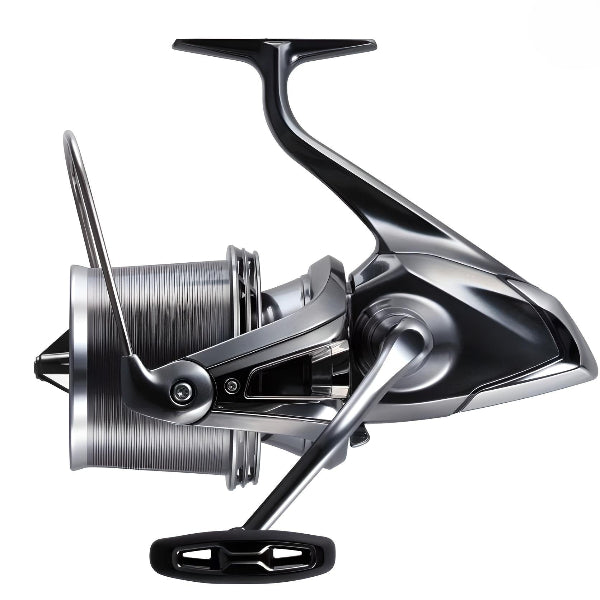
Sillago (Kisu, Japanese whiting) fishing is highly competitive, with tournaments held all over Japan. While catching Sillago itself is not especially difficult, competitions that focus on the number or size of fish caught within a limited time clearly reveal differences in angling skill.

Anglers who consistently place highly in tournaments not only excel at identifying areas where Sillago are likely to gather based on knowledge and experience, but also at searching over a wide area efficiently.
In this context, “efficient fishing” means minimizing non-fishing time within the limited time available. Tasks such as baiting the hook, removing caught fish, changing rigs, and dealing with tangles all reduce actual fishing time. The goal is to cut down these interruptions as much as possible and maximize the time spent actively fishing, even by a single minute.
To achieve this, serious anglers pay close attention to every part of their tackle, including rods and reels, and make every effort to gain even one or two extra meters of casting distance while preventing line trouble.
In Sillago fishing, casting distance often becomes a decisive advantage. For this reason, a wide range of tackle developed specifically for competitive Sillago fishing—from rods and reels to sinkers and balances—is available on the market.

Against this backdrop, Shimano released the long-awaited Kisu Special 45 in 2022, a dedicated Sillago reel equipped for the first time with a 45 mm long-stroke spool. The following sections explain what kind of reel it is and how it has evolved from previous Kisu Special models.
Shimano's First 45mm Long Stroke Model!

The fishing tackle industry in the spring of 2022 was highly energized by the full model changes of the flagship general-purpose spinning reels from the two giants leading the market: Daiwa’s 22 Exist and Shimano’s 22 Stella. Although these launches drew much of the attention, there was also a major development in Shimano’s surf casting reel lineup—the full model change of the Kisu Special, a surf casting reel dedicated to sillago fishing.
Shimano’s flagship line of large surf casting reels has long carried the name “Kisu Special.” Beginning with the Titanos Super Aero Kisu Special released in 1982, this series has built a long history, and the latest model marks the 30th anniversary of Shimano’s flagship surf reel lineage. Over the years, it has evolved into a true pinnacle of surf casting reels, standing alongside Daiwa’s Tournament Surf 45.

DAIWA Tournament Surf 45
The Kisu Special 45 incorporates nearly all of Shimano’s current technologies and, as a super long-distance casting model, is also equipped with the company’s first 45 mm long-stroke spool.
It should also be noted that the Kisu Special 45 is available not only in the standard model, but also in a CE (Competition Edition) model tuned specifically for tournament performance.
The Difference Between 35mm Stroke and 45mm Stroke
The “stroke” referred to here means the length of a spinning reel’s oscillation. When the handle is turned, the spool moves back and forth, and the mechanism that lays the line evenly from the top to the bottom of the spool is called the oscillation system.

The distance that the spool travels back and forth is known as the stroke. In general-purpose spinning reels, the stroke is usually around 17 mm to 25 mm. In large surf casting reels, however, the spool diameter is much larger, and the stroke is often around 30 mm to 35 mm.
A longer stroke offers two major advantages: it allows more line to be wound onto the spool, and it can also make it easier to achieve greater casting distance.
The spool of a surf casting reel also has a taper, meaning that its diameter gradually becomes smaller from the base toward the front lip of the spool. In many cases, this taper is around 2° to 5°.
A larger taper reduces line-release resistance, which is beneficial purely in terms of casting distance. However, if the taper is too steep, the line is more likely to slip off the spool too easily and release forward in a clump, increasing the risk of line trouble.
For that reason, a taper of around 2° or less is generally considered easier to manage, especially until the reel becomes familiar in actual use.
Kisu Special 45 CE Model's Unique Feature: "45mm Stroke Compatible Super Slow 10"
This mechanism is exclusive to the Kisu Special 45 CE model. It features a unique oscillation system called Super Slow 10, which winds the line onto the spool with extremely high density. As the name suggests, the oscillation is exceptionally slow. During one full round trip of the spool, the line is laid approximately 100 times, creating an extremely dense winding pattern. By packing the line tightly without adding much angle to the line lay, the system minimizes resistance during line release.
At the same time, super-dense winding created by slow oscillation can often lead to line trouble, especially when using thin PE lines such as PE #0.4. Problems can occur when the upper layers of line dig into the lower layers and catch during the cast, or when the line tangles into a knot-like ball. Shimano has addressed these issues with its own proprietary solutions, including a spool design in which only the front section is made taperless.
Super Slow 10 was also used in the previous 16 Super Aero Kisu Special 35CE, but that model had a 35 mm stroke. In addition, although slow oscillation is also found in Shimano’s general-purpose Stella series, the degree of slowness is very different from Super Slow 10, and the resulting line-lay density is on a completely different level. While both systems share the goal of improving casting distance, the mechanisms themselves can be considered fundamentally different.
This stands in clear contrast to Daiwa’s approach, known as Cross Wrap, which aims to reduce line trouble by laying the line diagonally across the spool in a crossed pattern.

