
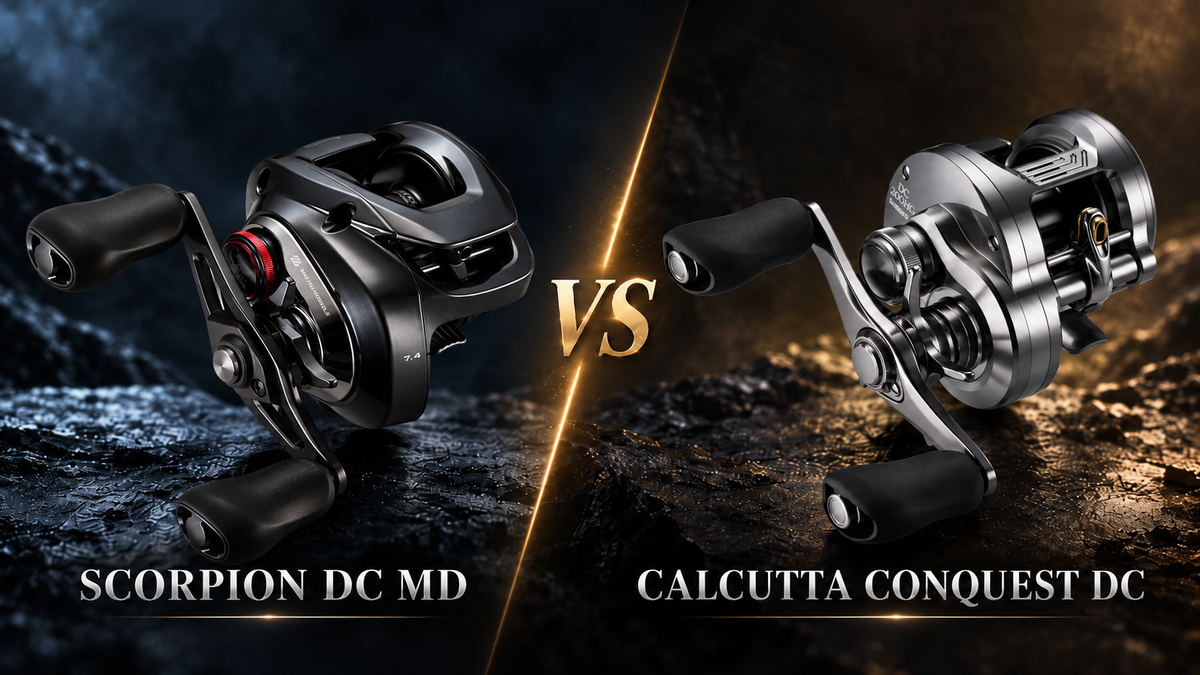
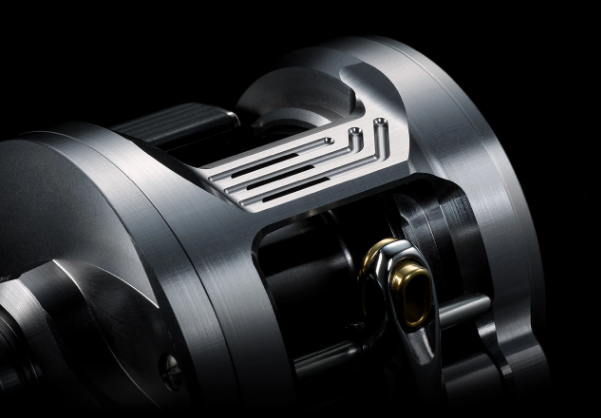
The 26 Shimano Scorpion DC MD and Calcutta Conquest DC share more casting technology than their shapes suggest. Both use the new I-DC5 brake and MagnumLite Spool IV, and their 200-size spools have the same 38 mm diameter, 21 mm width, and published mono capacity. The decision is therefore about the Scorpion's lighter low-profile speed versus the Calcutta's round forged body, Infinity Drive, wider ratio range, and more highly supported flagship drivetrain.

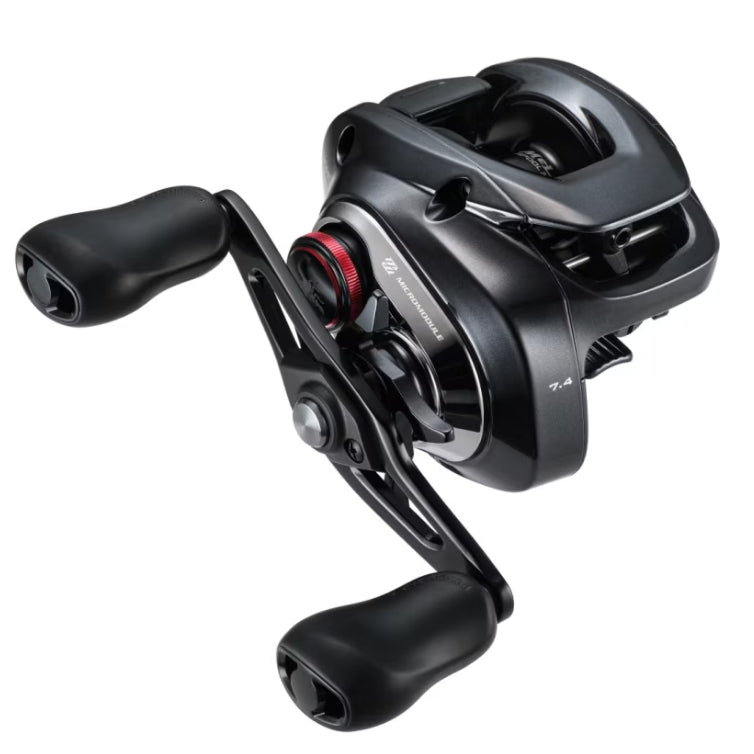
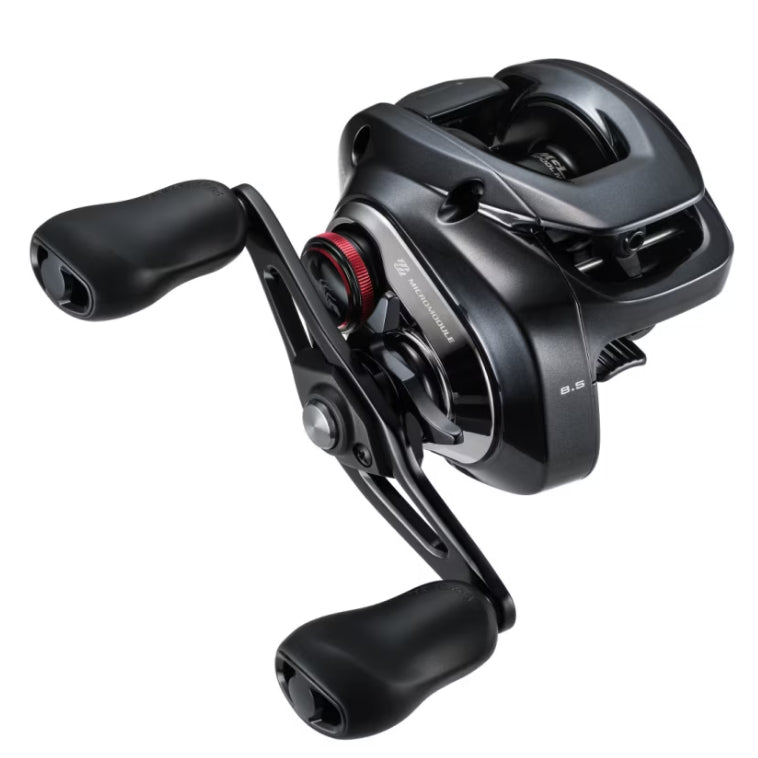
Shimano 2026 Scorpion DC MD 200HG.

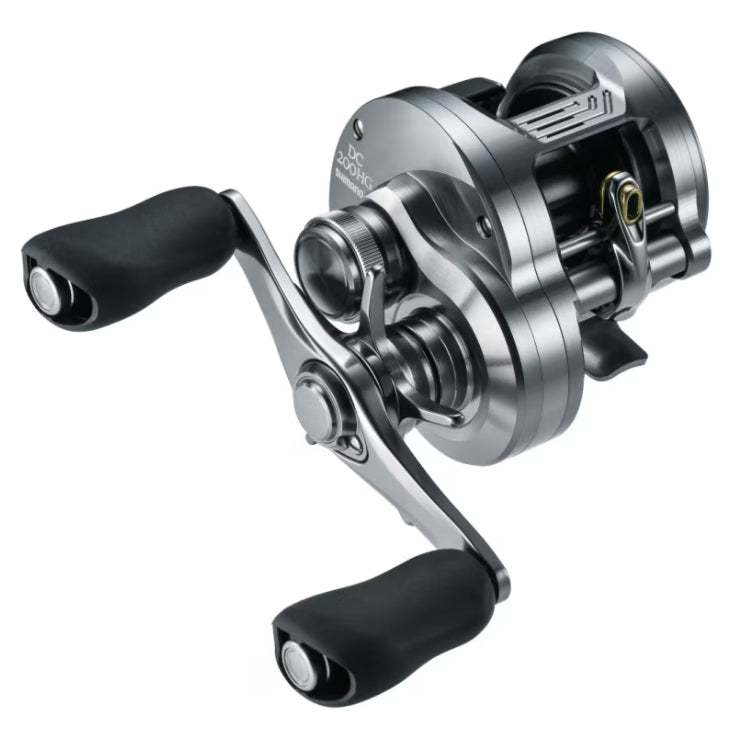
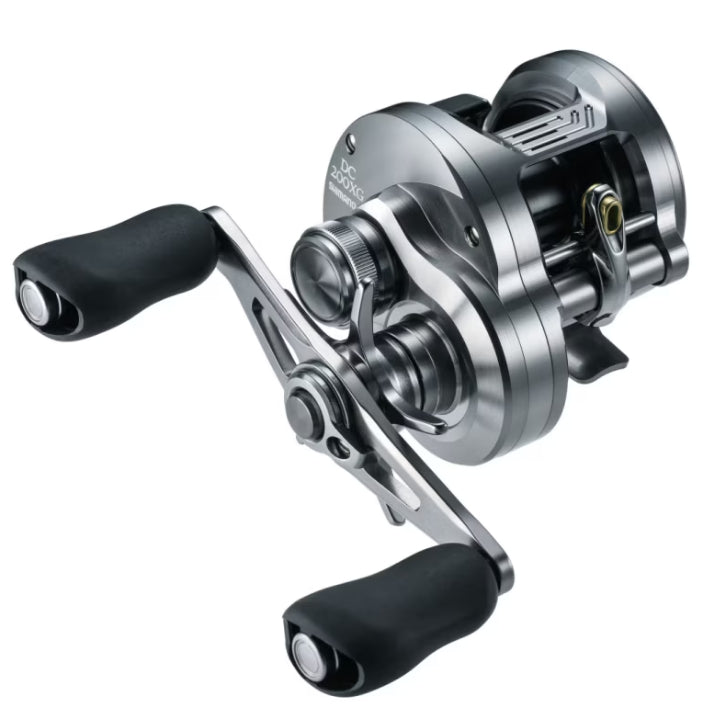
Shimano 2026 Calcutta Conquest DC 200HG.
The Short Answer
Choose Scorpion DC MD when a 225 g (7.9 oz) low-profile reel, fast 88 or 101 cm (34.6 or 39.8 in) retrieve, and the full 200-size line reserve fit big-bait casting and rapid line pickup. Choose Calcutta Conquest DC when round-body rigidity, Infinity Drive, 13 bearings, exciting drag sound, and a choice from compact 100-size to torque-focused 200PG matter more. The matching 200-size capacity means neither automatically carries more line; their useful separation is drivetrain feel, ratio range, weight, and ergonomics.
What They Share
Both reels pair MagnumLite Spool IV with the revised I-DC5 system. The reverse-taper spool geometry is designed to correct line-lay shape and reduce vibration at casting speed. Shimano's current control layout combines three external ranges—Low, Medium, and High—with five dial positions, providing 15 steps without opening the side plate.

Both also list a HAGANE Body, MicroModule Gear, SilentDrive, SilentTune, S3D spool machining, shielded anti-rust bearings, and Super Free spool support. Their shared casting hardware means the comparison should not be reduced to one reel having “better DC.” Setup, line diameter, lure aerodynamics, and the selected ratio remain decisive.

Scorpion DC MD: Low-Profile Speed
Scorpion DC MD is built around a 38 × 21 mm (1.50 × 0.83 in) spool and a low-profile frame with CI4+ components. Both ratios weigh 225 g (7.9 oz), making the reel 30 g (1.1 oz) lighter than Calcutta Conquest DC 200HG and 35 g (1.2 oz) lighter than the 200XG.
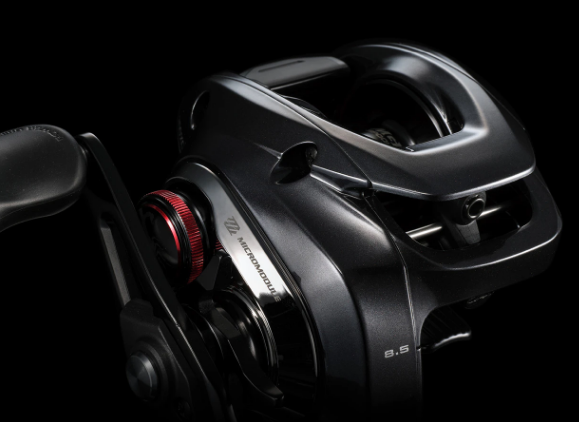
The HG model uses a 7.4:1 ratio and retrieves 88 cm (34.6 in) per turn. The XG reaches 8.5:1 and 101 cm (39.8 in), the fastest listed retrieve among the compared models. That speed helps with slack recovery, reeling jerks, and keeping contact after a lure changes direction. Scorpion also uses a 45 mm (1.77 in) handle on both versions.
Calcutta Conquest DC: Round-Body Refinement
Calcutta Conquest DC uses Shimano's cold-forged round metal housing, S-Compact body shaping, Infinity Drive, and 13 ball bearings. Infinity Drive changes how the pinion is supported to reduce drivetrain resistance under load while maintaining support rigidity. The result targets smooth, powerful winding rather than minimum mass.
The family offers two distinct spool classes. The 100 size uses a 34 × 19 mm (1.34 × 0.75 in) spool for common bass and inshore lure ranges. The 200 size matches Scorpion's 38 × 21 mm spool and line capacity, but adds PG, HG, and XG ratios. The 4.8:1 PG is the slowest, highest-control option for resistant lures; the 7.5:1 XG remains fast without reaching Scorpion XG's 101 cm (39.8 in) pickup.
Same Spool Size, Different 200-Class Personalities
For an equal-capacity comparison, focus on the 200-size reels. Scorpion 200HG retrieves 88 cm (34.6 in), ten centimeters faster per turn than Calcutta 200HG. Scorpion 200XG retrieves 101 cm (39.8 in), twelve centimeters faster than Calcutta 200XG. Calcutta counters with a 200PG, the round body, Infinity Drive, six additional ball bearings, and exciting drag sound.
The published maximum drag ratings are close: Scorpion HG and all Calcutta 200 versions list 6 kg (13.2 lb), while Scorpion XG lists 5.5 kg (12.1 lb). Maximum drag alone should not choose the reel. Practical settings depend on line, hooks, rod power, and target, and are normally well below the headline figure.