



Bluefin tuna casting places unusual demands on a spinning reel. A reel must carry enough braid for the fishing plan, release drag smoothly under sustained load, recover line at a useful rate, and keep its drivetrain aligned when pressure rises. Those requirements matter more than a simple reel-size label.
 What matters in a bluefin casting reel
Drag stability and heat management
Maximum drag is only one part of the system. During a long run, friction turns energy into heat. A useful offshore drag must start cleanly, remain predictable as the spool empties, and resist a large change in force as temperatures rise. Daiwa's current large Saltiga sizes use DRD, a metal-roller drag design intended to reduce heat-related fade and wear. Shimano's current Stella SW uses large drag washers and heat-management features on the heavy-duty sizes. These are different engineering approaches to the same practical problem: keeping line release controlled under sustained load.
Usable braid capacity
Capacity should be planned as a system, not chosen by chasing the largest number. Account for the working length, a reserve for a run, any line removed after abrasion, and the effect of line diameter and winding tension. Published capacity is approximate because braid construction and actual diameter vary by brand. For readability, the Japanese PE sizes in the official tables are converted here to approximate strength classes in pounds.
Gear ratio and line pickup
A lower ratio can reduce the effort needed to gain line under load, while a higher ratio retrieves slack faster and can suit quick lure work. Ratio alone does not tell the whole story: spool diameter determines how much line is recovered with each crank. That is why the comparison tables include both ratio and retrieve per handle turn.
Body, rotor, and gear support
A rigid body helps keep the drive gear and pinion aligned. Rotor and bail stiffness matter during line pickup, while the handle and gear train must transfer torque without excessive deflection. Sealing also matters, but no saltwater reel should be treated as maintenance-free. Rinse and service it according to the manufacturer's instructions, and inspect line, leader, knots, guides, and terminal hardware before a trip.
Seven reels from the source list
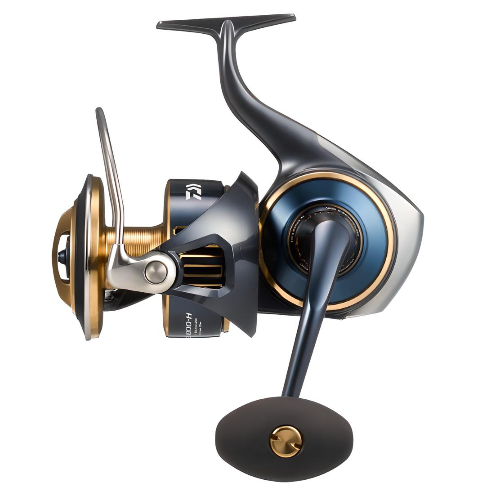
1. Daiwa Saltiga 30000-H
The 30000-H has the largest spool in this group and the fastest pickup among the listed Saltiga models. Its official capacity is approximately 150 lb × 400 m and 200 lb × 300 m (150 lb × 440 yd and 200 lb × 330 yd). At 1,060 g (37.4 oz), it is also the heaviest option. That combination makes it a specialized choice when very high capacity is a central requirement, rather than an automatic default for every casting setup.
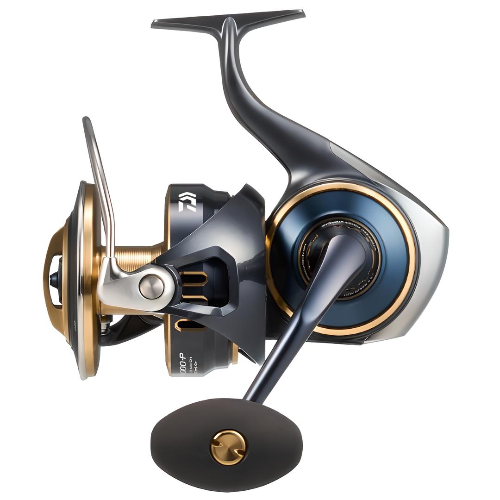
2. Daiwa Saltiga 25000-P
The 25000-P pairs a 4.4:1 ratio with 118 cm (46 in) of line pickup per crank. It carries approximately 130 lb × 360 m or 150 lb × 300 m (130 lb × 395 yd or 150 lb × 330 yd). Compared with the 30000-H, it gives up some capacity and retrieval speed while retaining the same stated maximum drag. The power-oriented ratio can make sense when gaining line under load takes priority over rapid slack recovery.

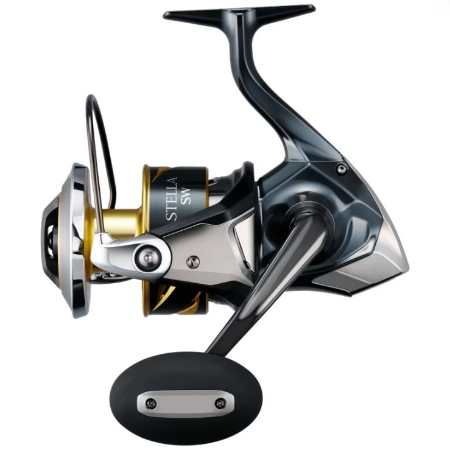
3. Shimano Stella SW 20000PG
The current 20000PG combines a 4.4:1 ratio with 104 cm (41 in) of pickup, a stated 30 kg (66.1 lb) maximum drag, and approximately 90 lb × 500 m, 100 lb × 370 m, or 130 lb × 300 m of braid capacity. It is lighter than the largest Saltiga options in this comparison. Shimano's current design uses InfinityXross and Infinity Drive in the drivetrain, with XX-Tough Drag and Heat Sink Drag focused on heavy-load drag performance.

Shop the Gear


4. Daiwa Saltiga 20000-H
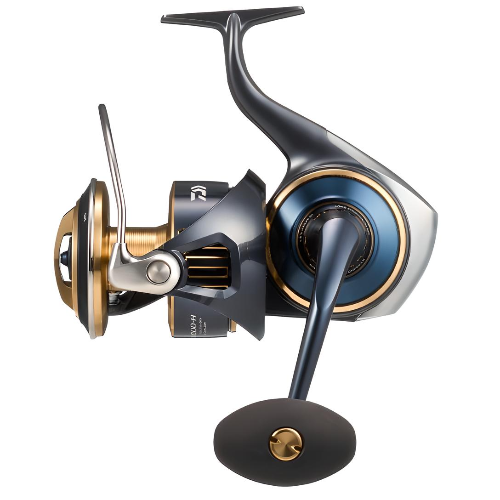
The 20000-H is the faster-pickup member of Daiwa's 20000-size pair. Its 5.5:1 ratio recovers 138 cm (54 in) per crank, while capacity is approximately 100 lb × 370 m or 130 lb × 300 m (100 lb × 405 yd or 130 lb × 330 yd). The current 18000–30000 Saltiga models use Daiwa's DRD system, PowerDrive Design, an aluminum Monocoque body, and a manual bail-return mechanism.

5. Daiwa Saltiga 18000-H
The 18000-H shares the 5.5:1 ratio and 30 kg (66.1 lb) maximum drag of the larger high-speed Saltiga models, but uses a smaller spool. It retrieves 129 cm (51 in) per crank and carries approximately 90 lb × 420 m or 100 lb × 300 m (90 lb × 460 yd or 100 lb × 330 yd). This creates a middle position for anglers who want high pickup without the bulk and capacity of the 25000 or 30000 sizes.

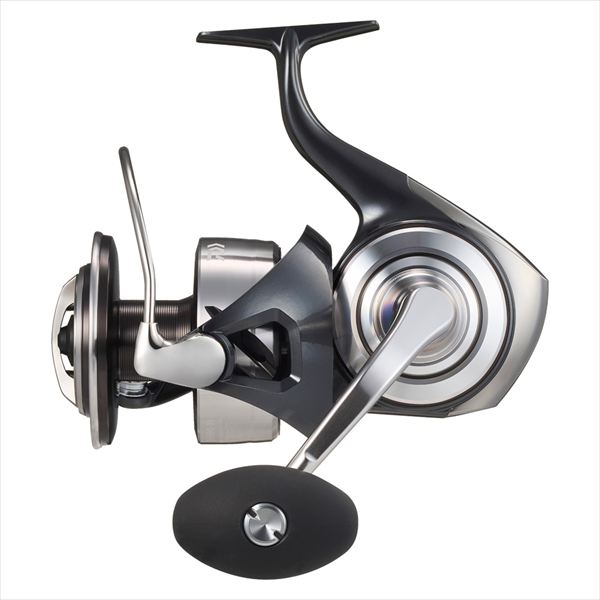
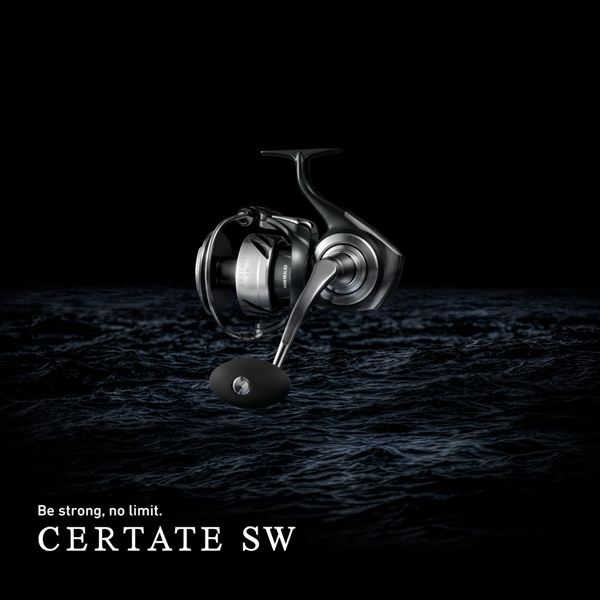
6. Daiwa Certate SW 20000-H
The 2026 Certate SW 20000-H matches the Saltiga 20000-H's 5.5:1 ratio, 138 cm (54 in) pickup, 30 kg (66.1 lb) maximum drag, and headline braid capacity, while its listed weight is 895 g (31.6 oz). It uses Daiwa's PowerDrive Design, a full-aluminum Monocoque body, Magsealed protection at the pinion and line roller, and the LC-ABS SW spool. Its specifications make it a relevant alternative when the same basic capacity and pickup targets are required in a lighter package.

7. Shimano Stella SW 14000XG
The 14000XG is the lightest reel in this group at 685 g (24.2 oz). Its 6.2:1 ratio and 134 cm (53 in) pickup suit rapid slack recovery, while its capacity and stated maximum drag are lower than those of the 18000–30000 models. Official capacity is approximately 80 lb × 360 m, 90 lb × 300 m, or 100 lb × 220 m (80 lb × 395 yd, 90 lb × 330 yd, or 100 lb × 240 yd). It should be selected when that capacity is sufficient for the intended fishery and line plan, not simply because its lower weight is attractive.

Metric specifications
| Model | Weight | Gear ratio | Retrieve / crank | Max drag | Approx. braid capacity |
|---|---|---|---|---|---|
| Saltiga 30000-H | 1,060 g | 5.5:1 | 155 cm | 30 kg | 150 lb × 400 m; 200 lb × 300 m |
| Saltiga 25000-P | 950 g | 4.4:1 | 118 cm | 30 kg | 130 lb × 360 m; 150 lb × 300 m |
| Stella SW 20000PG | 915 g | 4.4:1 | 104 cm | 30 kg | 90 lb × 500 m; 100 lb × 370 m; 130 lb × 300 m |
| Saltiga 20000-H | 940 g | 5.5:1 | 138 cm | 30 kg | 100 lb × 370 m; 130 lb × 300 m |
| Saltiga 18000-H | 930 g | 5.5:1 | 129 cm | 30 kg | 90 lb × 420 m; 100 lb × 300 m |
| Certate SW 20000-H | 895 g | 5.5:1 | 138 cm | 30 kg | 100 lb × 370 m; 130 lb × 300 m |
| Stella SW 14000XG | 685 g | 6.2:1 | 134 cm | 25 kg | 80 lb × 360 m; 90 lb × 300 m; 100 lb × 220 m |
Specifications in Pounds, Yards & Inches
| Model | Weight | Gear ratio | Retrieve / crank | Max drag | Approx. braid capacity |
|---|---|---|---|---|---|
| Saltiga 30000-H | 37.4 oz | 5.5:1 | 61 in | 66.1 lb | 150 lb × 440 yd; 200 lb × 330 yd |
| Saltiga 25000-P | 33.5 oz | 4.4:1 | 46 in | 66.1 lb | 130 lb × 395 yd; 150 lb × 330 yd |
| Stella SW 20000PG | 32.3 oz | 4.4:1 | 41 in | 66.1 lb | 90 lb × 550 yd; 100 lb × 405 yd; 130 lb × 330 yd |
| Saltiga 20000-H | 33.2 oz | 5.5:1 | 54 in | 66.1 lb | 100 lb × 405 yd; 130 lb × 330 yd |
| Saltiga 18000-H | 32.8 oz | 5.5:1 | 51 in | 66.1 lb | 90 lb × 460 yd; 100 lb × 330 yd |
| Certate SW 20000-H | 31.6 oz | 5.5:1 | 54 in | 66.1 lb | 100 lb × 405 yd; 130 lb × 330 yd |
| Stella SW 14000XG | 24.2 oz | 6.2:1 | 53 in | 55.1 lb | 80 lb × 395 yd; 90 lb × 330 yd; 100 lb × 240 yd |
Braid strength conversions are approximate. Actual diameter and breaking strength vary by manufacturer, construction, and test method; verify the specifications of the line you intend to spool.
How to narrow the list
- Start with capacity: define the line class and reserve required for the specific fishery, then eliminate reels that cannot carry it.
- Choose pickup deliberately: faster models recover slack quickly; power-geared models trade speed for mechanical advantage.
- Balance the complete outfit: reel weight affects repeated casting, but a lighter reel is not automatically the better choice if it compromises the required capacity.
- Set drag with a scale: base the setting on the weakest part of the system and reassess it when line, knots, or leader material changes.
- Plan for service: heavy saltwater use demands inspection and maintenance regardless of sealing claims.
Bottom line
The largest reels here prioritize line reserve and sustained-load hardware; the smaller 14000 class prioritizes lower mass and fast pickup. Between those ends, the 18000 and 20000 sizes provide several combinations of capacity, ratio, and weight. The right answer is the smallest reel that safely meets the actual capacity, drag, and recovery requirements of the complete setup—not the model attached to the biggest fish claim.