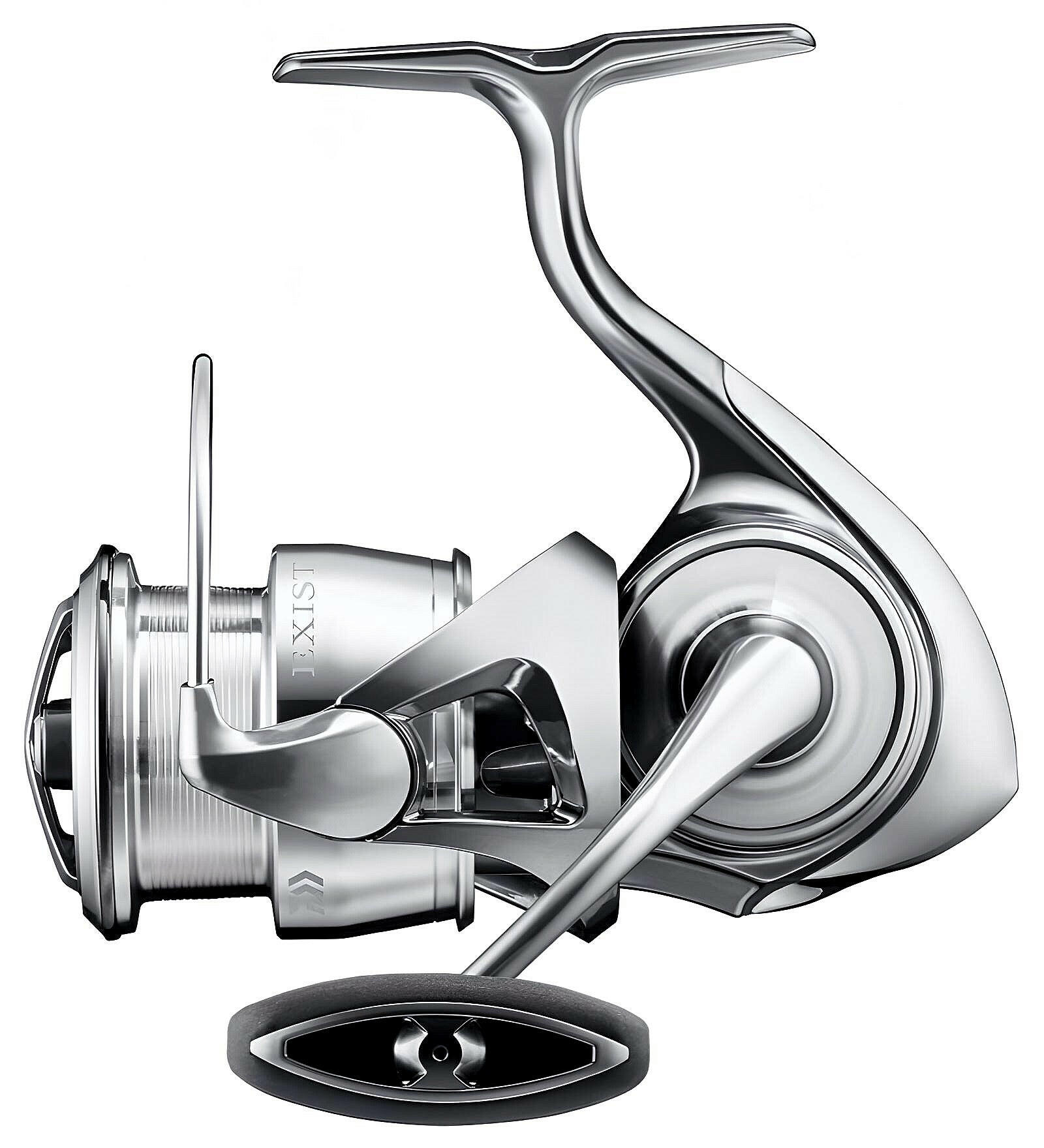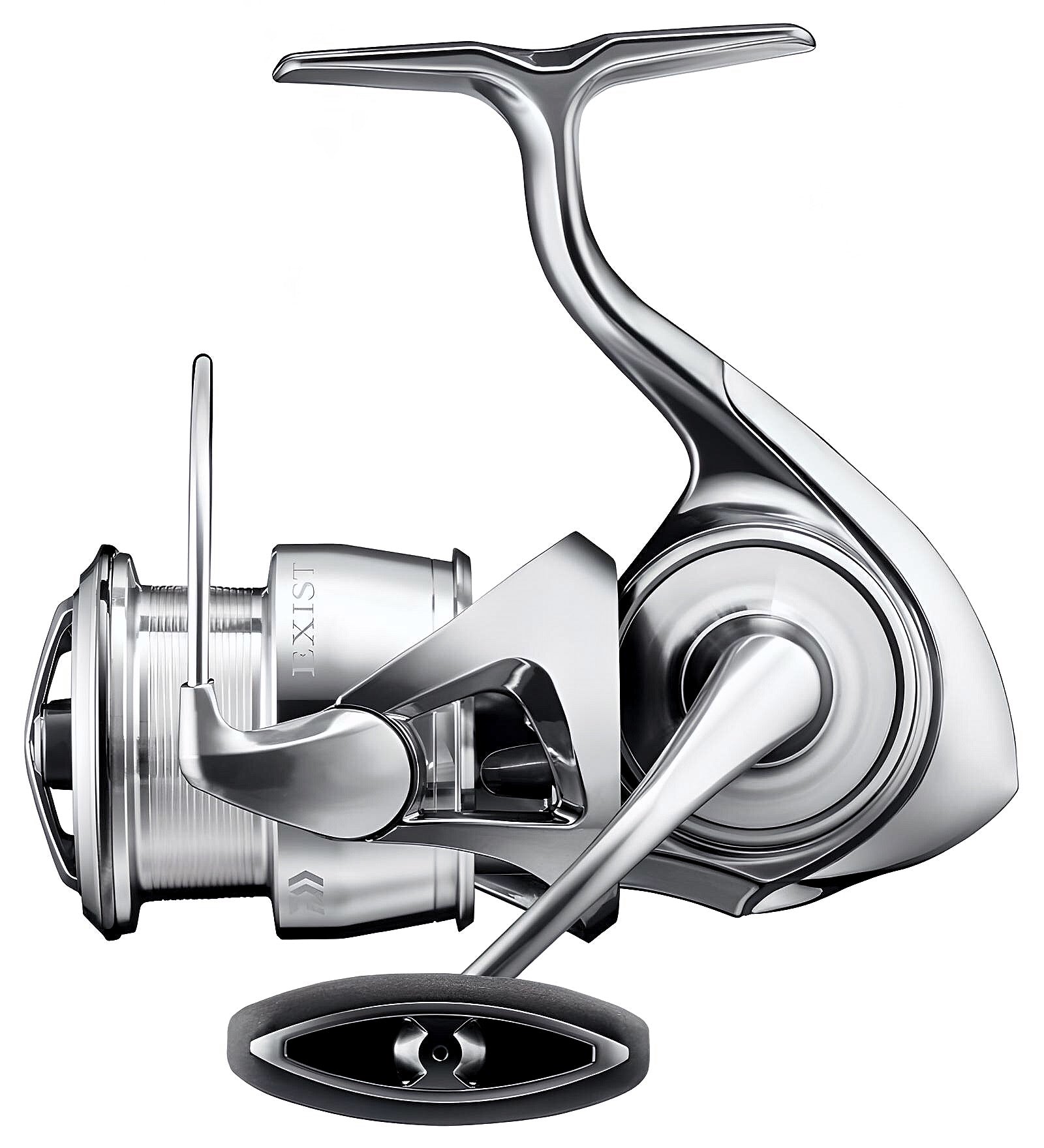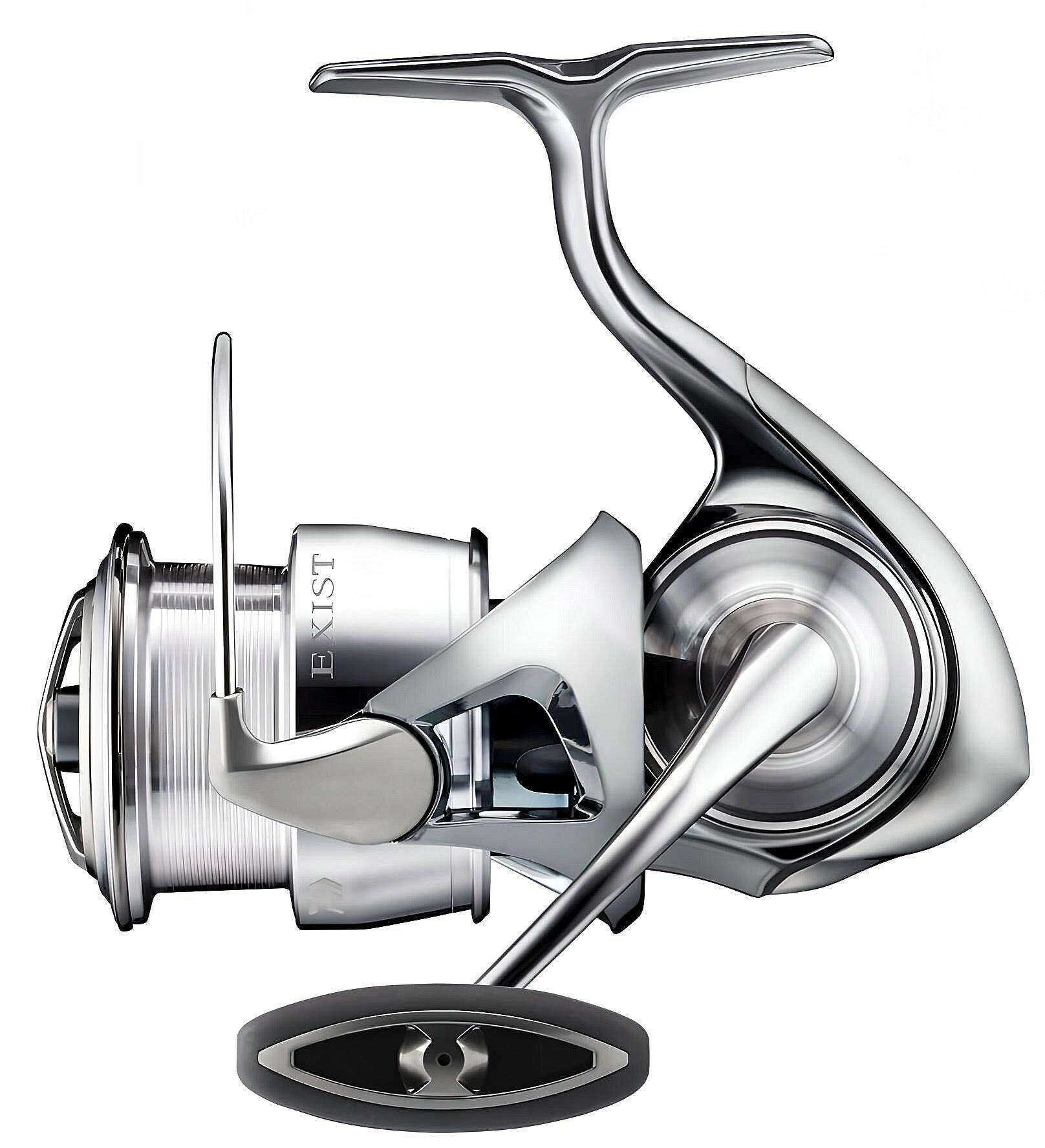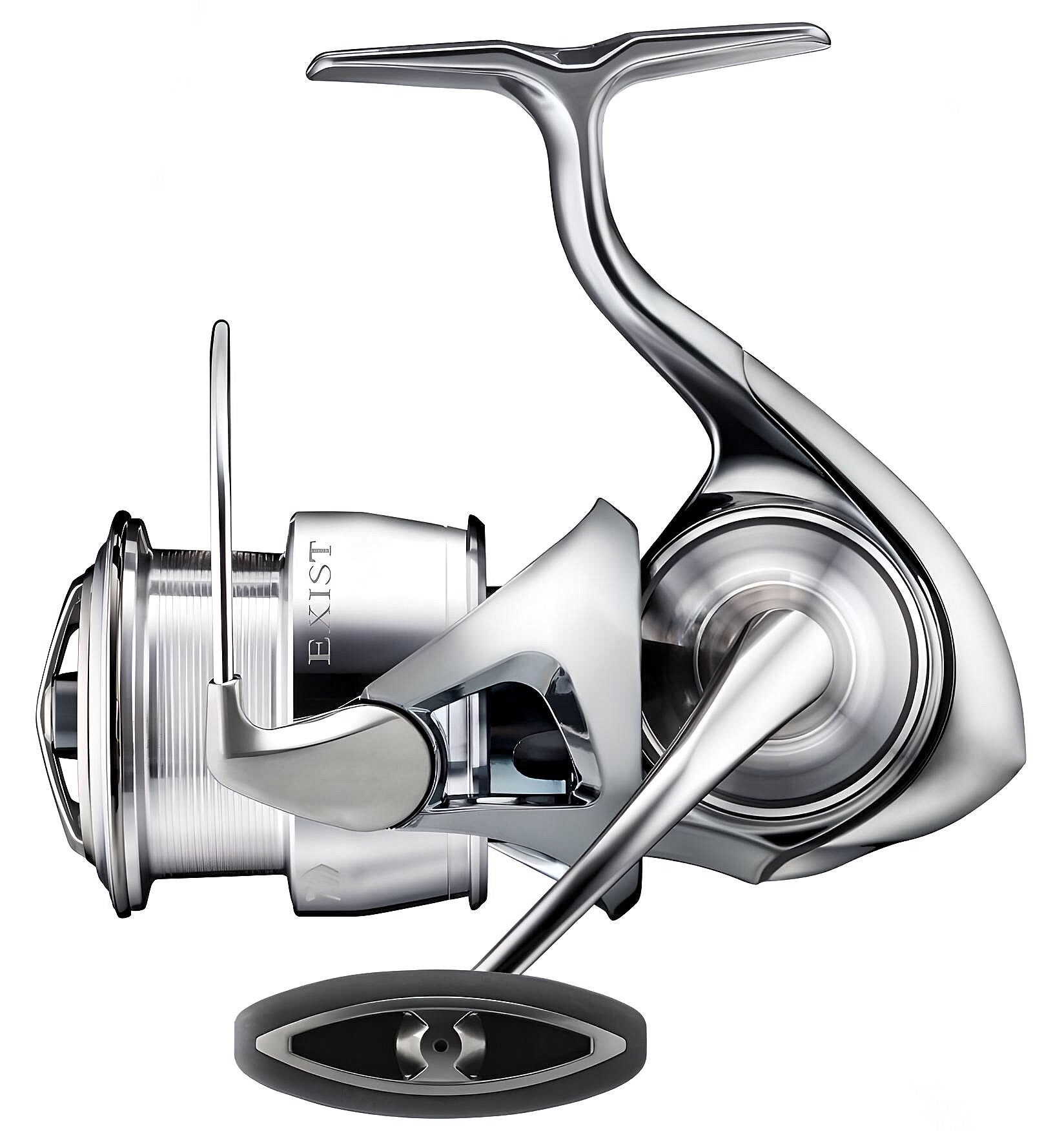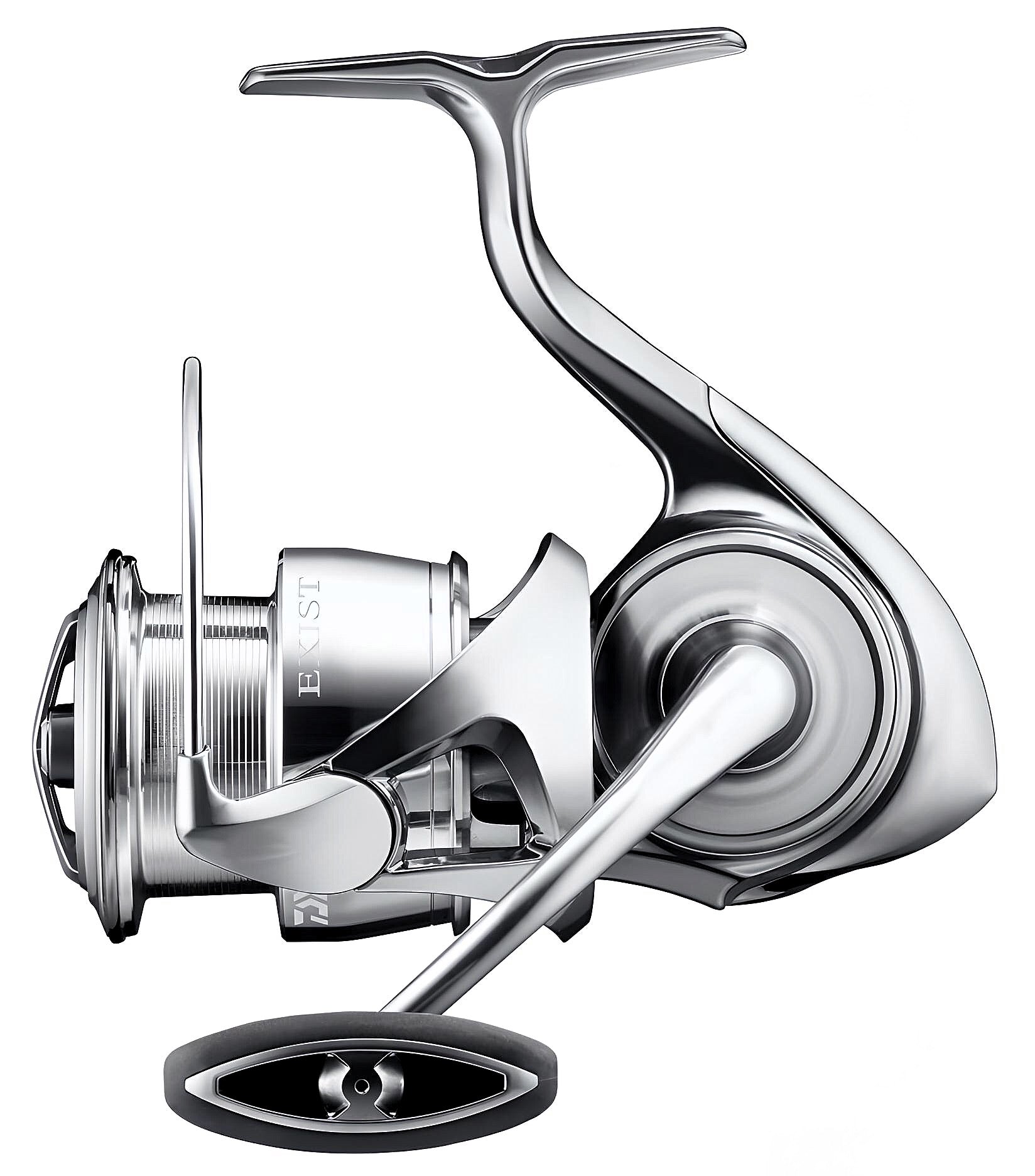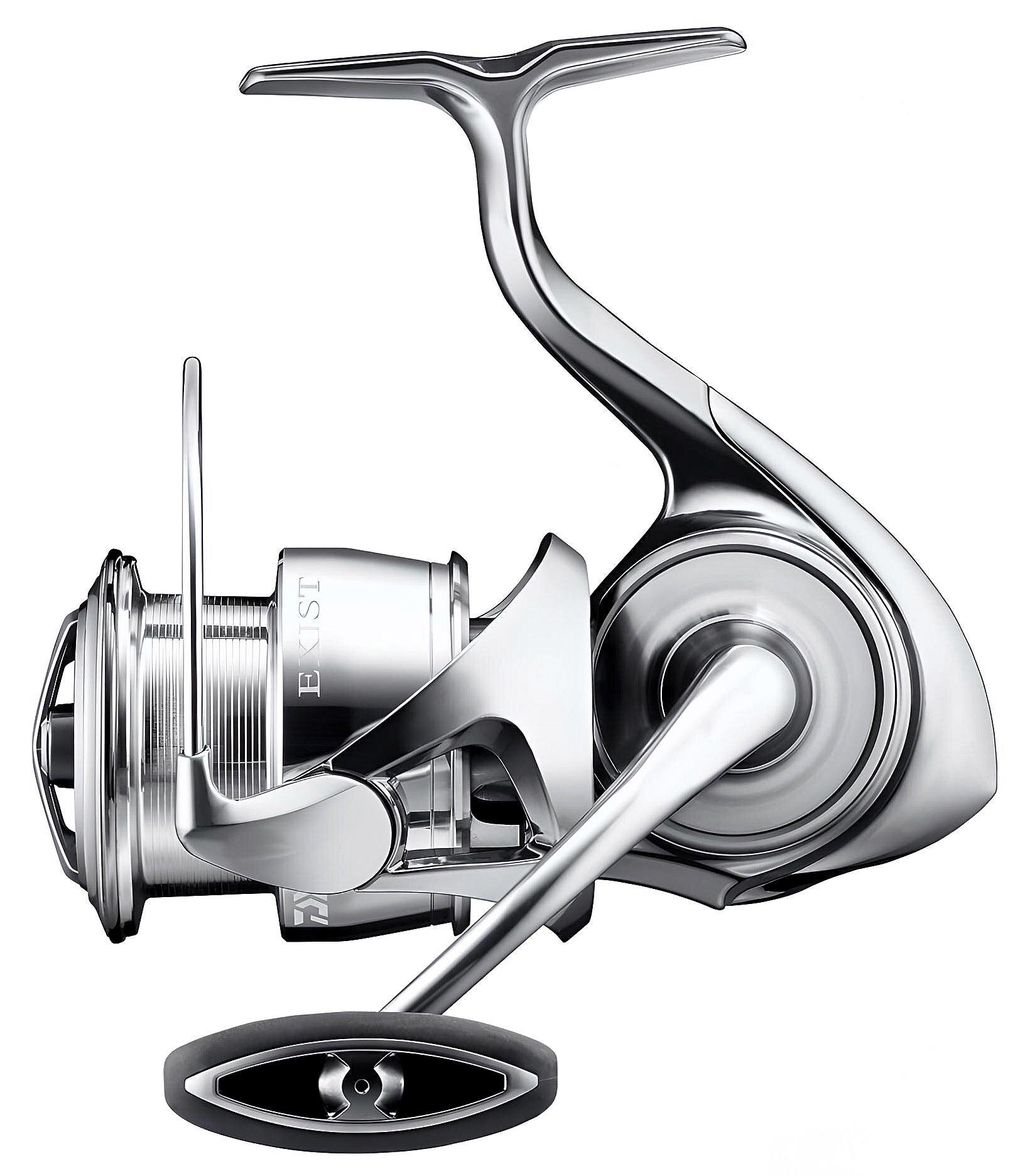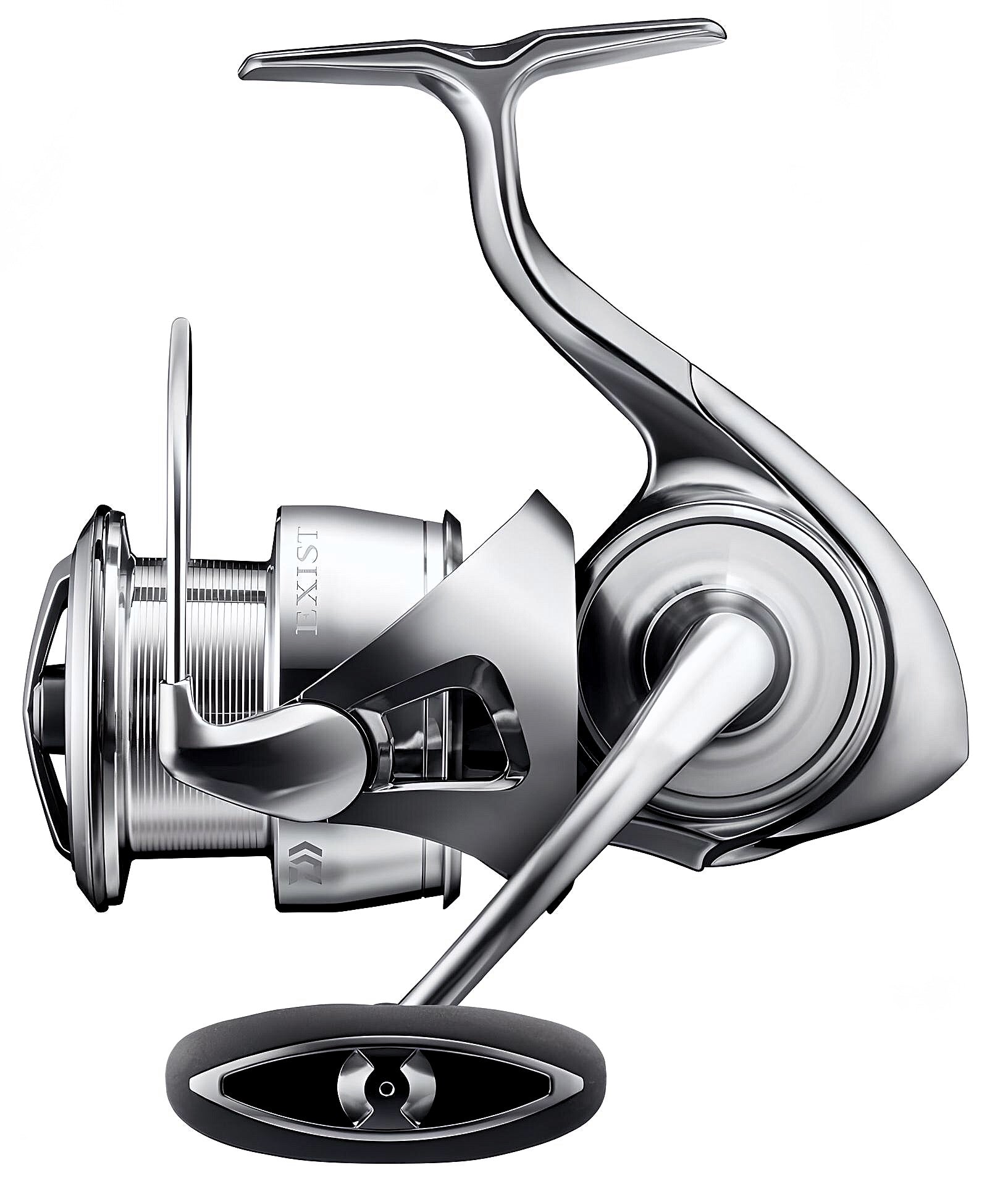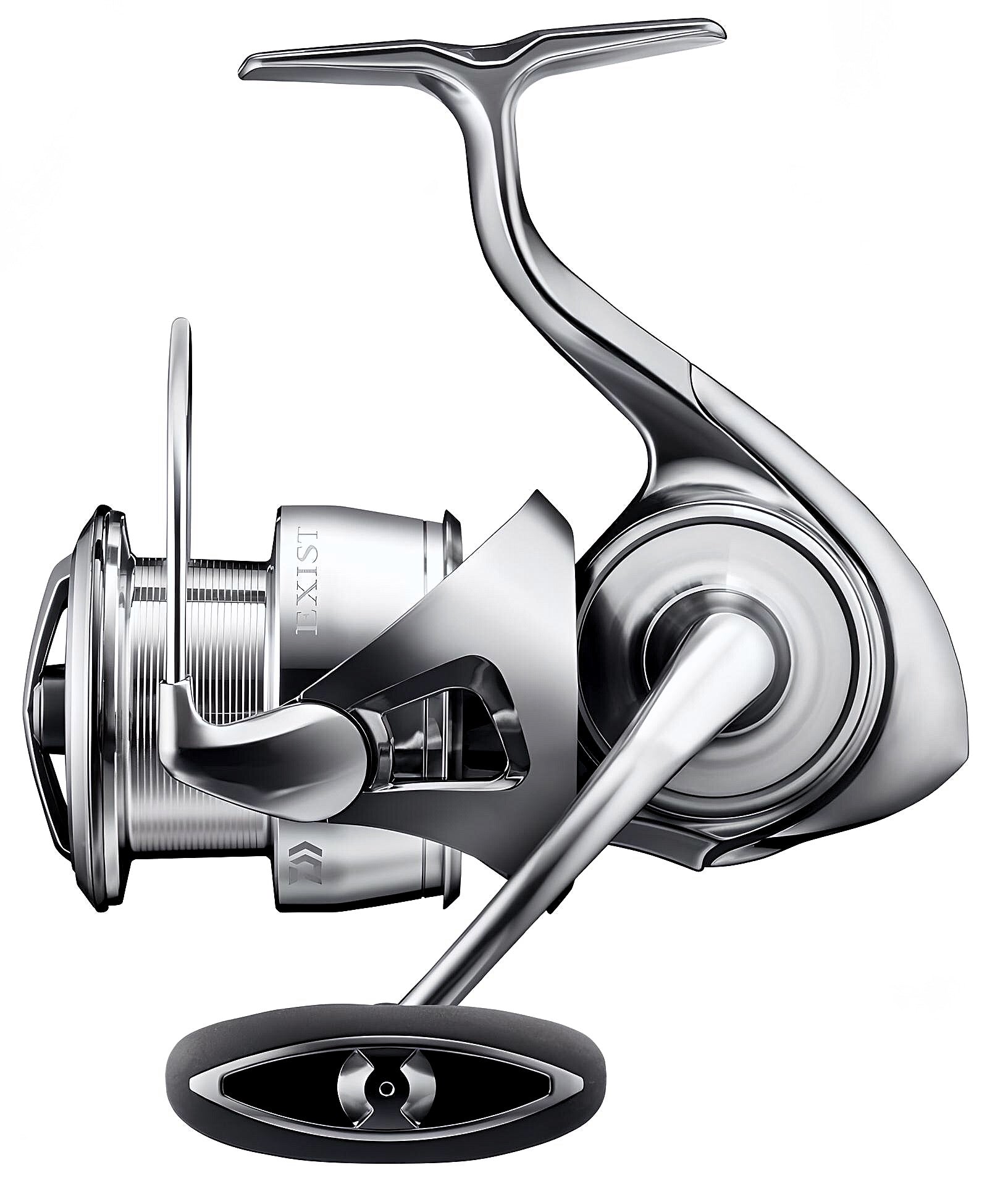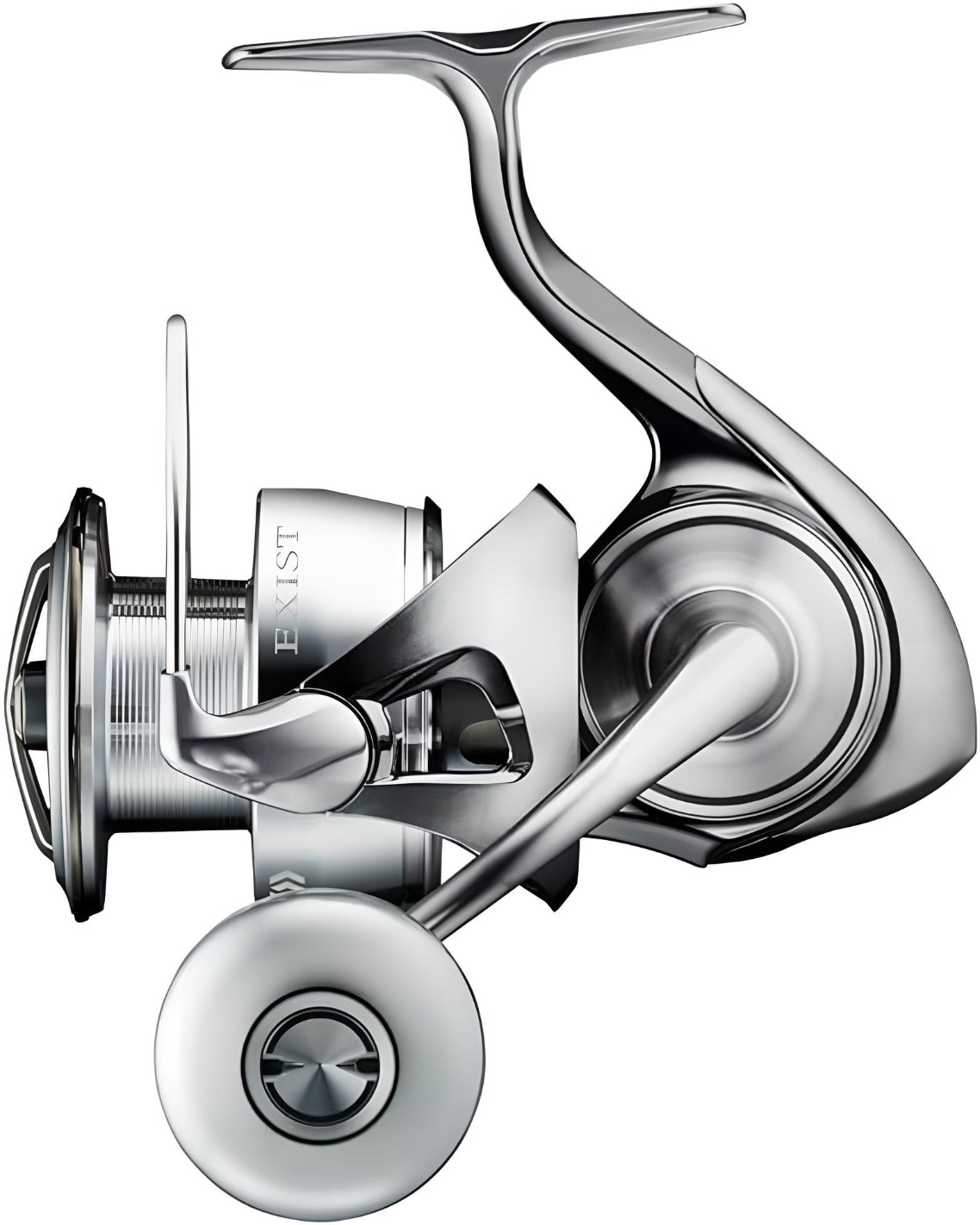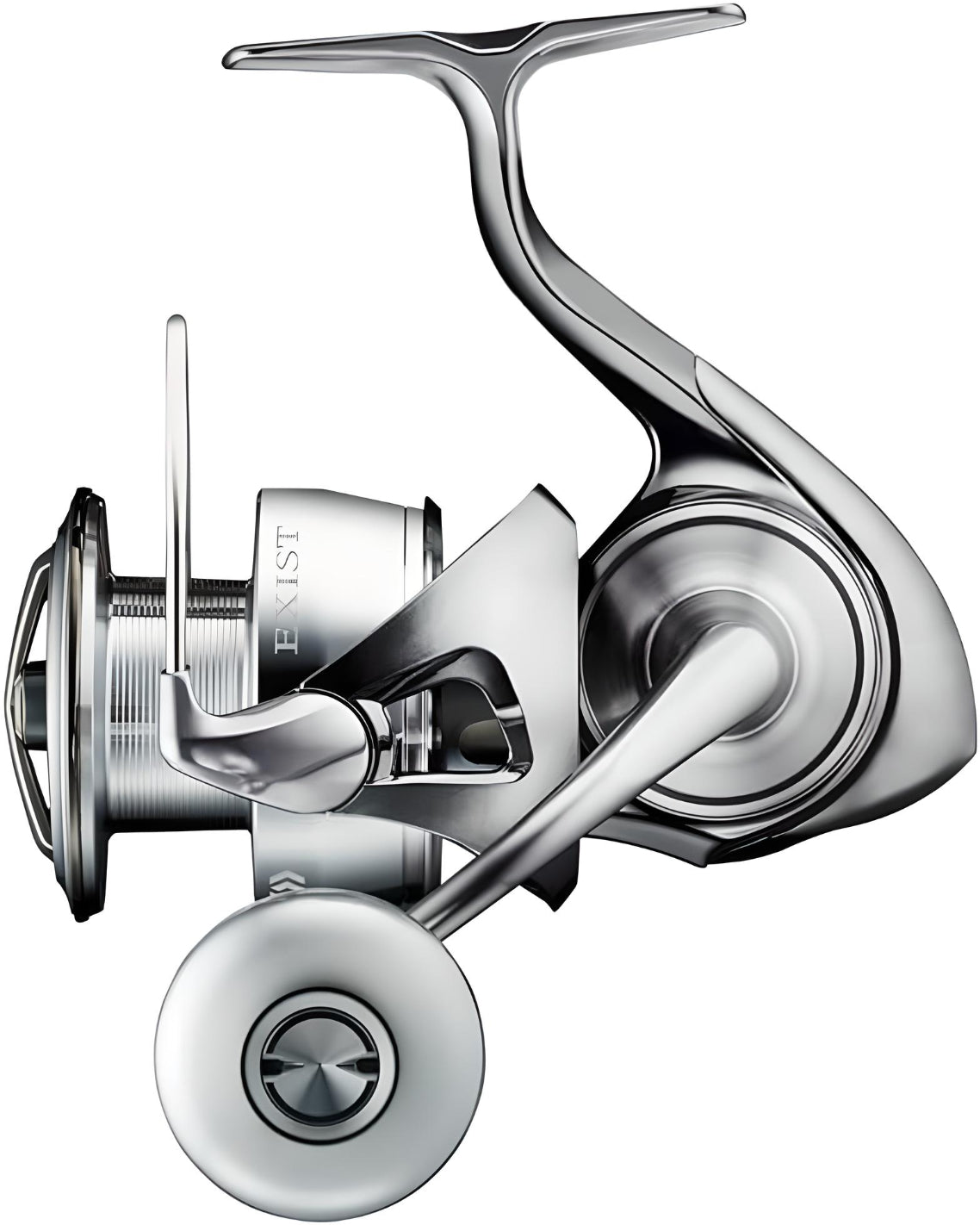
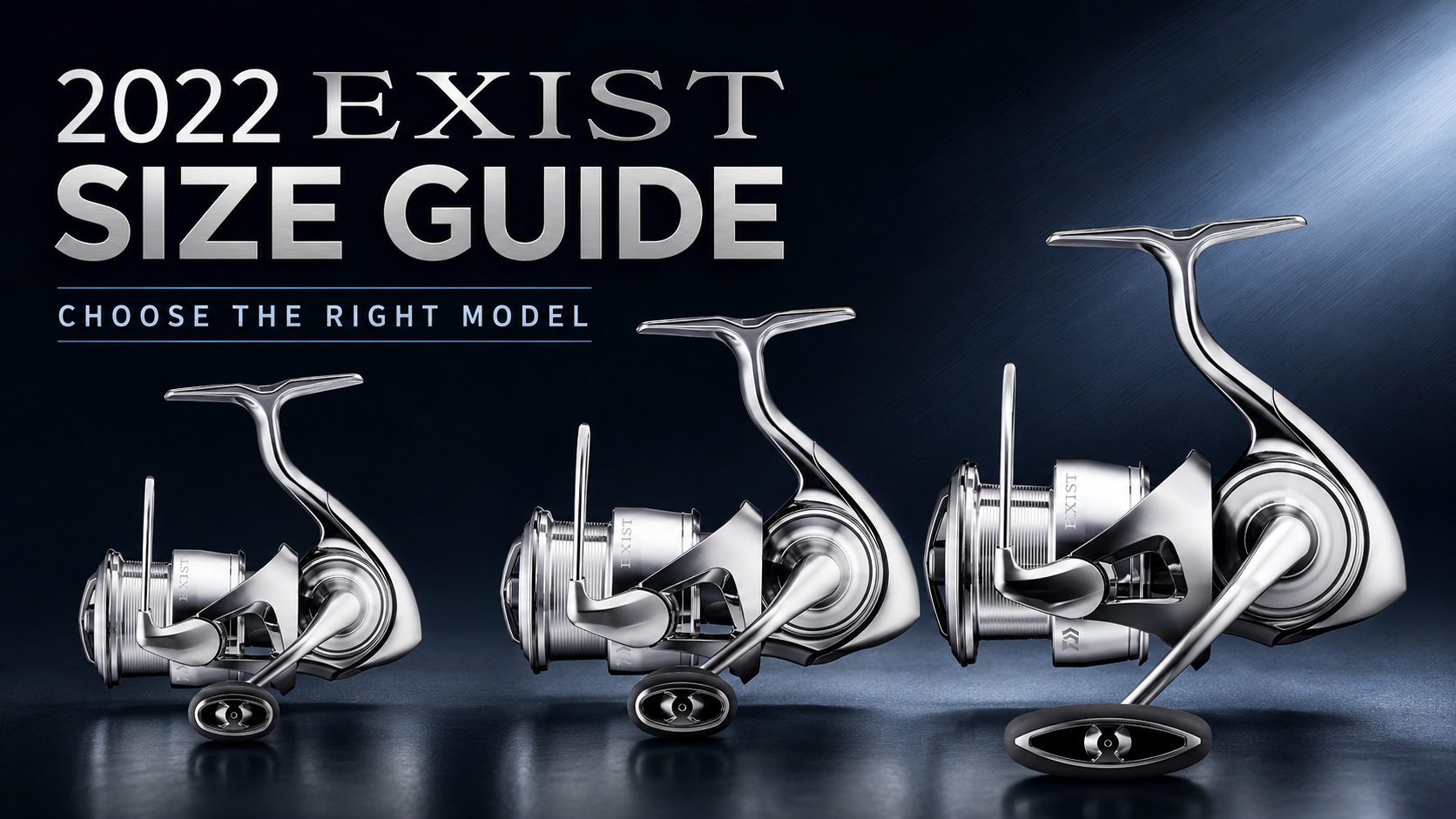
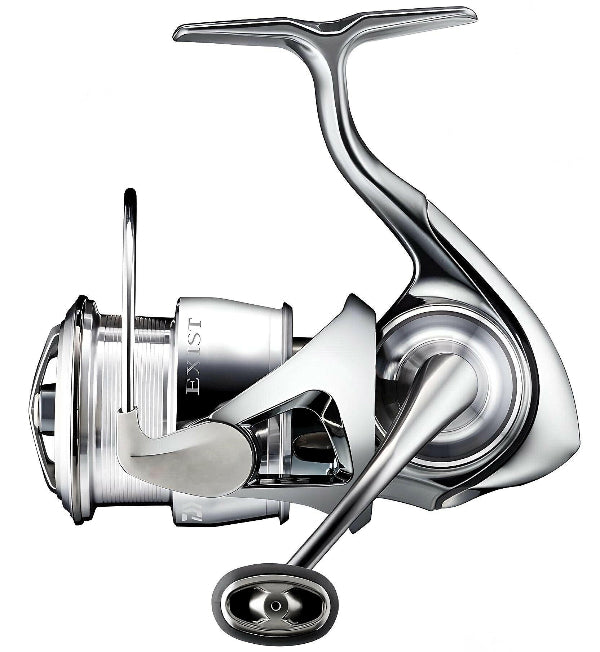
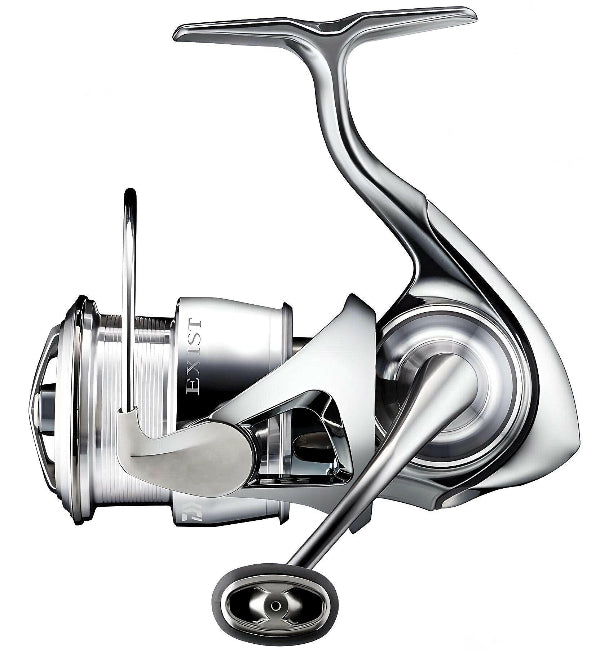
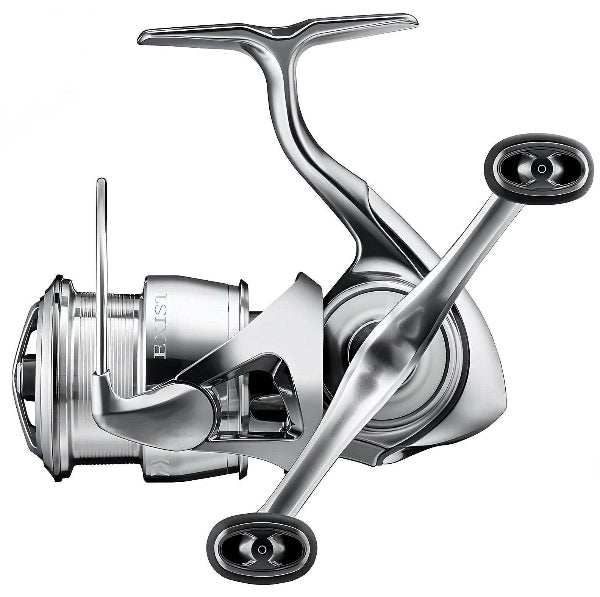
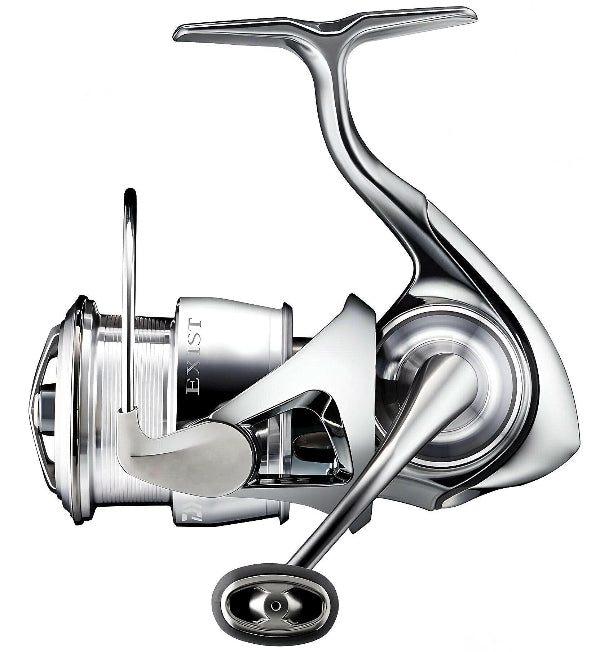
The 2022 Daiwa Exist family spans 21 configurations across the standard LT and specialized SF ranges. The correct model is not simply the largest reel your rod will balance. Size determines line capacity, spool diameter, chassis class, drag ceiling, handle leverage, and the amount of line recovered per crank.
This independent English reconstruction removes shopping links and personal endorsements. Every numerical specification is checked against Daiwa's manufacturer data, and Japanese braid-size notation is converted to approximate breaking strength.
How to read the model names
- LT: the standard Light & Tough platform.
- SF: Super Finesse, a separately tuned platform intended for light lures and light line.
- 1000–5000: the size class. Larger numbers generally bring greater capacity, larger spool diameter, and greater load capability.
- S / SS: shallow / super-shallow spool. These reduce unnecessary backing when using thin line.
- P, H, and XH: power, high, and extra-high gearing. Compare the actual pickup-per-turn number, not only the suffix.
- PC: Power Custom. These combine a spool class with a larger body class for greater drivetrain capacity.
- C: compact-body configuration; DH denotes a double handle.

Step 1: select capacity before species
Start with the line system you intend to use. A shallow spool is efficient when the required working length fits without excessive backing, but insufficient capacity leaves no reserve for long casts, current, or a running fish. The listed capacities are nominal; actual fill varies with line construction, manufacturer, tension, and backing.
- 1000 and 2000 classes: light-line systems, compact rods, and low line-volume applications.
- 2500 class: a broad middle ground for shallow-spool setups that do not require the capacity or chassis of a 3000.
- 3000 class: greater spool diameter and capacity for longer casts, stronger line, or more line reserve.
- 4000 class: 12 lb nylon or approximately 30 lb braid capacity, with a 51 mm (2.01 in) spool.
- 5000-C class: the greatest capacity here, including approximately 40 lb braid over 300 m (328 yd).
Step 2: match the chassis to sustained load
Two reels can carry similar amounts of line while using different body classes. The PC LT2500 models use the 2500 spool class with a larger-body power configuration and a 10 kg (22.0 lb) maximum drag specification, compared with 5 kg (11.0 lb) for the standard LT2500S group. PC LT3000 likewise adds body and handle leverage without increasing spool diameter beyond 48 mm (1.89 in).
Maximum drag is a component limit, not a recommended fishing setting. Rod rating, line strength, knots, hooks, spool fill, and heat must all remain within their own working limits.

Step 3: choose pickup, not a gear label
Pickup ranges from 57 cm (22.4 in) to 105 cm (41.3 in) per handle turn. Lower pickup supports fine low-speed control and greater mechanical advantage. Higher pickup collects slack and retrieves a lure faster with fewer handle turns. Spool diameter also affects pickup, so a ratio should not be compared in isolation across different sizes.
The LT2500S family makes the tradeoff clear: 5.1:1 retrieves 72 cm (28.3 in), 5.8:1 retrieves 82 cm (32.3 in), and 6.2:1 retrieves 87 cm (34.3 in) per turn. Select the distance that suits the presentation and load rather than assuming XH is universally better.
Shop the Gear
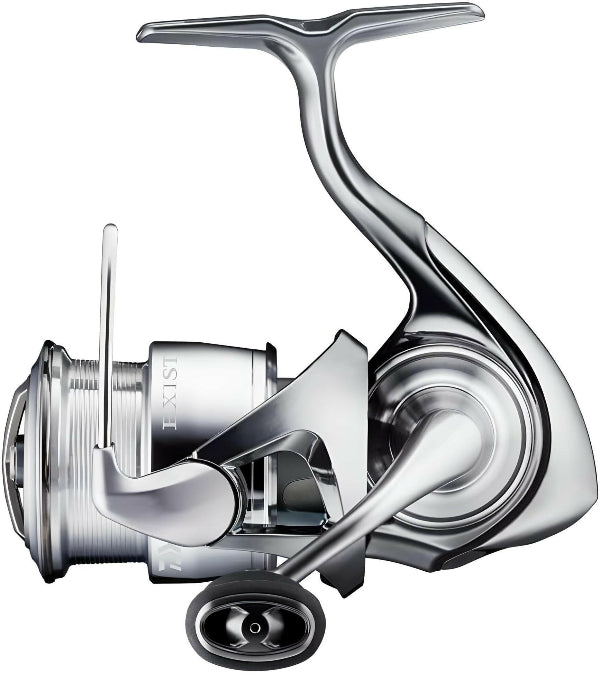
LT size groups in practical terms
LT2000: compact light-line platform
Both LT2000 models hold 3 lb nylon over 150 m (164 yd) or approximately 8 lb braid over 200 m (219 yd). The P model emphasizes slow pickup at 64 cm (25.2 in), while the H version increases pickup to 76 cm (29.9 in).
LT2500: shallow-spool versatility
The standard 2500 models share 4 lb nylon over 150 m (164 yd), approximate 12 lb braid over 200 m (219 yd), a 45 mm (1.77 in) spool, and 5 kg (11.0 lb) maximum drag. Choose among three pickup rates or the DH double-handle configuration. PC LT2500 raises capacity and chassis load at the cost of additional mass.
LT3000 and PC LT3000: more line and leverage
LT3000S retains a shallow 6 lb nylon capacity; LT3000-H moves to 8 lb nylon and approximate 20 lb braid. Both use a 48 mm (1.89 in) spool. The PC versions add a 60 mm (2.36 in) handle and slightly greater mass for load-oriented use.
LT4000 and LT5000-C: capacity-focused choices
LT4000 models use a 51 mm (2.01 in) spool and hold 12 lb nylon over 150 m (164 yd). LT5000-C expands to a 54 mm (2.13 in) spool and approximately 40 lb braid over 300 m (328 yd). Within each size, choose standard or XH gearing from the required pickup rate.
Where Exist SF fits—and where it does not
Exist SF is optimized for light lures and light line. Daiwa specifies a smaller body, lower mass, 3 kg (6.6 lb) maximum drag, and Magsealed protection at the pinion only rather than the three sealed locations listed for LT models. The manufacturer identifies approximately 4 lb monofilament or 12 lb braid and below as its intended line range, and recommends drag settings no higher than approximately 0.8 kg (1.8 lb).
SF therefore suits narrowly defined finesse use. It should not be selected merely because its 135–140 g (4.8–4.9 oz) weight looks attractive. Use an LT model when line tension during spooling, sustained retrieve load, environmental exposure, or drag demand exceeds the SF platform's stated operating guidance.

Complete metric specifications
Braid capacities are expressed as approximate strength in lb-m, not Japanese diameter classes. Actual breaking strain varies among line manufacturers.
| Model | Weight | Pickup / turn | Gear ratio | Nylon capacity | Braid equivalent | Handle | Max drag | Spool diameter |
|---|---|---|---|---|---|---|---|---|
| LT2000S-P | 155 g | 64 cm | 4.9:1 | 3 lb / 150 m | 8 lb / 200 m | 40 mm | 5 kg | 42 mm |
| LT2000S-H | 155 g | 76 cm | 5.8:1 | 3 lb / 150 m | 8 lb / 200 m | 45 mm | 5 kg | 42 mm |
| LT2500S | 160 g | 72 cm | 5.1:1 | 4 lb / 150 m | 12 lb / 200 m | 50 mm | 5 kg | 45 mm |
| LT2500S-H | 160 g | 82 cm | 5.8:1 | 4 lb / 150 m | 12 lb / 200 m | 50 mm | 5 kg | 45 mm |
| LT2500S-XH | 160 g | 87 cm | 6.2:1 | 4 lb / 150 m | 12 lb / 200 m | 50 mm | 5 kg | 45 mm |
| LT2500S-DH | 170 g | 72 cm | 5.1:1 | 4 lb / 150 m | 12 lb / 200 m | 90 mm | 5 kg | 45 mm |
| PC LT2500 | 175 g | 73 cm | 5.2:1 | 6 lb / 150 m | 16 lb / 200 m | 50 mm | 10 kg | 45 mm |
| PC LT2500-H | 175 g | 80 cm | 5.7:1 | 6 lb / 150 m | 16 lb / 200 m | 55 mm | 10 kg | 45 mm |
| LT3000S | 180 g | 77 cm | 5.2:1 | 6 lb / 150 m | 16 lb / 200 m | 55 mm | 10 kg | 48 mm |
| LT3000-H | 180 g | 85 cm | 5.7:1 | 8 lb / 150 m | 20 lb / 200 m | 55 mm | 10 kg | 48 mm |
| PC LT3000 | 190 g | 77 cm | 5.2:1 | 8 lb / 150 m | 20 lb / 200 m | 60 mm | 10 kg | 48 mm |
| PC LT3000-XH | 190 g | 93 cm | 6.2:1 | 8 lb / 150 m | 20 lb / 200 m | 60 mm | 10 kg | 48 mm |
| LT4000 | 205 g | 82 cm | 5.2:1 | 12 lb / 150 m | 30 lb / 200 m | 60 mm | 10 kg | 51 mm |
| LT4000-XH | 205 g | 99 cm | 6.2:1 | 12 lb / 150 m | 30 lb / 200 m | 60 mm | 10 kg | 51 mm |
| LT5000-C | 220 g | 87 cm | 5.2:1 | 20 lb / 150 m | 40 lb / 300 m | 60 mm | 10 kg | 54 mm |
| LT5000-CXH | 220 g | 105 cm | 6.2:1 | 20 lb / 150 m | 40 lb / 300 m | 60 mm | 10 kg | 54 mm |
| SF1000S-P | 135 g | 57 cm | 4.6:1 | 2.5 lb / 100 m | 6 lb / 200 m | 35 mm | 3 kg | 40 mm |
| SF2000SS-P | 135 g | 60 cm | 4.6:1 | 2.5 lb / 100 m | 6 lb / 200 m | 40 mm | 3 kg | 42 mm |
| SF2000SS-H | 135 g | 74 cm | 5.7:1 | 2.5 lb / 100 m | 6 lb / 200 m | 45 mm | 3 kg | 42 mm |
| SF2500SS | 140 g | 70 cm | 5.0:1 | 3 lb / 150 m | 8 lb / 200 m | 45 mm | 3 kg | 45 mm |
| SF2500SS-H | 140 g | 80 cm | 5.7:1 | 3 lb / 150 m | 8 lb / 200 m | 45 mm | 3 kg | 45 mm |
Specifications in Pounds, Yards & Inches
Capacity lengths are rounded to the nearest yard. Weight, pickup, handle length, drag, and spool diameter are converted from the manufacturer’s metric figures.
| Model | Weight | Pickup / turn | Gear ratio | Nylon capacity | Braid equivalent | Handle | Max drag | Spool diameter |
|---|---|---|---|---|---|---|---|---|
| LT2000S-P | 5.5 oz | 25.2 in | 4.9:1 | 3 lb / 164 yd | 8 lb / 219 yd | 1.57 in | 11.0 lb | 1.65 in |
| LT2000S-H | 5.5 oz | 29.9 in | 5.8:1 | 3 lb / 164 yd | 8 lb / 219 yd | 1.77 in | 11.0 lb | 1.65 in |
| LT2500S | 5.6 oz | 28.3 in | 5.1:1 | 4 lb / 164 yd | 12 lb / 219 yd | 1.97 in | 11.0 lb | 1.77 in |
| LT2500S-H | 5.6 oz | 32.3 in | 5.8:1 | 4 lb / 164 yd | 12 lb / 219 yd | 1.97 in | 11.0 lb | 1.77 in |
| LT2500S-XH | 5.6 oz | 34.3 in | 6.2:1 | 4 lb / 164 yd | 12 lb / 219 yd | 1.97 in | 11.0 lb | 1.77 in |
| LT2500S-DH | 6.0 oz | 28.3 in | 5.1:1 | 4 lb / 164 yd | 12 lb / 219 yd | 3.54 in | 11.0 lb | 1.77 in |
| PC LT2500 | 6.2 oz | 28.7 in | 5.2:1 | 6 lb / 164 yd | 16 lb / 219 yd | 1.97 in | 22.0 lb | 1.77 in |
| PC LT2500-H | 6.2 oz | 31.5 in | 5.7:1 | 6 lb / 164 yd | 16 lb / 219 yd | 2.17 in | 22.0 lb | 1.77 in |
| LT3000S | 6.3 oz | 30.3 in | 5.2:1 | 6 lb / 164 yd | 16 lb / 219 yd | 2.17 in | 22.0 lb | 1.89 in |
| LT3000-H | 6.3 oz | 33.5 in | 5.7:1 | 8 lb / 164 yd | 20 lb / 219 yd | 2.17 in | 22.0 lb | 1.89 in |
| PC LT3000 | 6.7 oz | 30.3 in | 5.2:1 | 8 lb / 164 yd | 20 lb / 219 yd | 2.36 in | 22.0 lb | 1.89 in |
| PC LT3000-XH | 6.7 oz | 36.6 in | 6.2:1 | 8 lb / 164 yd | 20 lb / 219 yd | 2.36 in | 22.0 lb | 1.89 in |
| LT4000 | 7.2 oz | 32.3 in | 5.2:1 | 12 lb / 164 yd | 30 lb / 219 yd | 2.36 in | 22.0 lb | 2.01 in |
| LT4000-XH | 7.2 oz | 39.0 in | 6.2:1 | 12 lb / 164 yd | 30 lb / 219 yd | 2.36 in | 22.0 lb | 2.01 in |
| LT5000-C | 7.8 oz | 34.3 in | 5.2:1 | 20 lb / 164 yd | 40 lb / 328 yd | 2.36 in | 22.0 lb | 2.13 in |
| LT5000-CXH | 7.8 oz | 41.3 in | 6.2:1 | 20 lb / 164 yd | 40 lb / 328 yd | 2.36 in | 22.0 lb | 2.13 in |
| SF1000S-P | 4.8 oz | 22.4 in | 4.6:1 | 2.5 lb / 109 yd | 6 lb / 219 yd | 1.38 in | 6.6 lb | 1.57 in |
| SF2000SS-P | 4.8 oz | 23.6 in | 4.6:1 | 2.5 lb / 109 yd | 6 lb / 219 yd | 1.57 in | 6.6 lb | 1.65 in |
| SF2000SS-H | 4.8 oz | 29.1 in | 5.7:1 | 2.5 lb / 109 yd | 6 lb / 219 yd | 1.77 in | 6.6 lb | 1.65 in |
| SF2500SS | 4.9 oz | 27.6 in | 5.0:1 | 3 lb / 164 yd | 8 lb / 219 yd | 1.77 in | 6.6 lb | 1.77 in |
| SF2500SS-H | 4.9 oz | 31.5 in | 5.7:1 | 3 lb / 164 yd | 8 lb / 219 yd | 1.77 in | 6.6 lb | 1.77 in |
Fast selection checklist
- Choose a spool that holds the required line strength and working length with reserve.
- Decide whether the standard LT chassis or a PC body better matches sustained load.
- Compare pickup per turn for slack recovery, lure speed, and low-speed control.
- Check handle length and single- versus double-handle preference.
- Choose SF only when its light-line, low-drag, and reduced-sealing limits match the application.
- Confirm rod, line, leader, knot, and drag compatibility as one complete system.
Bottom line
For the 2022 Exist, size is a system of capacity, spool diameter, body class, gearing, and handle leverage. LT2000 and LT2500 cover light and versatile shallow-spool setups; PC configurations add drivetrain capacity; LT3000 through LT5000-C progressively increase line reserve and spool diameter. SF is the specialized choice for deliberately light tackle. Define capacity and load first, then select the retrieve rate that supports the intended presentation.