
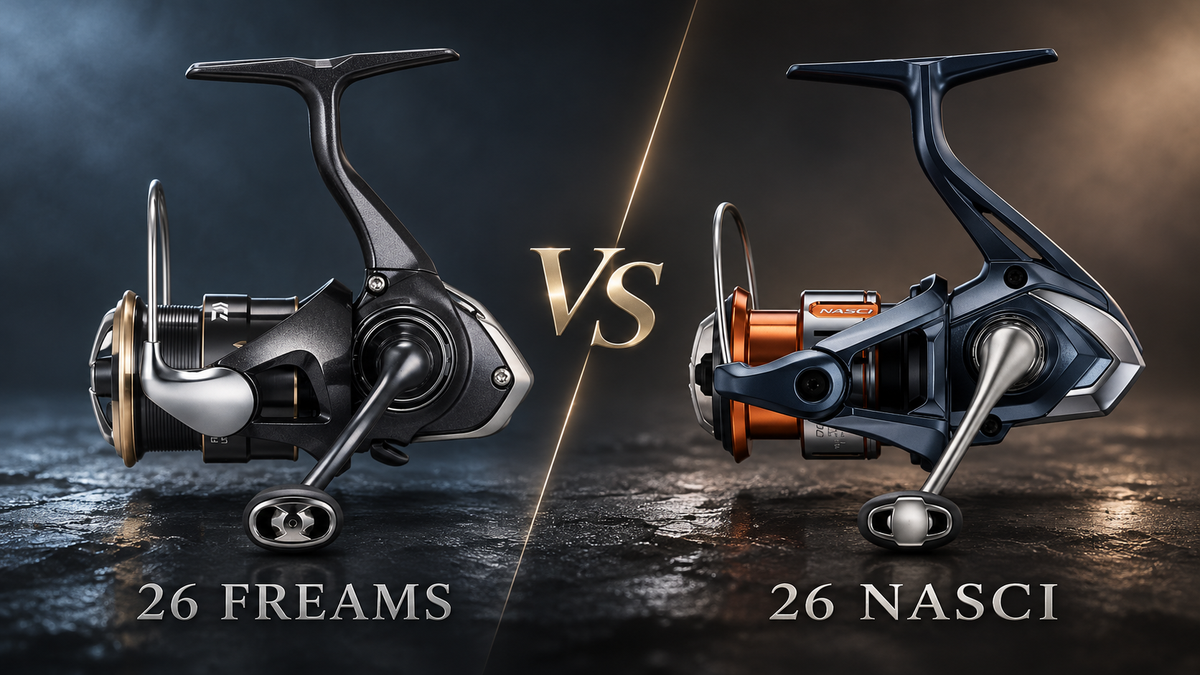





The Daiwa 26 Freams and Shimano 26 Nasci occupy a similar JDM spinning-reel tier, but their priorities are easy to separate. Freams uses a lighter ZAION V body and rotor with AirDrive components. Nasci carries more weight and answers with Infinity Drive, a HAGANE gear, and a line-management package built around its One-Piece Bail and Anti-Twist Fin.

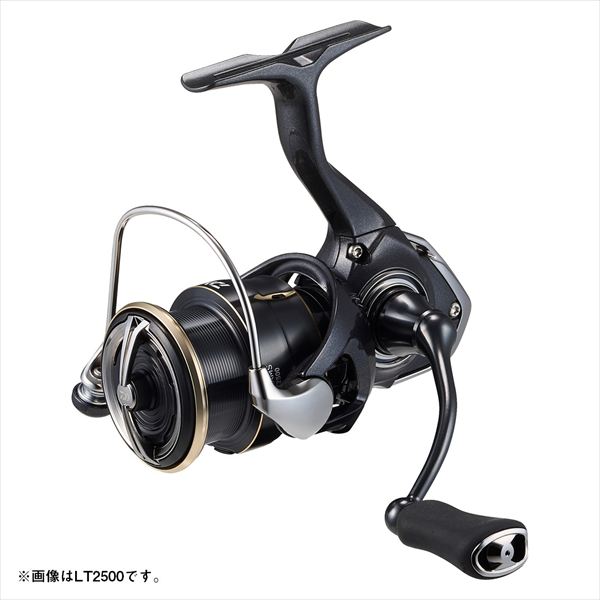
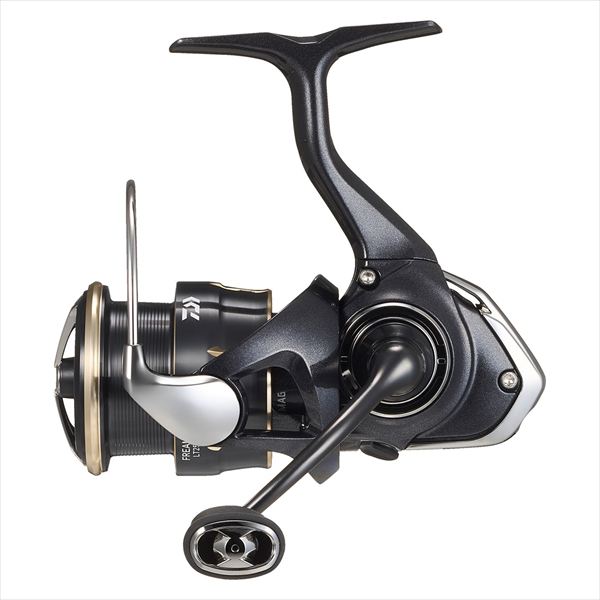
Daiwa 26 Freams LT2500.
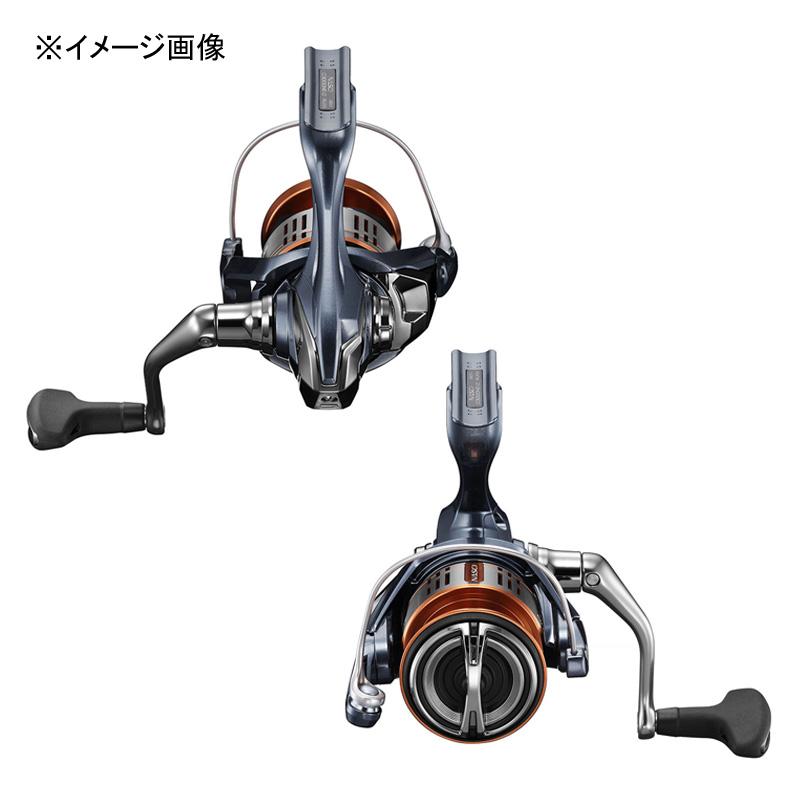
Shimano 26 Nasci 2500.
The Main Difference Is Response Versus Load Management
Freams is the more obvious choice when low total weight and quick rotor response lead the decision. Its AirDrive Rotor and Bail reduce mass in the rotating assembly, while the ZAION V body keeps the representative LT2500 forty grams lighter than the Nasci 2500. Nasci instead emphasizes winding under resistance through Infinity Drive and a cold-forged HAGANE main gear.
Why Freams Feels More Immediate
A light rotor changes how quickly the handle starts and stops. That matters when working slack-line techniques, repeatedly twitching a lure, or making frequent cadence changes. The LT2500 also lists slightly more retrieve per handle turn and a shorter handle than the normal-gear Nasci 2500. Its Magsealed pinion area is intended to help limit water and debris entry without a contacting seal.
Why Nasci Feels More Settled
Nasci is heavier, but weight alone does not define balance in hand. Shimano moves oscillation components closer to the rod with G-Free Body, and the 55 mm handle gives more leverage than the Freams model compared here. Infinity Drive reduces sliding resistance around the main shaft under load. Coreprotect, a sealed drag knob, and corrosion-conscious finishes support varied freshwater and inshore use.

Line Handling Takes Different Routes
Daiwa pairs its spool lip and AirDrive Bail with a light rotor. Shimano combines the AR-C spool with a joint-free bail and Anti-Twist Fin to control slack near the line roller. Neither design eliminates the need to match line diameter, fill level, and spool capacity to the technique. The published capacities also differ enough that anglers should compare exact models rather than assuming every 2500-size reel stores the same amount of line.


