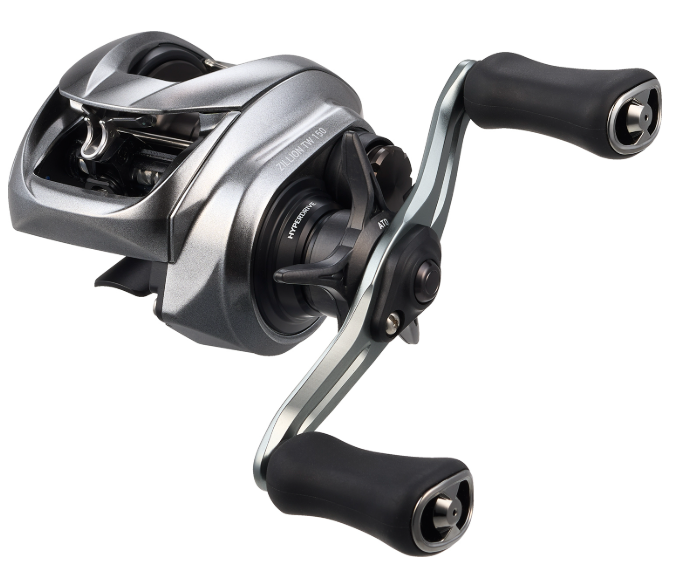
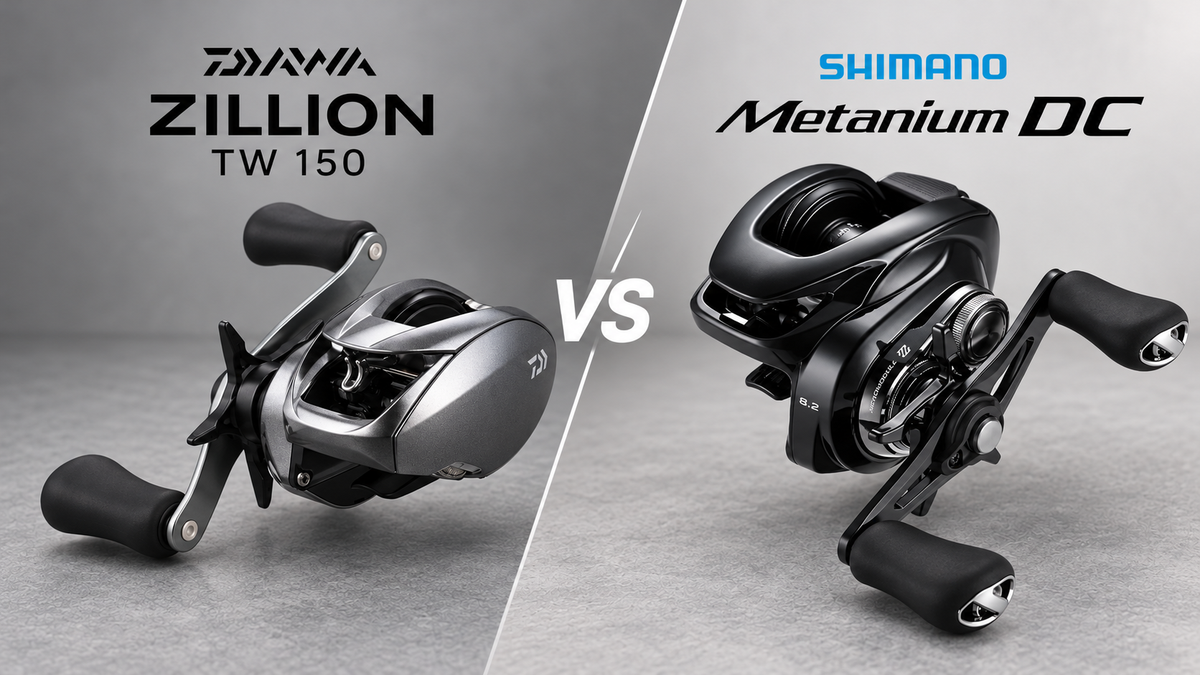
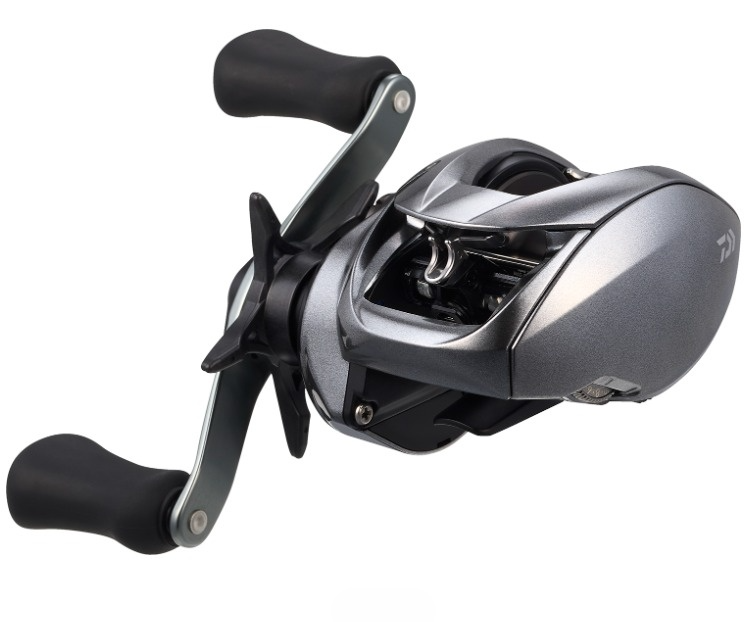
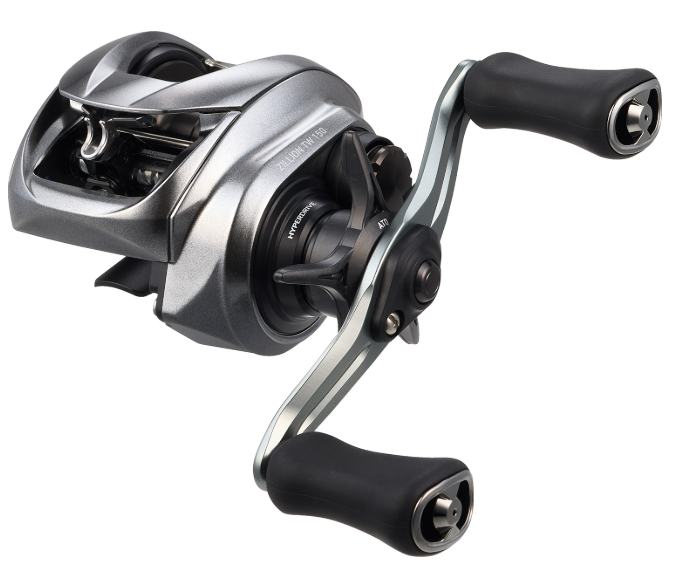
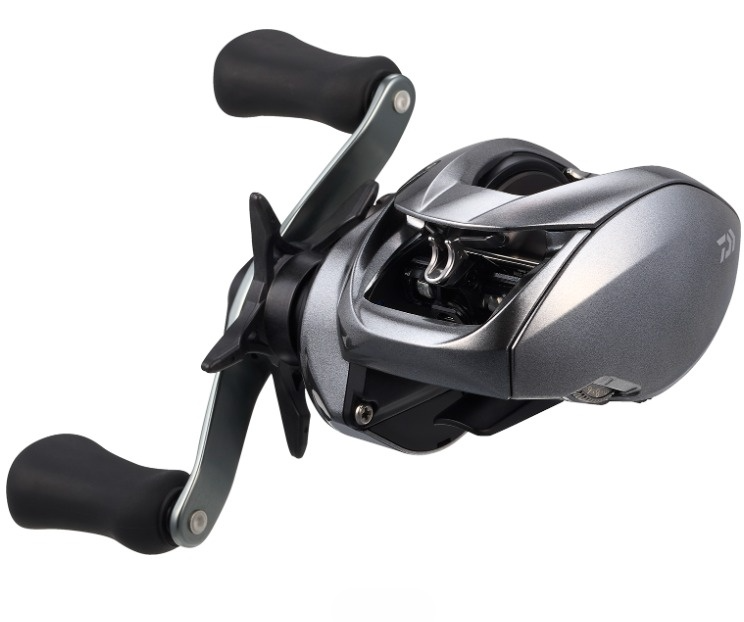

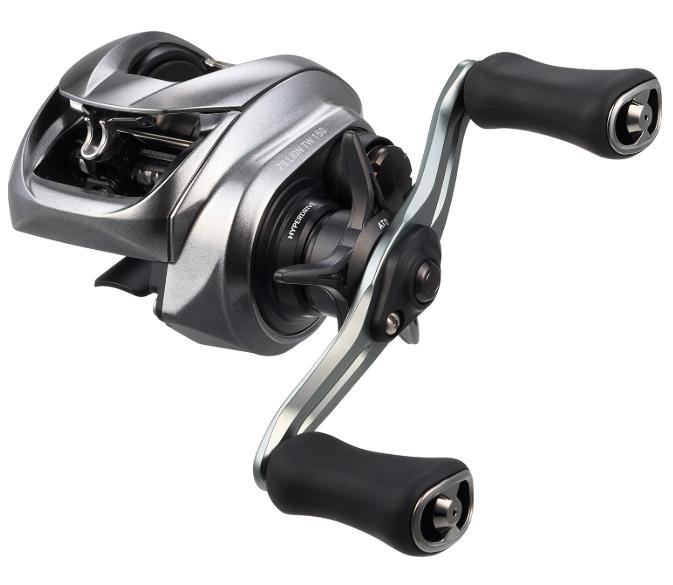
The 2026 Daiwa Zillion TW 150 and 2024 Shimano Metanium DC are both compact metal-framed baitcasters, but they occupy different working ranges. Zillion is a 150-size reel built around a 36 × 24 mm G1 duralumin spool, MAG-Z BOOST, and deeper line reserve. Metanium DC is a 70-size reel with a 34 × 19 mm MGL Spool III, I-DC5 braking, and a body roughly 35–40 g (1.2–1.4 oz) lighter. The choice is capacity and magnetic freedom versus low mass and digital control.

2026 Zillion TW 150H.

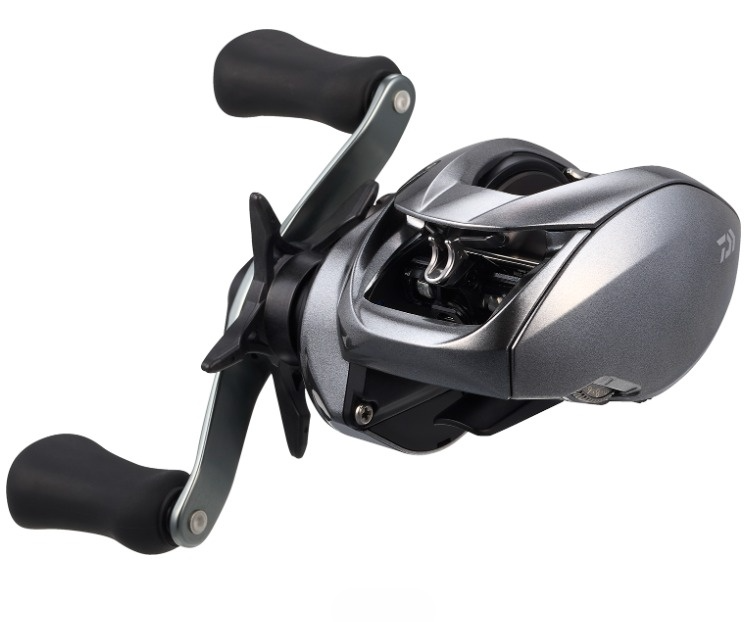
2024 Metanium DC 70HG.
The Short Answer
Choose Zillion TW 150 when 16–20 lb line, reaction baits, heavier aerodynamic loads, moving-water use, and a larger reserve are central to the setup. Choose Metanium DC when palmability, repeated casting, lower total outfit weight, and electronically managed control across normal bass-lure classes matter more. Their normal and high-speed ratios are closely paired, which makes spool size, brake character, and capacity more decisive than nominal gearing.
MAG-Z BOOST Versus I-DC5
Zillion’s MAG-Z BOOST is a speed-responsive magnetic system derived from Magforce Z. The moving inductor applies stronger braking when spool speed and magnetic force rise, then allows the spool to run more freely later in the cast. Its single external dial encourages hands-on tuning around lure shape, wind, line, and casting stroke.

Metanium’s I-DC5 uses line modes and five external brake settings to create 15 combinations. A microcomputer monitors spool speed and adjusts braking during the cast. The system is useful when lure changes, crosswinds, or awkward casting angles make repeatability more important than the most direct manual feel. Neither system makes setup irrelevant: spool tension, line fill, lure aerodynamics, and casting technique still matter.

Spool Geometry Defines the Working Range
Zillion’s 36 mm spool is 2 mm (0.08 in) larger in diameter and 5 mm (0.20 in) wider than Metanium’s. It holds 125 m (137 yd) of 16 lb line or 100 m (109 yd) of 20 lb. Metanium holds 80 m (87 yd) of 16 lb or 65 m (71 yd) of 20 lb. The Zillion therefore keeps more reserve after a long cast, abrasion cut-back, or a strong run.
Metanium’s smaller, narrower MGL Spool III carries less line mass and starts with less rotating inertia, supporting compact casting and frequent presentation changes. Zillion’s larger G1 duralumin spool shifts the practical center toward standard-to-heavy lures, longer casts, and thicker line. Daiwa’s tapered T-Wing System opens the line path during the cast; Shimano manages the spool through its low-inertia design and digital brake.
Body, Weight, and Retrieve Feel
Zillion uses a full-aluminum HYPER ARMED HOUSING with HYPERDRIVE DIGIGEAR, double-supported pinion, reinforced clutch, ATD drag, and a clicking drag. At 215 g (7.6 oz), it is still compact for a 150-size reel, but the design favors a planted feel and load capacity.

Metanium DC uses a compact CoreSolid HAGANE body with MicroModule Gear, X-Ship, SilentDrive, SilentTune, and an aluminum MGL Spool III. Standard and HG models weigh 175 g (6.2 oz), while XG weighs 180 g (6.3 oz). That difference becomes noticeable over hundreds of casts or on a light rod, although the heavier Zillion may balance a more powerful blank better.

Ratio Choice Is Closely Matched
The slowest pair is 6.3:1 for Zillion and 6.2:1 for Metanium, retrieving 70 versus 66 cm (27.6 versus 26.0 in) per turn. These are the best options for resistance-heavy moving baits and deliberate retrieves. The middle pair is 7.3:1 versus 7.1:1, with 82 versus 76 cm (32.3 versus 29.9 in) pickup. Both work as general-purpose choices.
The fastest pair is 8.4:1 versus 8.1:1. Zillion retrieves 94 cm (37.0 in) per turn; Metanium retrieves 86 cm (33.9 in). Zillion XH also lists a slightly lower maximum drag than its slower siblings, while Metanium keeps the same published 5 kg (11.0 lb) figure across ratios. Ratio should follow lure resistance and line-recovery need, not the assumption that faster is always better.
Drag and Handle Specifications
Zillion publishes 6 kg (13.2 lb) maximum drag for standard and H models and 5.5 kg (12.1 lb) for XH. Metanium lists 5 kg (11.0 lb) for all three ratios. Maximum drag is not a working recommendation; line strength, hook gauge, rod power, and smooth startup determine the practical setting.
Daiwa lists a 95 mm (3.74 in) handle, while Shimano lists 42 or 45 mm (1.65 or 1.77 in). These numbers use different measurement conventions: Daiwa commonly describes the complete handle span, while Shimano specifies the distance from shaft center to one knob. They should not be read as a two-to-one leverage difference.