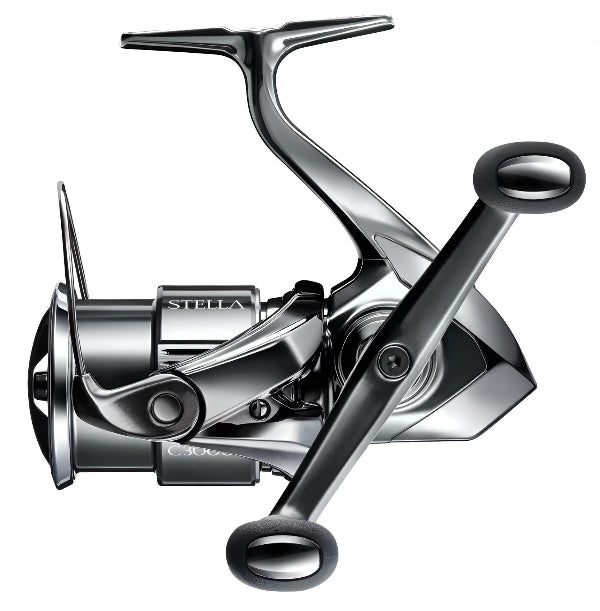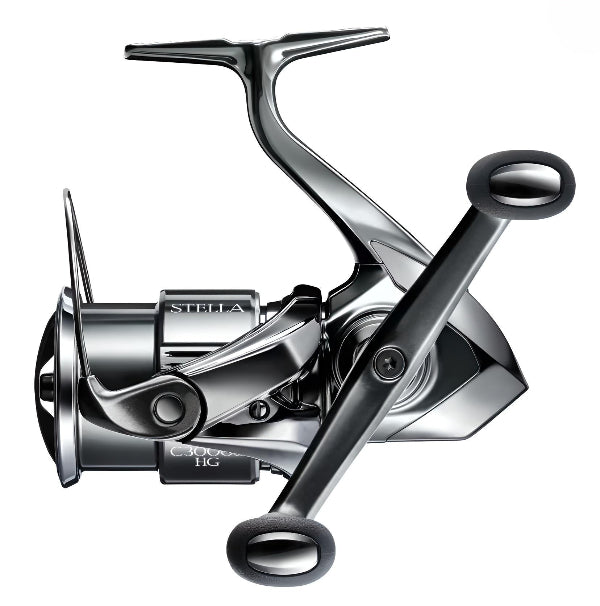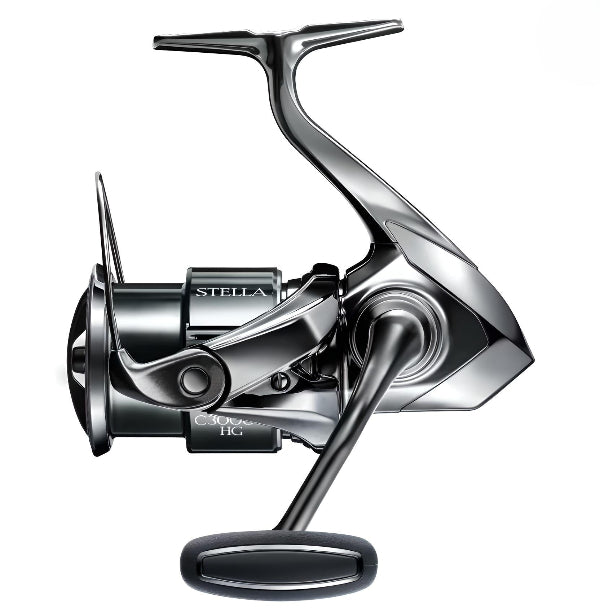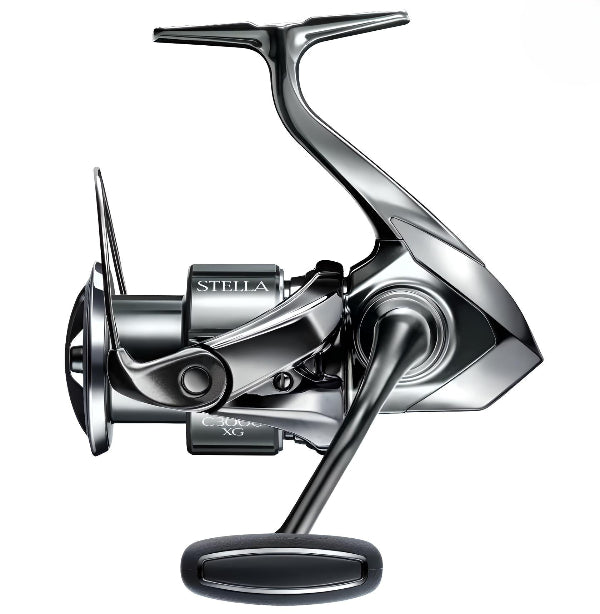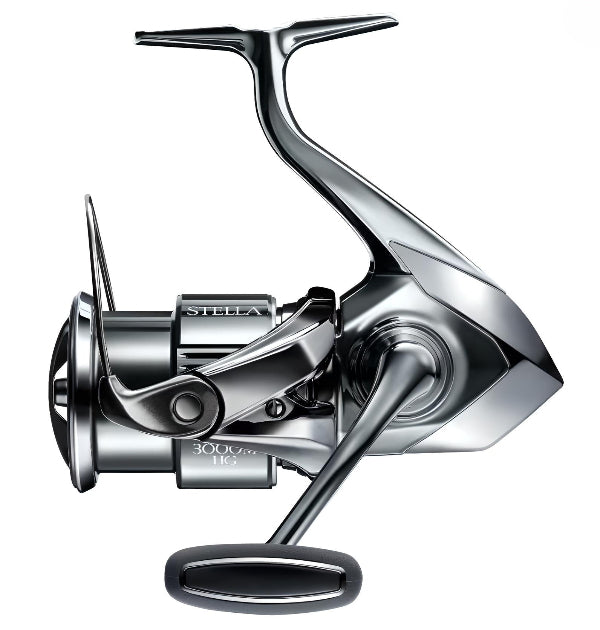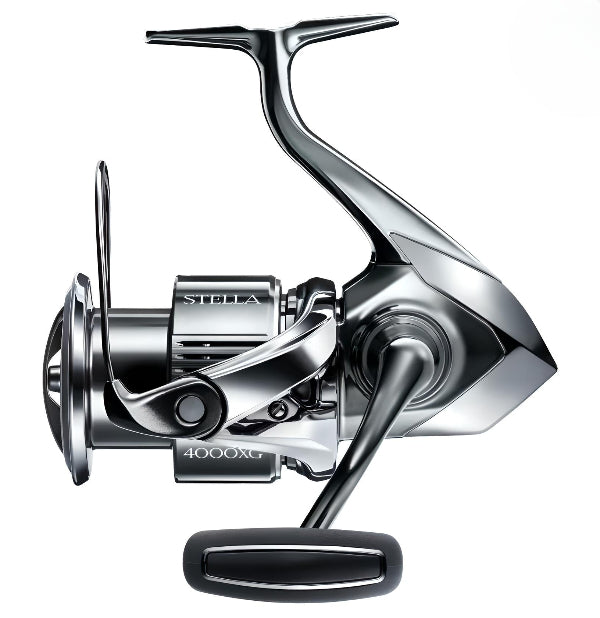

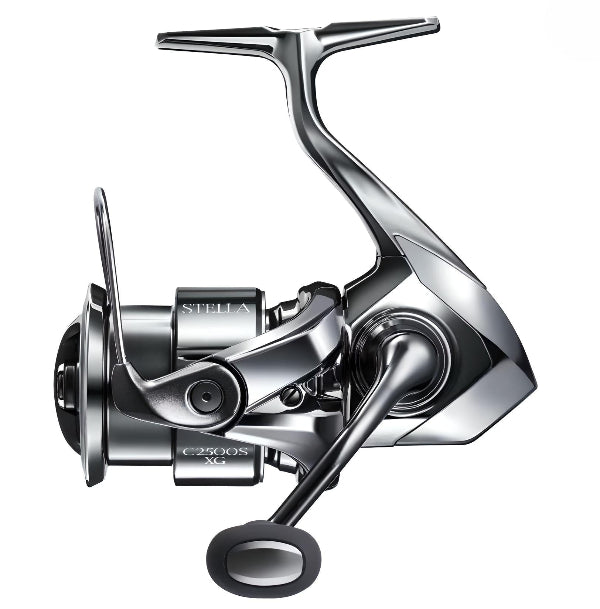
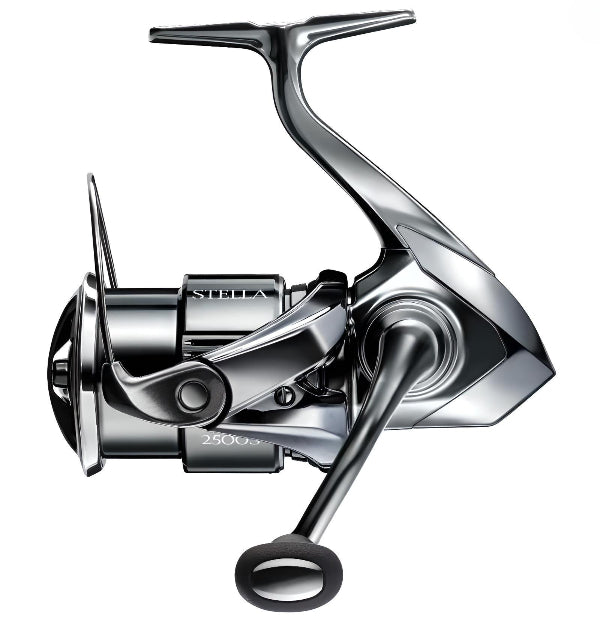
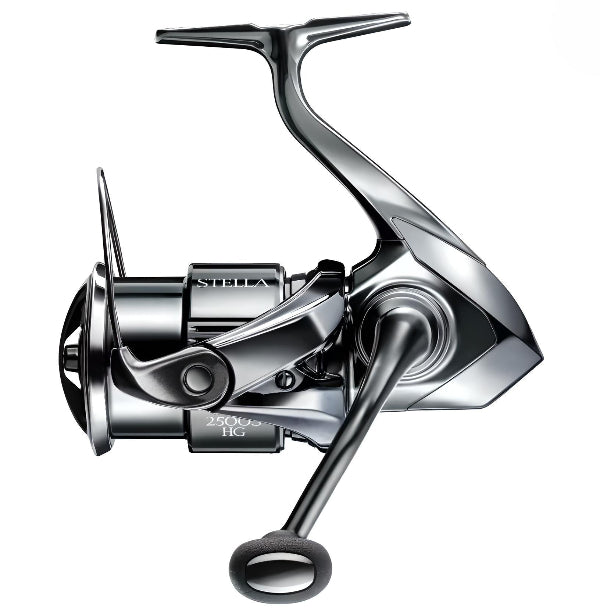
Shimano Stella can be used for bass fishing, but the name alone does not identify the correct setup. The useful questions are mechanical: how much line is required, how quickly must slack be recovered, what drag range will actually be used, and which reel weight balances the rod.
This English reconstruction removes retailer promotions, cost-based judgments, fixed service-life claims, and unsupported statements about which tackle will catch more fish. It uses current Shimano specifications for the 2022 Stella and treats application guidance as a starting framework that must remain within the rod, line, lure, hook, and knot ratings.
What Stella contributes to a bass setup
Drivetrain alignment under load
The metal HAGANE Body is designed to limit flex around the gears. Infinity Cross increases gear-tooth contact, while Infinity Drive reduces main-shaft sliding resistance. These features are most relevant when retrieve resistance or fish load rises; they do not mean that a larger model should be paired with a rod unable to transmit that load safely.
Controlled line lay and slack management
Infinity Loop produces very slow spool oscillation and dense line lay. The Anti-Twist Fin controls loose line near the roller, and the AR-C lip and Long Stroke Spool manage line release. Together, these systems address line behavior during casting and recovery. Correct spool fill, line condition, knot shape, and manual bail closure remain essential.
A supported drag system
Rigid Support Drag uses bearings to stabilize the spool, and DuraCross is Shimano's wear-oriented drag material. Smooth drag response can protect light line, but the drag must be set below the verified limit of the weakest component. Maximum drag is a structural specification, not an instruction to fish at that setting.

Choose the reel from the line system outward
- Set the main-line strength and working length. Include backing, the longest realistic cast, lure depth, and reserve for retying or a running fish.
- Choose spool depth. S and SS spools reduce unnecessary fill for thin line; M spools provide more capacity.
- Choose pickup per turn. A higher figure recovers slack faster. A lower figure provides finer low-speed adjustment per handle revolution.
- Balance the rod. Reel mass, reel-seat position, rod length, and tip weight determine the assembled balance—not reel weight alone.
- Verify every rating. Rod lure range, line range, knot strength, hook wire, and drag setting must agree.

Bass-focused size groups
C2000: compact and low-volume
C2000 models weigh 170 g (6.0 oz), use a 43 mm (1.69 in) spool, and list 3 kg (6.6 lb) maximum drag. They suit systems that genuinely need limited line volume and a compact body. C2000S retrieves 69 cm (27.2 in) per turn; C2000SHG retrieves 81 cm (31.9 in).
C2500: compact-body finesse range
C2500 models use a 44 mm (1.73 in) spool on a compact body and weigh 175 g (6.2 oz). The S and SXG versions share capacity but retrieve 70 cm and 87 cm (27.6 and 34.3 in) respectively. This pair is useful when the desired decision is cadence versus fast slack pickup rather than more capacity.
2500 and C3000: more body or more capacity
Full-size 2500 models move to a 47 mm (1.85 in) spool and 205 g (7.2 oz) body. C3000 configurations use that spool diameter with a 9 kg (19.8 lb) maximum-drag specification and several capacity, gear, and handle options. Double-handle models emphasize a symmetrical grip arrangement; MHG and XG models provide greater line volume or pickup.
3000 and 4000: specialized higher-load spinning
The 3000MHG uses a full-size 3000 body at 235 g (8.3 oz). The 4000XG increases spool diameter to 52 mm (2.05 in), pickup to 101 cm (39.8 in), and maximum drag to 11 kg (24.3 lb). In bass fishing this is a specialized choice for rods, lures, and line systems explicitly rated for heavier spinning work—not a default upgrade for finesse.
Shop the Gear
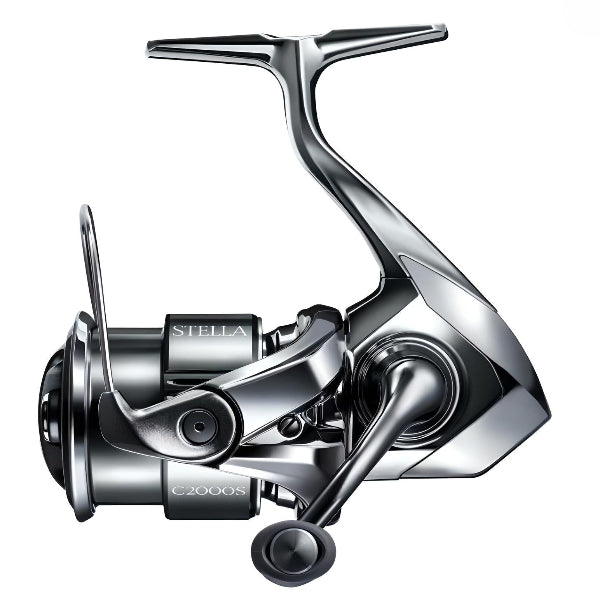
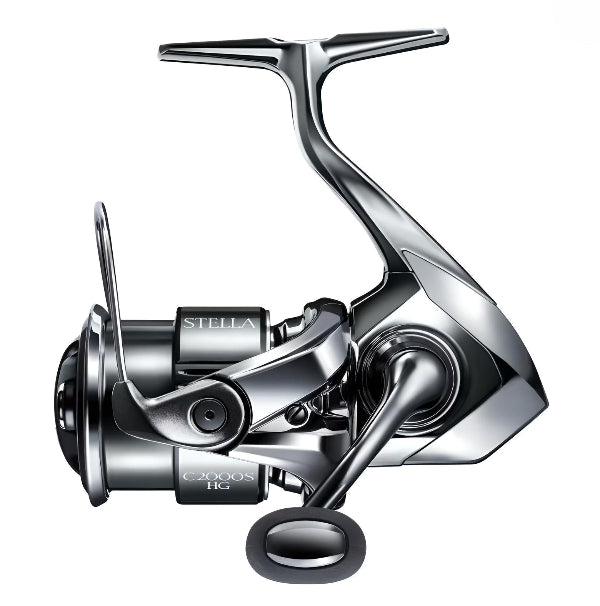
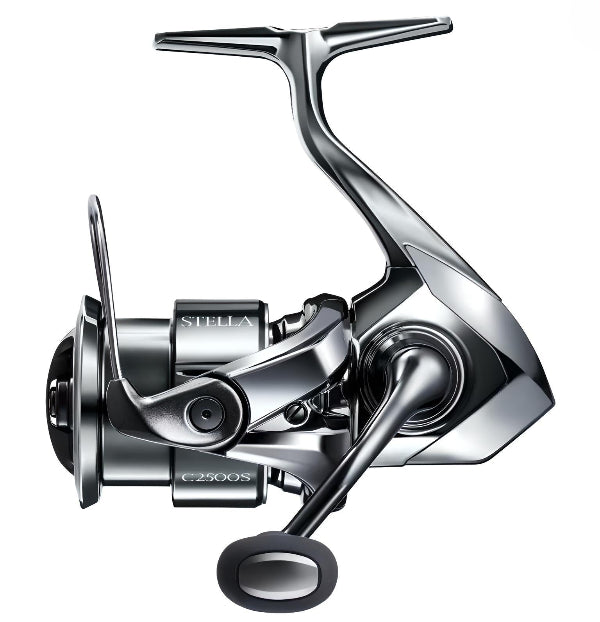
Gear choice: compare pickup, not suffixes
C2500S and C2500SXG use the same spool dimensions and capacity. The 5.1:1 S model retrieves 70 cm (27.6 in) per turn, while the 6.3:1 SXG retrieves 87 cm (34.3 in). The extra 17 cm (6.7 in) per crank can matter when recovering slack after a hop, sweep, or long cast. The lower-ratio model provides more mechanical advantage and moves the lure a shorter distance for each complete crank.
Neither is universally more sensitive. Resistance at the hand also depends on handle length, knob, lure pull, current, line angle, drivetrain condition, and rod position.

Starting points for complete bass setups
These are compatibility frameworks, not universal prescriptions. Use only combinations that fall within the exact rod and line manufacturers' ratings.
| Application | Stella range | Typical main-line range | Rod framework | Selection priority |
|---|---|---|---|---|
| Compact-water finesse | C2000–C2500 | 3–8 lb mono/fluoro or 6–12 lb braid | 1.93–2.13 m (6 ft 4 in–7 ft), L–ML | Low line volume and balanced tip control |
| Distance finesse / open water | C2500–C3000 | 8–20 lb braid with 6–12 lb leader | 2.08–2.29 m (6 ft 10 in–7 ft 6 in), ML–M | Capacity, casting system, and slack recovery |
| Moving baits / fast pickup | C2500SXG–C3000XG | 10–20 lb braid or rod-rated mono/fluoro | 2.03–2.29 m (6 ft 8 in–7 ft 6 in), ML–M | Pickup per turn and lure resistance |
| Specialized heavy spinning | 3000–4000 | 20–40 lb braid with matched leader | 2.13–2.44 m (7–8 ft), M–H | Rod lure rating, hook strength, and load path |
Complete metric specifications for relevant models
Braid capacities are converted to approximate strength in lb-m. Rated breaking strain and actual diameter vary among braid products.
| Model | Weight | Gear ratio | Max drag | Braid equivalent | Pickup / turn | Handle | Spool dia. / stroke |
|---|---|---|---|---|---|---|---|
| C2000S | 170 g | 5.1:1 | 3 kg | 12 lb / 150 m; 16 lb / 110 m; 20 lb / 80 m | 69 cm | 40 mm | 43 / 13.5 mm |
| C2000SHG | 170 g | 6.0:1 | 3 kg | 12 lb / 150 m; 16 lb / 110 m; 20 lb / 80 m | 81 cm | 45 mm | 43 / 13.5 mm |
| C2500S | 175 g | 5.1:1 | 3 kg | 12 lb / 200 m; 16 lb / 150 m; 20 lb / 120 m | 70 cm | 45 mm | 44 / 13.5 mm |
| C2500SXG | 175 g | 6.3:1 | 3 kg | 12 lb / 200 m; 16 lb / 150 m; 20 lb / 120 m | 87 cm | 45 mm | 44 / 13.5 mm |
| 2500S | 205 g | 5.1:1 | 4 kg | 12 lb / 200 m; 16 lb / 150 m; 20 lb / 120 m | 75 cm | 50 mm | 47 / 17 mm |
| 2500SHG | 205 g | 5.8:1 | 4 kg | 12 lb / 200 m; 16 lb / 150 m; 20 lb / 120 m | 86 cm | 55 mm | 47 / 17 mm |
| C3000SDH | 220 g | 5.1:1 | 9 kg | 12 lb / 200 m; 16 lb / 150 m; 20 lb / 120 m | 75 cm | 45 mm | 47 / 17 mm |
| C3000SDHHG | 220 g | 5.8:1 | 9 kg | 12 lb / 200 m; 16 lb / 150 m; 20 lb / 120 m | 86 cm | 45 mm | 47 / 17 mm |
| C3000MHG | 210 g | 5.8:1 | 9 kg | 20 lb / 190 m; 24 lb / 150 m; 30 lb / 120 m | 86 cm | 55 mm | 47 / 17 mm |
| C3000XG | 210 g | 6.4:1 | 9 kg | 20 lb / 400 m; 30 lb / 270 m; 40 lb / 200 m | 94 cm | 55 mm | 47 / 17 mm |
| 3000MHG | 235 g | 5.7:1 | 9 kg | 20 lb / 190 m; 24 lb / 150 m; 30 lb / 120 m | 84 cm | 55 mm | 47 / 17 mm |
| 4000XG | 260 g | 6.2:1 | 11 kg | 20 lb / 490 m; 30 lb / 320 m; 40 lb / 240 m | 101 cm | 57 mm | 52 / 19 mm |
Specifications in Pounds, Yards & Inches
Capacity lengths are rounded to the nearest yard. Other values are converted from Shimano's metric specifications.
| Model | Weight | Gear ratio | Max drag | Braid equivalent | Pickup / turn | Handle | Spool dia. / stroke |
|---|---|---|---|---|---|---|---|
| C2000S | 6.0 oz | 5.1:1 | 6.6 lb | 12 lb / 164 yd; 16 lb / 120 yd; 20 lb / 87 yd | 27.2 in | 1.57 in | 1.69 / 0.53 in |
| C2000SHG | 6.0 oz | 6.0:1 | 6.6 lb | 12 lb / 164 yd; 16 lb / 120 yd; 20 lb / 87 yd | 31.9 in | 1.77 in | 1.69 / 0.53 in |
| C2500S | 6.2 oz | 5.1:1 | 6.6 lb | 12 lb / 219 yd; 16 lb / 164 yd; 20 lb / 131 yd | 27.6 in | 1.77 in | 1.73 / 0.53 in |
| C2500SXG | 6.2 oz | 6.3:1 | 6.6 lb | 12 lb / 219 yd; 16 lb / 164 yd; 20 lb / 131 yd | 34.3 in | 1.77 in | 1.73 / 0.53 in |
| 2500S | 7.2 oz | 5.1:1 | 8.8 lb | 12 lb / 219 yd; 16 lb / 164 yd; 20 lb / 131 yd | 29.5 in | 1.97 in | 1.85 / 0.67 in |
| 2500SHG | 7.2 oz | 5.8:1 | 8.8 lb | 12 lb / 219 yd; 16 lb / 164 yd; 20 lb / 131 yd | 33.9 in | 2.17 in | 1.85 / 0.67 in |
| C3000SDH | 7.8 oz | 5.1:1 | 19.8 lb | 12 lb / 219 yd; 16 lb / 164 yd; 20 lb / 131 yd | 29.5 in | 1.77 in | 1.85 / 0.67 in |
| C3000SDHHG | 7.8 oz | 5.8:1 | 19.8 lb | 12 lb / 219 yd; 16 lb / 164 yd; 20 lb / 131 yd | 33.9 in | 1.77 in | 1.85 / 0.67 in |
| C3000MHG | 7.4 oz | 5.8:1 | 19.8 lb | 20 lb / 208 yd; 24 lb / 164 yd; 30 lb / 131 yd | 33.9 in | 2.17 in | 1.85 / 0.67 in |
| C3000XG | 7.4 oz | 6.4:1 | 19.8 lb | 20 lb / 437 yd; 30 lb / 295 yd; 40 lb / 219 yd | 37.0 in | 2.17 in | 1.85 / 0.67 in |
| 3000MHG | 8.3 oz | 5.7:1 | 19.8 lb | 20 lb / 208 yd; 24 lb / 164 yd; 30 lb / 131 yd | 33.1 in | 2.17 in | 1.85 / 0.67 in |
| 4000XG | 9.2 oz | 6.2:1 | 24.3 lb | 20 lb / 536 yd; 30 lb / 350 yd; 40 lb / 262 yd | 39.8 in | 2.24 in | 2.05 / 0.75 in |
When a Stella is the wrong size—or the wrong tool
- A 4000 model adds capacity and mass that many finesse systems do not require.
- A compact shallow spool may lack reserve for a long-range or deep presentation.
- A high-ratio reel may create more cranking resistance with a high-drag lure.
- Heavy cover work may require a baitcasting system for line control and rod availability; reel rigidity alone does not make a spinning setup suitable.
- Water-resistant construction is not waterproof. Do not submerge the reel, and follow Shimano's cleaning, lubrication, inspection, and service instructions.
Bottom line
For bass fishing, Stella should be selected like any precision component: from the complete system. C2000 and C2500 cover compact low-volume setups; full-size 2500 and C3000 add body, drag range, or capacity; 3000 and 4000 serve specialized heavier spinning. After capacity is correct, choose pickup and handle configuration for the presentation. Prestige, maximum drag, and reel size are not substitutes for compatibility.