Gracias por comprar siempre en JDMREELHUB.com. No procesaremos envíos del 28 de diciembre al 4 de enero. Se pueden seguir realizando pedidos durante este período, pero los envíos se reanudarán el 5 de enero. Gracias por su comprensión.
Precio de venta$381.15 USDPrecio habitual$412.65 USD
Disponible
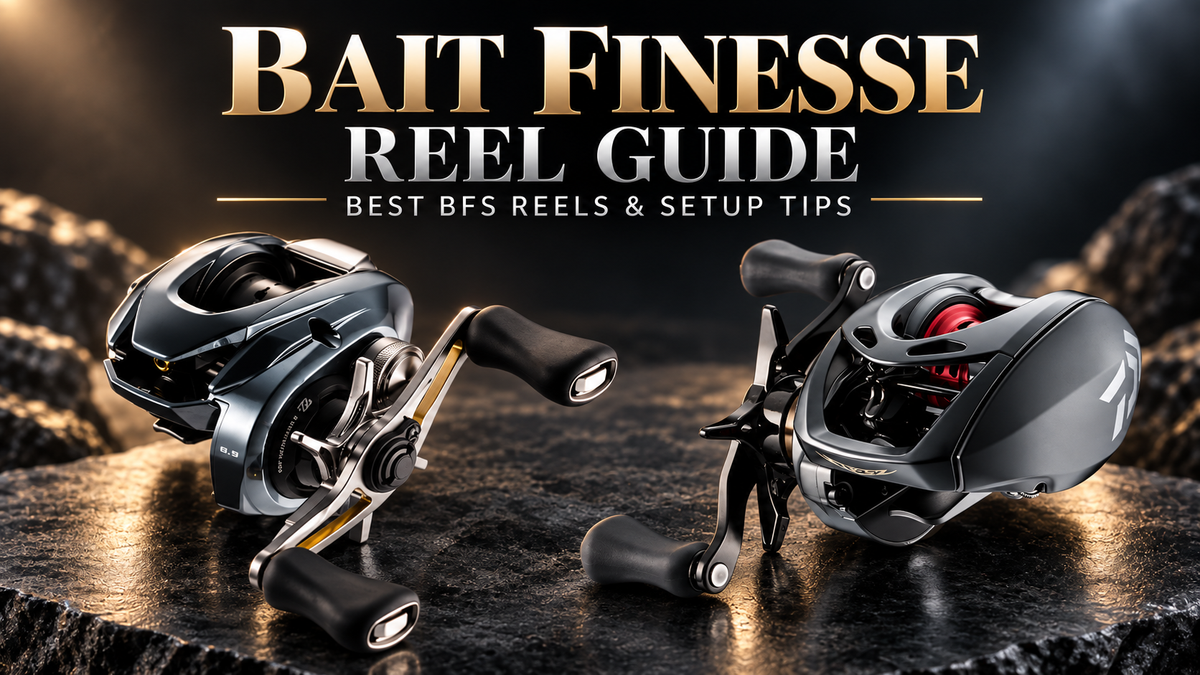
Bait finesse reels are baitcasters engineered to start a light spool with very little lure momentum. Their shallow, low-inertia spools and finely adjustable magnetic brakes make it possible to present lightweight lures with the direct line control and compact handling of a baitcasting setup.
This guide explains how to select and set up a reel, compares the 13 featured models.
What Makes a Bait Finesse Reel Different?
A conventional baitcaster often needs more lure mass to accelerate its spool cleanly. A bait finesse spool is smaller, shallower, and lighter, so less energy is required to begin rotation. Most dedicated designs use an externally adjustable magnetic brake because braking force can be applied without mounting a heavy centrifugal assembly on the spool.
The category is useful beyond bass fishing. Native trout, light rockfish, horse mackerel, black sea bream, and other light-line applications can benefit when the reel is approved for the relevant environment. Saltwater compatibility must be confirmed for each model; freshwater-only reels should not be treated as interchangeable with saltwater-rated designs.
Where bait finesse helps
Low lure mass: shallow spools respond to gentle casting inputs and reduce the force needed to start the cast.
Accurate placement: the thumb can control spool speed throughout the cast and soften the lure’s entry.
Direct line path: line leaves the spool without the twist introduced by a spinning reel’s rotor.
Cover-oriented line choices: some applications can combine small lures with stronger line than a comparable spinning presentation.
Where it is less suitable
Shallow spools carry limited line, and adding unnecessary line mass increases rotational inertia. Dedicated finesse spools are also not intended to absorb the acceleration loads of substantially heavier lures. The usable lure range depends on the reel, rod, line, lure aerodynamics, and the caster; the manufacturer’s limits take priority over broad category rules.
How to Choose a Bait Finesse Reel
Spool diameter and width
Spool diameters in this group run approximately 28–33 mm (1.10–1.30 in). A smaller diameter can reduce inertia and improve response with very light lures, but it also turns faster during the cast and changes line pickup as the spool empties. A 30–32 mm (1.18–1.26 in) platform generally offers more line reserve and a broader working range, while 28–29 mm (1.10–1.14 in) designs concentrate more heavily on finesse response.
Brake architecture
Daiwa’s AIR and BF platforms use magnetic systems such as Air Brake, SS Magforce, or Magforce with a moving induct rotor. Shimano’s FTB system locates the magnetic brake hardware away from the spool, allowing the spool itself to remain light. Abu Garcia and Tailwalk use their own magnetic layouts. These systems should be compared by adjustment range and intended line type rather than by brand name alone.
Gear ratio and actual pickup
Ratios around 7:1 to 9:1 are common because a small spool retrieves less line per revolution than a large spool at the same ratio. Higher gearing can recover slack quickly after pitching or working cover. A lower ratio can provide finer retrieve control. Actual pickup per turn—not ratio alone—is the most useful speed measurement.
Reel mass, rod balance, and handle side
Low reel mass can make repeated short casts feel responsive, but the lightest reel is not automatically the best-balanced reel on every rod. Handle side is equally personal: many anglers cast and work the rod with their dominant hand and retrieve with the other, while moving-bait techniques may favor the opposite arrangement.
Daiwa Bait Finesse Models
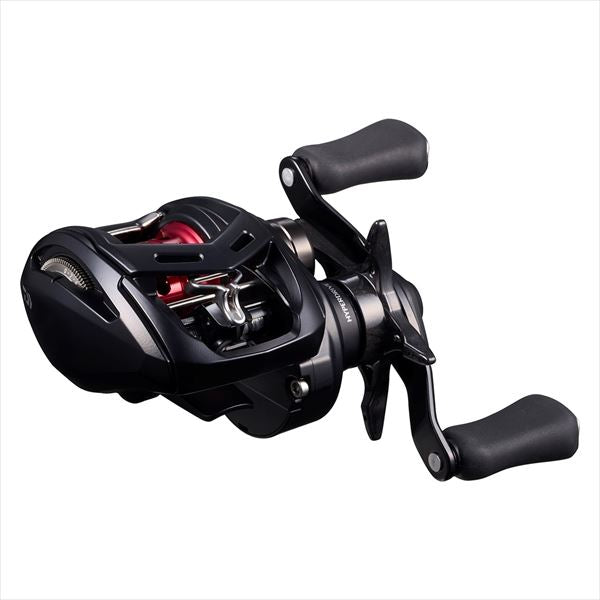
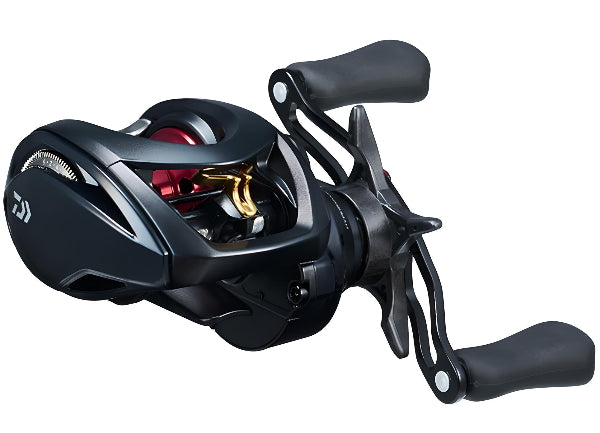
Alphas BF TW
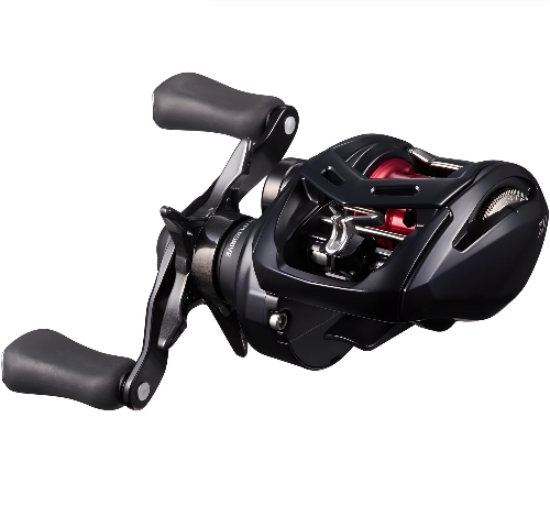
The current Alphas BF TW uses a 30 mm × 21 mm (1.18 in × 0.83 in) G1 duralumin spool, T-Wing System, Magforce braking, and HYPERDRIVE DESIGN. The source highlights the 8.5:1 version; a 6.3:1 option broadens the platform for anglers who prefer slower pickup.
Daiwa Alphas BF TW.
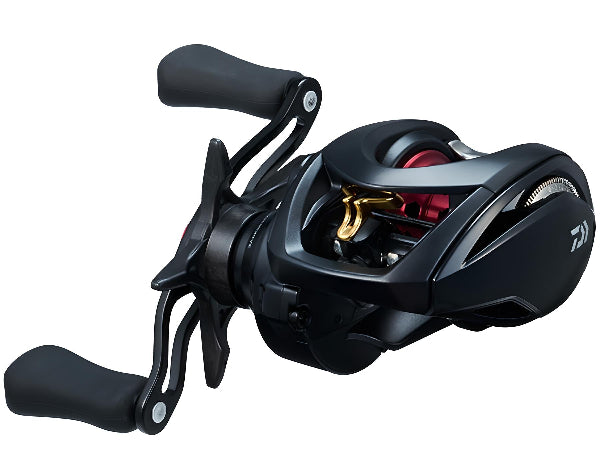
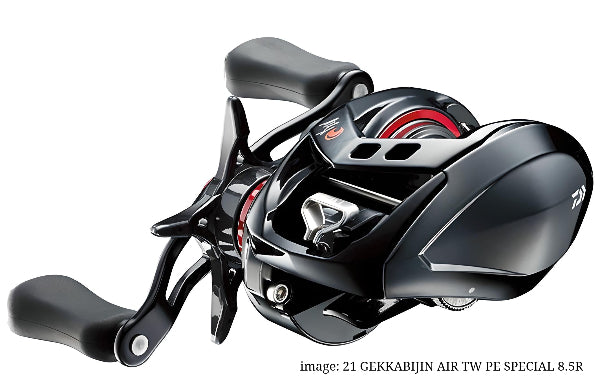
Gekkabijin AIR TW PE Special
This salt-oriented model is tuned specifically for braided line and uses a 28 mm (1.10 in) spool. The source model carries approximately 12 lb × 50 m and uses 8.5:1 gearing. Its line restriction matters: a PE-specific spool should not be loaded with nylon or fluorocarbon unless Daiwa explicitly approves it.
Daiwa Gekkabijin AIR TW PE Special.
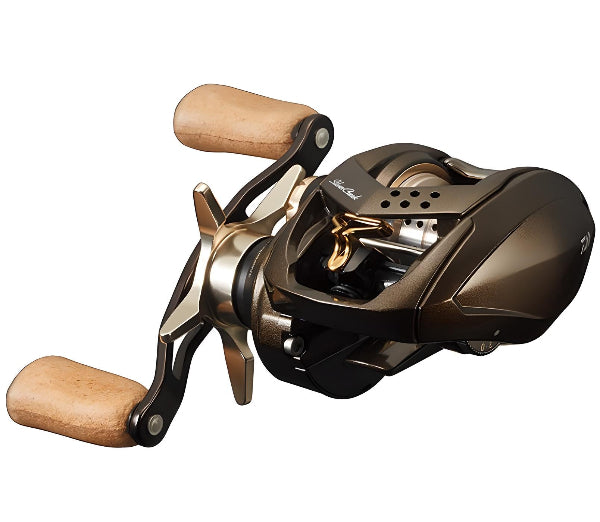
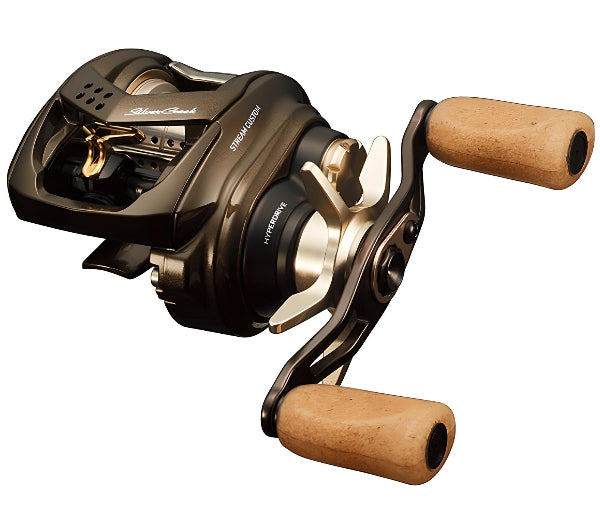
Silver Creek AIR TW Stream Custom
The Stream Custom combines a 28 mm × 21 mm (1.10 in × 0.83 in) spool with braking intended for compact, low-trajectory casts used in confined trout water. Its approximately 12 lb or 16 lb × 40 m capacity is deliberately shallow, limiting rotating line mass.
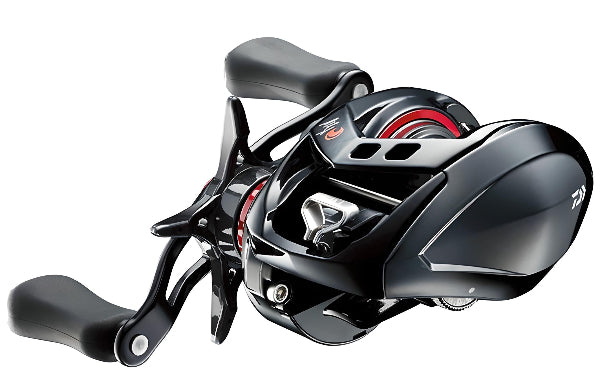
SS AIR TW
SS AIR TW uses SS Magforce, T-Wing System, and HYPERDRIVE DESIGN in a 145 g (5.1 oz) platform. Its shallow 28 mm × 21 mm (1.10 in × 0.83 in) spool supports short, controlled acceleration rather than long-distance line storage.
Daiwa SS AIR TW.
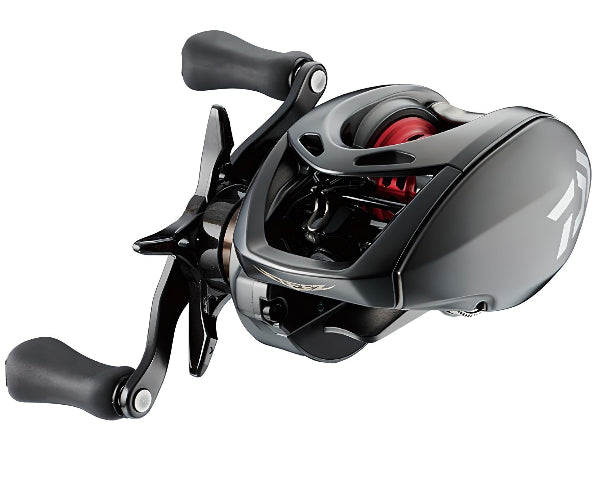
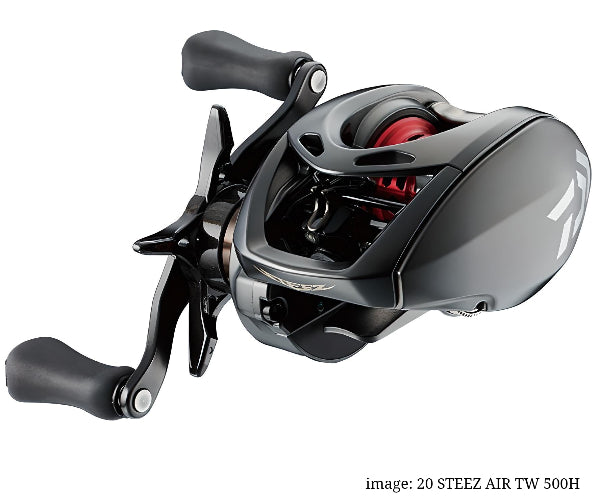
Steez AIR TW
Steez AIR TW is a freshwater-focused magnesium-frame platform with a 28 mm (1.10 in) spool. The 500H/HL models use 6.8:1 gearing, while faster variants are available. At 135 g (4.8 oz), it places minimal mass above the reel seat, though rod balance remains the deciding factor.
Precio de venta$283.50 USDPrecio habitual$306.60 USD
Disponible
Shimano Bait Finesse Models
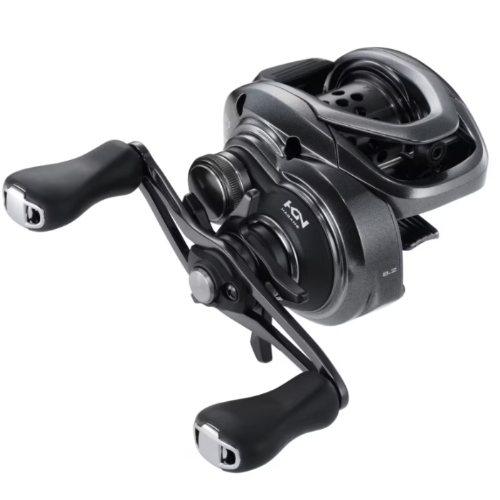
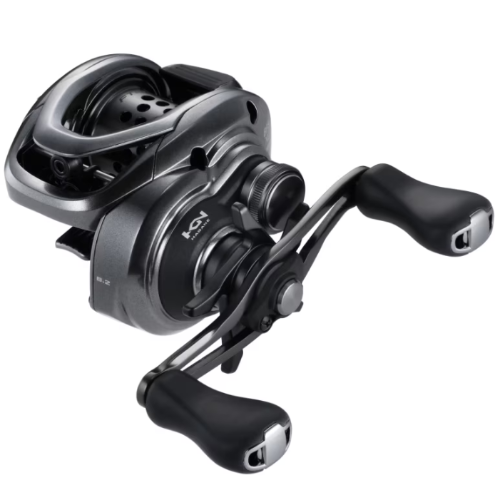
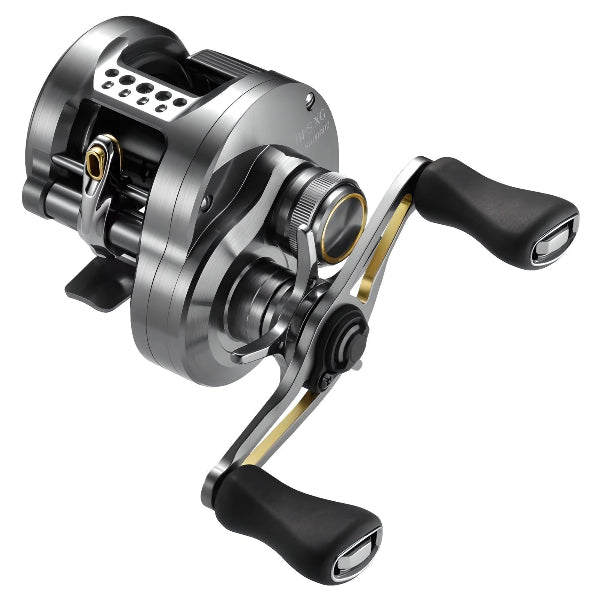
SLX BFS
The current XG version combines an aluminum frame, 32 mm × 22 mm (1.26 in × 0.87 in) shallow spool, FTB magnetic braking, and 8.2:1 gearing. Its wider, larger-diameter spool makes it the least specialized spool geometry among the three Shimano models here and gives it a practical role across bass, trout, and compatible light-salt applications.
Shimano SLX BFS XG.
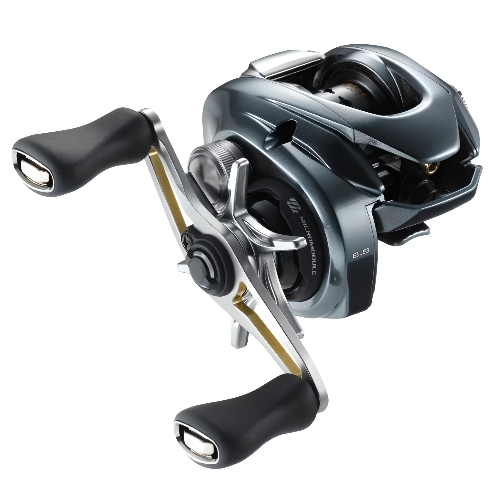
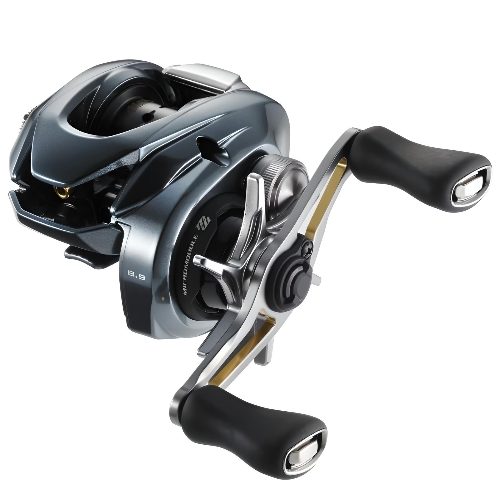
Aldebaran BFS
Aldebaran BFS moves the brake unit off the MGL Spool III through FTB, reducing rotating hardware on the spool. The XG model uses a 29 mm × 19 mm (1.14 in × 0.75 in) spool, 8.9:1 gearing, MicroModule Gear, and a 130 g (4.6 oz) magnesium-based body.
Shimano Aldebaran BFS XG.
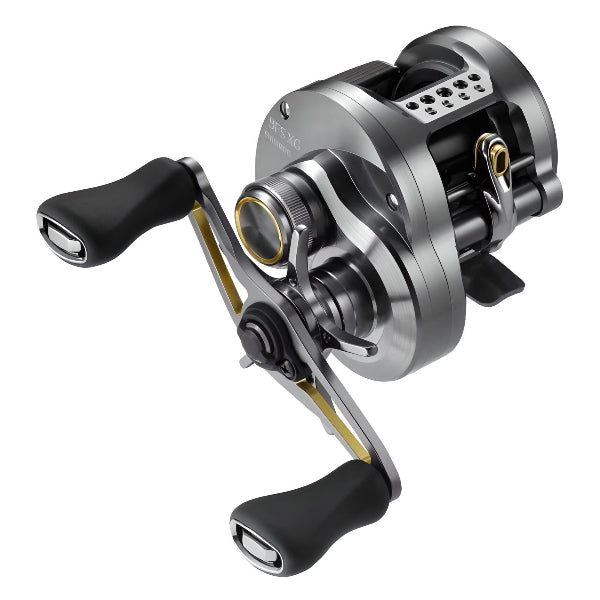
Calcutta Conquest BFS
This round-profile reel uses the same basic 29 mm × 19 mm (1.14 in × 0.75 in) finesse spool dimensions as Aldebaran BFS, together with FTB and MGL Spool III. The machined round body raises mass to 195 g (6.9 oz) but provides a different structural layout and retrieve character.
Shimano Calcutta Conquest BFS XG.
Abu Garcia and Tailwalk Models
Roxani BF8
Roxani BF8 uses an aluminum frame, 8.0:1 gearing, and a 33 mm (1.30 in) spool. Its deeper capacity—including approximately 8 lb × 100 m and 20 lb braid × 200 m—places it toward the higher-capacity end of this list.
Zenon LTX
Zenon LTX combines a 30 mm × 22 mm (1.18 in × 0.87 in) spool, 8.3:1 gearing, and 150 g (5.3 oz) mass. Carbon-fiber components reduce weight while the 5 kgf (11.0 lbf) drag rating exceeds that of several shallower freshwater-focused reels.
Revo Ultracast BF8 and Revo ALC-BF7
Both use approximately 8 lb × 50 m nylon capacity and 32 mm (1.26 in) spools. Ultracast BF8 pairs 8.0:1 gearing with a 175 g (6.2 oz) body; ALC-BF7 uses 7.1:1 gearing and weighs 141 g (5.0 oz). Their different ratios and masses create distinct setup priorities despite similar spool capacity.
Tailwalk Crosspeer BF 100XG-DH
Crosspeer BF combines 8.1:1 gearing, a 32 mm (1.26 in) spool, and an 8.4 g (0.30 oz) spool assembly including its bearing. Its published capacities cover 8 lb nylon × 50 m and braided-line options up to approximately 16 lb × 130 m.
Metric Specifications
Capacities are approximate. Braided-line strength equivalents vary by manufacturer and construction.
Model
Ratio
Mass
Max drag
Line capacity
Spool diameter × width
Alphas BF TW 8.5
8.5:1
165 g
3.5 kgf
6/8 lb × 45 m; 12 lb braid × 45 m
30 × 21 mm
Gekkabijin AIR TW PE Special
8.5:1
165 g
3.5 kgf
12 lb braid × 50 m
28 mm
Silver Creek AIR TW Stream Custom
8.5:1
170 g
3.5 kgf
12/16 lb braid × 40 m
28 × 21 mm
SS AIR TW
8.5:1
145 g
3.5 kgf
6/8 lb × 45 m; 16 lb braid × 50 m
28 × 21 mm
Steez AIR TW 500H
6.8:1
135 g
3.5 kgf
6/8 lb × 45 m
28 mm
SLX BFS XG
8.2:1
170 g
3.5 kgf
8 lb × 45 m
32 × 22 mm
Aldebaran BFS XG
8.9:1
130 g
3.5 kgf
6/8 lb × 45 m
29 × 19 mm
Calcutta Conquest BFS XG
8.9:1
195 g
3.5 kgf
6/8 lb × 45 m
29 × 19 mm
Roxani BF8
8.0:1
185 g
5.5 kgf
8 lb × 100 m; 20 lb braid × 200 m
33 mm
Zenon LTX
8.3:1
150 g
5 kgf
8 lb × 50 m
30 × 22 mm
Revo Ultracast BF8
8.0:1
175 g
7 kgf
8 lb × 50 m
32 mm
Revo ALC-BF7
7.1:1
141 g
7 kgf
8 lb × 50 m
32 mm
Crosspeer BF 100XG-DH
8.1:1
155 g
5 kgf
8 lb × 50 m; 16 lb × 130 m; 12 lb × 180 m
32 mm
Specifications in Pounds, Yards & Inches
Meter capacities are converted and rounded to the nearest yard. Braided-line strength equivalents remain approximate.
Model
Ratio
Mass
Max drag
Line capacity
Spool diameter × width
Alphas BF TW 8.5
8.5:1
5.8 oz
7.7 lbf
6/8 lb × 49 yd; 12 lb braid × 49 yd
1.18 × 0.83 in
Gekkabijin AIR TW PE Special
8.5:1
5.8 oz
7.7 lbf
12 lb braid × 55 yd
1.10 in
Silver Creek AIR TW Stream Custom
8.5:1
6.0 oz
7.7 lbf
12/16 lb braid × 44 yd
1.10 × 0.83 in
SS AIR TW
8.5:1
5.1 oz
7.7 lbf
6/8 lb × 49 yd; 16 lb braid × 55 yd
1.10 × 0.83 in
Steez AIR TW 500H
6.8:1
4.8 oz
7.7 lbf
6/8 lb × 49 yd
1.10 in
SLX BFS XG
8.2:1
6.0 oz
7.7 lbf
8 lb × 49 yd
1.26 × 0.87 in
Aldebaran BFS XG
8.9:1
4.6 oz
7.7 lbf
6/8 lb × 49 yd
1.14 × 0.75 in
Calcutta Conquest BFS XG
8.9:1
6.9 oz
7.7 lbf
6/8 lb × 49 yd
1.14 × 0.75 in
Roxani BF8
8.0:1
6.5 oz
12.1 lbf
8 lb × 109 yd; 20 lb braid × 219 yd
1.30 in
Zenon LTX
8.3:1
5.3 oz
11.0 lbf
8 lb × 55 yd
1.18 × 0.87 in
Revo Ultracast BF8
8.0:1
6.2 oz
15.4 lbf
8 lb × 55 yd
1.26 in
Revo ALC-BF7
7.1:1
5.0 oz
15.4 lbf
8 lb × 55 yd
1.26 in
Crosspeer BF 100XG-DH
8.1:1
5.5 oz
11.0 lbf
8 lb × 55 yd; 16 lb × 142 yd; 12 lb × 197 yd
1.26 in
How to Cast a Bait Finesse Reel
Begin with more brake than you expect to need. Confirm the spool-tension procedure in the reel manual, then set the external magnetic brake high enough to prevent uncontrolled overrun.
Use a smooth sidearm or pitching motion. Sudden acceleration spikes spool speed. Let the lure load the rod blank, then allow the rod’s recovery to launch it.
Reduce braking gradually. Make one adjustment at a time until the spool follows the lure without requiring heavy mid-cast thumb pressure.
Thumb the spool before touchdown. Stopping the spool just before the lure lands limits overrun and can reduce entry noise.
Line Setup and Maintenance
Fill only to the level recommended by the manufacturer. Excess line adds rotating mass and can reduce the response that defines a finesse spool. When using braided line on a compatible reel, secure it with the approved backing or spool connection so it cannot slip around the arbor.
After approved saltwater use, tighten the drag, rinse the exterior gently with cool fresh water, and dry the reel in shade. Avoid high-pressure water and do not flood lubricated areas. Apply oil only at the points and intervals specified in the manufacturer’s instructions. Deep disassembly is best left to an authorized service provider unless the reel documentation explicitly describes the procedure.
Bottom Line
Select the reel around the actual lure range, line type, water environment, and rod rather than a single specification. The smallest spool favors the lowest-inertia setup; a 30–32 mm platform generally adds versatility; salt-focused reels require explicit material and sealing compatibility; and brake adjustment matters as much as hardware. A correctly balanced combination with conservative initial braking will usually be easier to learn than an extremely light setup adjusted too aggressively.