

A reel's gear ratio tells you how many times its output mechanism turns for one complete turn of the handle. A 6.2:1 spinning reel turns the rotor approximately 6.2 times; an 8.1:1 baitcasting reel turns the spool approximately 8.1 times. That number is important, but it does not tell the whole story.
This guide reconstructs the central ideas from a Japanese gear-ratio primer and adds manufacturer-verified examples. It separates mechanical facts from preference-based claims so you can compare reels without relying on labels such as “high gear” alone.

What the ratio means on each reel type
Spinning reels
On a spinning reel, the spool does not rotate during a normal retrieve. The handle drives the rotor and bail around the spool while the oscillation system moves the spool forward and backward. A ratio of 5.2:1 therefore means roughly 5.2 rotor revolutions per handle turn.
Because spool diameter, spool shape, oscillation, and rotor geometry differ among sizes and models, two spinning reels with the same ratio can retrieve different amounts of line. Use the manufacturer's published retrieve-per-crank figure when comparing actual pickup.
Baitcasting reels
On a baitcaster, the gear ratio describes spool revolutions per handle turn. Approximate pickup can be understood with a simple relationship:
Pickup ≈ gear ratio × π × effective spool diameter
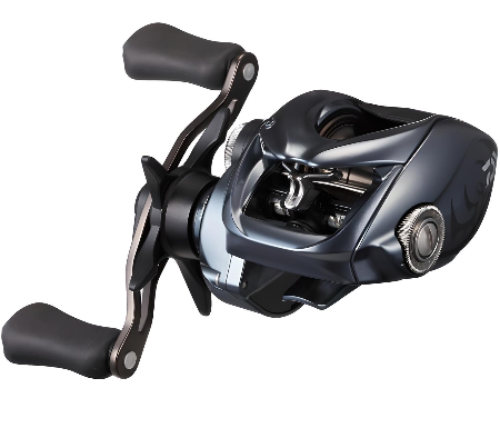
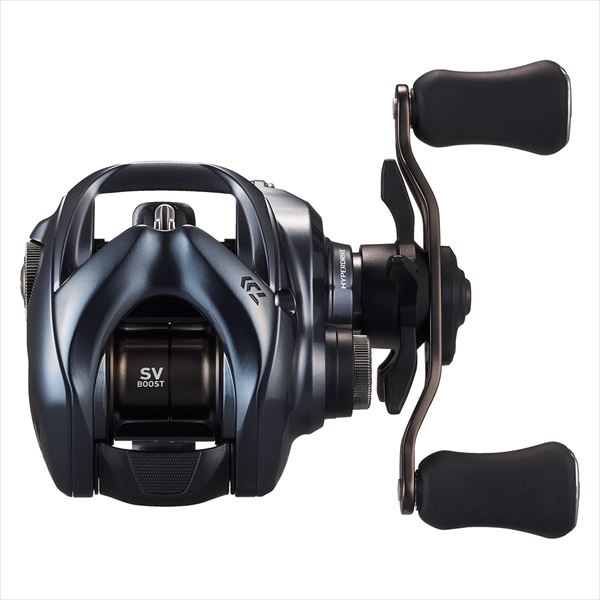
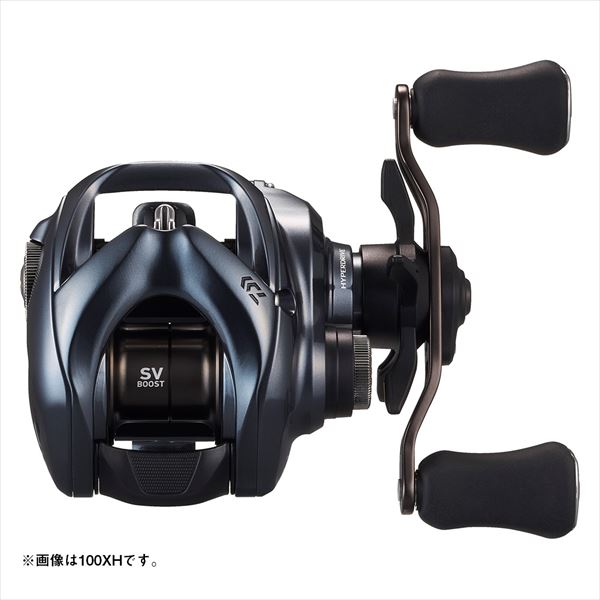
With a full 32 mm (1.26 in) spool, a 6.3:1 ratio produces an approximate pickup of 633 mm (24.9 in), which closely matches Daiwa's published 63 cm (24.8 in) figure for the Tatula SV TW 100. An 8.1:1 ratio on the same spool produces approximately 814 mm (32.0 in), matching the published 81 cm (31.9 in) figure for the 100XH.
The effective diameter shrinks as line leaves a baitcasting spool. If that diameter falls from 32 mm to 26 mm (1.02 in), an 8.1:1 reel's theoretical pickup falls from about 81 cm to 66 cm (32.0 to 26.0 in) per turn. Published pickup is therefore a comparison point, not a constant throughout every cast.
High ratio: where speed helps
A higher ratio retrieves more line with each handle turn when the rest of the reel geometry is comparable. That can help with:
- Slack management: quickly reconnecting with a lure after a cast, hop, sweep, or change in current.
- Fast lure recovery: bringing a lure back for the next cast after it leaves the productive zone.
- Maintaining tension: taking up line when a fish moves toward the angler or changes direction.
- High-speed presentations: achieving more lure speed without an extreme handle cadence.
The tradeoff is mechanical advantage. With otherwise comparable gearing and handle length, a higher ratio requires more handle force to produce the same torque at the spool or rotor. High-resistance lures can therefore feel heavier to crank. Reel rigidity, gear dimensions, bearings, lubrication, handle length, knob shape, and the load itself all affect the result, so ratio alone cannot predict “power” or smoothness.

Lower ratio: where control and leverage help
A lower ratio retrieves less line per handle turn on otherwise comparable reels. Its greater mechanical advantage can reduce the hand force needed under sustained load and makes it easier to use a naturally slow, repeatable cadence. Common advantages include:
- High-resistance retrieves: deep-diving plugs, large blades, heavy current, or other loads that demand sustained torque.
- Fine low-speed control: covering a short distance with several handle turns rather than making tiny hand movements.
- Reduced effort under load: useful when resistance is continuous, although handle length and reel design remain important.
A lower ratio does not prevent fast retrieves, and a higher ratio can always be turned slowly. The difference is how much line each revolution moves and how much hand force is required for a given reel-side load. Low gearing can also require more handle turns to recover a lure over long distances or collect sudden slack.
Shop the Gear
Real-world comparison: same platform, different gearing
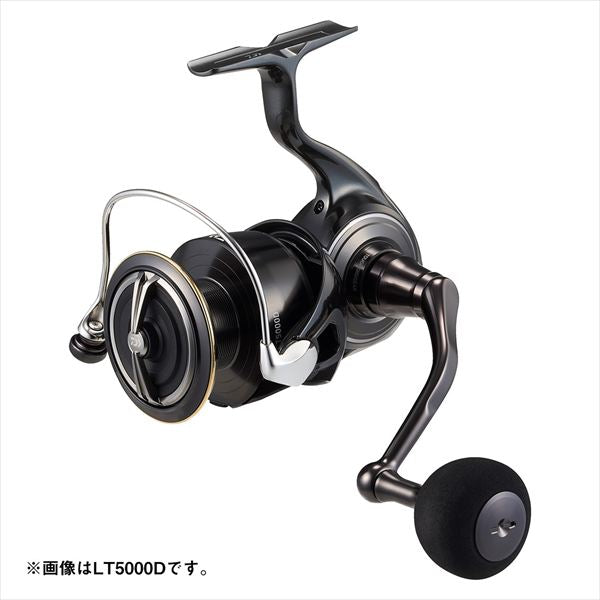
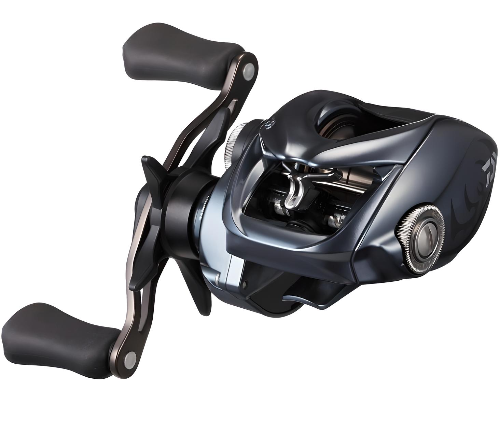
Comparing ratios within the same reel family removes many variables. The two Certate HD models below share the LT4000-C size and a 60 mm (2.36 in) handle, but the 6.2:1 CXH retrieves 17 cm (6.7 in) more line per turn than the 5.2:1 C. The Tatula models share a 32 mm (1.26 in) spool and 85 mm (3.35 in) handle, making their pickup differences a direct illustration of gearing.
Metric specifications
| Model | Reel type | Gear ratio | Pickup / turn | Handle | Spool diameter |
|---|---|---|---|---|---|
| Certate HD LT4000-C | Spinning | 5.2:1 | 82 cm | 60 mm | — |
| Certate HD LT4000-CXH | Spinning | 6.2:1 | 99 cm | 60 mm | — |
| Tatula SV TW 100 | Baitcasting | 6.3:1 | 63 cm | 85 mm | 32 mm |
| Tatula SV TW 100H | Baitcasting | 7.1:1 | 71 cm | 85 mm | 32 mm |
| Tatula SV TW 100XH | Baitcasting | 8.1:1 | 81 cm | 85 mm | 32 mm |
Specifications in Pounds, Yards & Inches
| Model | Reel type | Gear ratio | Pickup / turn | Handle | Spool diameter |
|---|---|---|---|---|---|
| Certate HD LT4000-C | Spinning | 5.2:1 | 32.3 in | 2.36 in | — |
| Certate HD LT4000-CXH | Spinning | 6.2:1 | 39.0 in | 2.36 in | — |
| Tatula SV TW 100 | Baitcasting | 6.3:1 | 24.8 in | 3.35 in | 1.26 in |
| Tatula SV TW 100H | Baitcasting | 7.1:1 | 28.0 in | 3.35 in | 1.26 in |
| Tatula SV TW 100XH | Baitcasting | 8.1:1 | 31.9 in | 3.35 in | 1.26 in |

Do not treat ratio labels as universal standards
Terms such as power gear, normal gear, high gear, extra high, HG, and XH are useful within a manufacturer's lineup, but there is no universal boundary shared by every brand, reel type, or size. A 6.2:1 spinning reel and a 6.3:1 baitcaster can have very different pickup because their mechanisms and dimensions differ. Compare the following in order:
- Line pickup per handle turn for speed and slack recovery.
- Gear ratio for the internal mechanical relationship.
- Spool diameter and capacity, especially on baitcasters where pickup changes as the spool empties.
- Handle length and knob because leverage and grip affect perceived cranking effort.
- Intended load, including lure resistance, current, depth, and the amount of line typically out.
A practical selection method
Start with the task that matters most. Choose greater pickup when rapid slack collection, fast lure recovery, or high-speed control is the priority. Choose lower pickup when sustained resistance and precise slow-speed cadence dominate. If the application is mixed, a middle ratio avoids the extremes.
Then compare models using the published pickup figure, not only the suffix. For baitcasters, remember that the value decreases as effective spool diameter falls. Finally, consider handle leverage and the reel's intended use. The best ratio is not a universal number; it is the gearing that produces the required pickup and manageable effort under the loads you actually fish.
Bottom line
Gear ratio tells you how many output revolutions occur per handle turn. Line pickup tells you how much line is actually recovered. Higher ratios favor rapid pickup but reduce mechanical advantage; lower ratios favor leverage and low-speed control but require more handle turns over distance. Read both specifications together, and account for spool diameter and handle length before deciding which reel is faster or easier to crank.