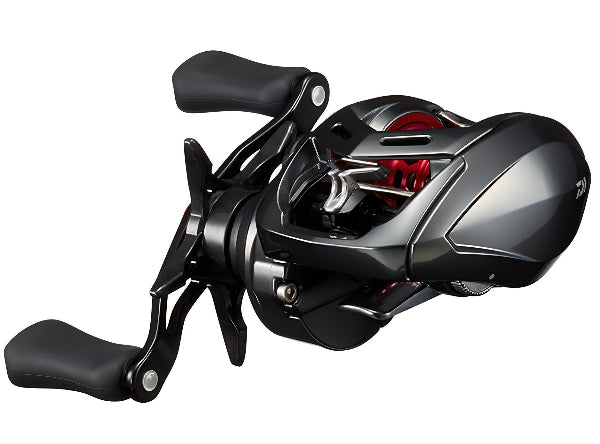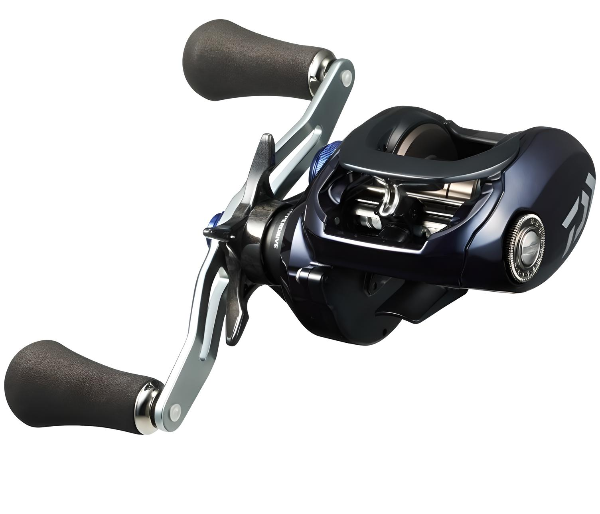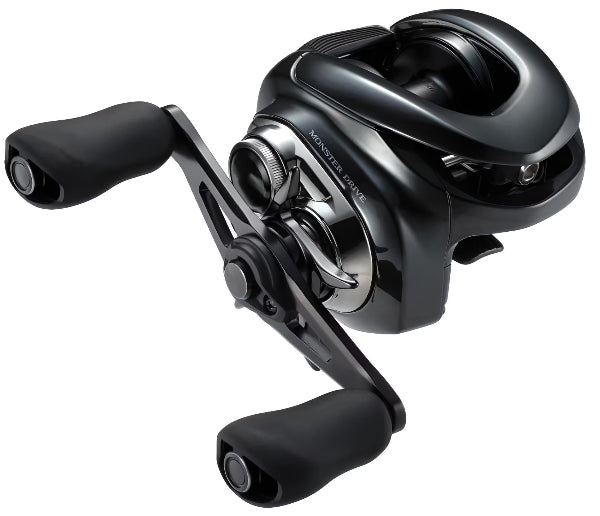

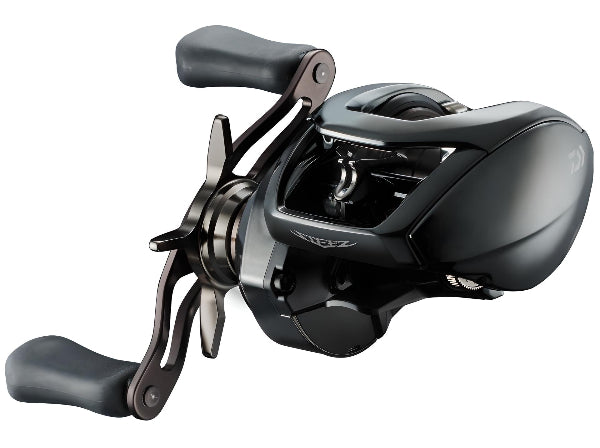
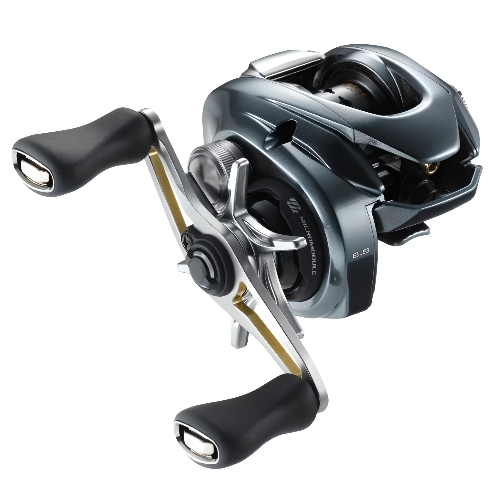
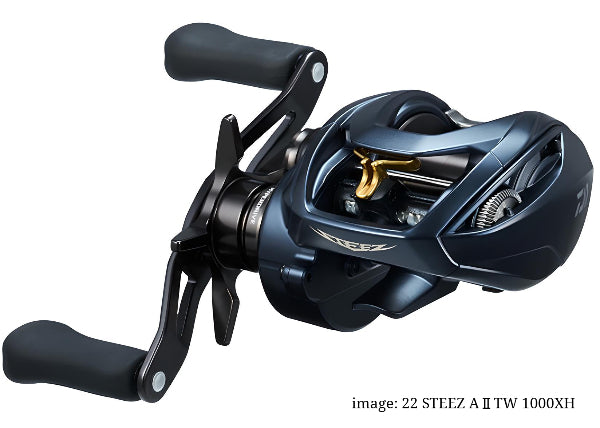
Baitcasting tackle gives seabass anglers direct spool control, quick engagement, and a practical way to handle thicker line and bulky lures. It also introduces backlash risk—especially with braided line—and no single reel can be optimized for tiny bait imitations, general-purpose plugs, long-range casting, and large swimbaits at the same time.
This guide restructures a Japanese list of 12 reels into four functional groups. Personal casting-distance claims, promotional language, shopping links, and unsupported rankings have been removed. The model list and spool information are retained as a starting point, while current manufacturer materials are used where available.

Why use a baitcaster for seabass?
A baitcaster lets the angler regulate line release with the thumb, which is useful when placing a lure near bridge pilings, walls, current seams, and other defined targets. The spool also provides a direct line path and immediate engagement after the clutch is closed. With appropriate line and setup, this can make repeated target casts and heavier-lure work efficient.
The principal tradeoff is spool control. If the spool rotates faster than the lure pulls line, loose coils build and a backlash follows. Braided line can make the resulting tangle difficult to clear, and a sudden stop may damage line or send a lure off course. Wind, lure profile, spool fill, brake setting, rod loading, and casting technique all affect that balance.
Three specifications that matter
Body and drivetrain support
Seabass reels are exposed to salt, repeated casting, and occasional high load. A rigid frame helps maintain gear alignment, but material alone does not determine durability. Handle length, gear support, pinion alignment, clutch design, sealing strategy, maintenance, and how the reel is used all matter. Confirm that the selected model is approved for saltwater use and follow its rinsing and service instructions.
Spool diameter and inertia
A smaller, lighter spool starts more easily with a light lure. A larger spool generally maintains a useful effective diameter as line leaves, and it retrieves more line per revolution at the same gear ratio. Brake design and spool width can change the result, so diameter should be treated as a strong orientation tool rather than a complete performance rating.
- 28–30 mm (1.10–1.18 in): finesse-oriented, usually chosen for roughly 2–5 g (0.07–0.18 oz) presentations and close target work.
- 32 mm (1.26 in): light-versatile territory, often used when roughly 4–15 g (0.14–0.53 oz) lures dominate.
- 33–34 mm (1.30–1.34 in): a broad general-purpose class for many 7–25 g (0.25–0.88 oz) seabass plugs.
- 36 mm (1.42 in): a bridge between general-purpose and long-range/heavier-lure setups.
- 37–38 mm (1.46–1.50 in): commonly selected when distance, line reserve, or lures from about 15 g (0.53 oz) into big-bait classes take priority.
These ranges are editorial orientation points, not manufacturer lure ratings. Rod loading, spool mass, line load, brake profile, and lure aerodynamics can shift the usable range substantially.
Line capacity
Line adds rotating mass. Filling a shallow spool with more braid than the fishing plan requires can reduce light-lure response, while too little reserve is unsafe for long casts or areas with strong current. Capacity also changes with actual line diameter, weave, coating, and winding tension. The reference fills in the tables below are converted from the source article into approximate pound-strength classes; they are not substitutes for the reel maker's capacity chart or the line maker's diameter data.
Accessible general-purpose options
1. Shimano 2024 SLX 70
The SLX 70 uses a 32 mm (1.26 in) MGL III spool and SVS Infinity centrifugal braking. That combination places it in the light-versatile group rather than true ultralight BFS territory. It is a logical starting point for anglers whose lure rotation centers on small-to-medium plugs and who prefer the progressive character of a centrifugal system.

2. Daiwa 2025 Tatula SV TW 100
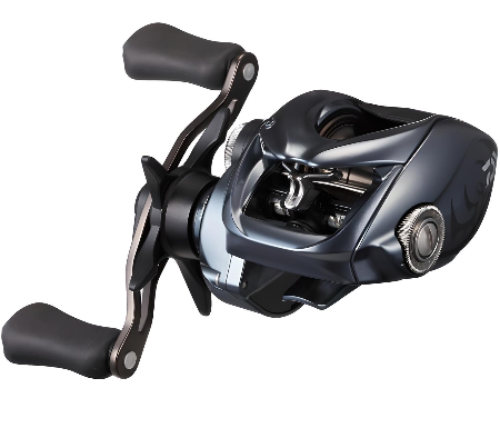
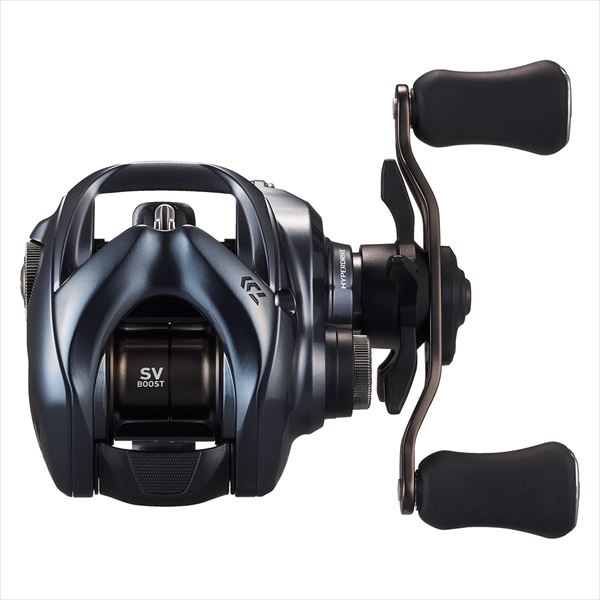
This Tatula combines a 32 mm (1.26 in) SV Boost spool with Daiwa's T-Wing line guide. Its shallow, light-versatile configuration is aimed at stable control across a useful lure range. The current official chart lists nylon and fluorocarbon capacities; anglers using braid should match actual diameter and fill level rather than treating a Japanese braid size as universally equivalent.

3. Daiwa 2024 Tatula TW 100
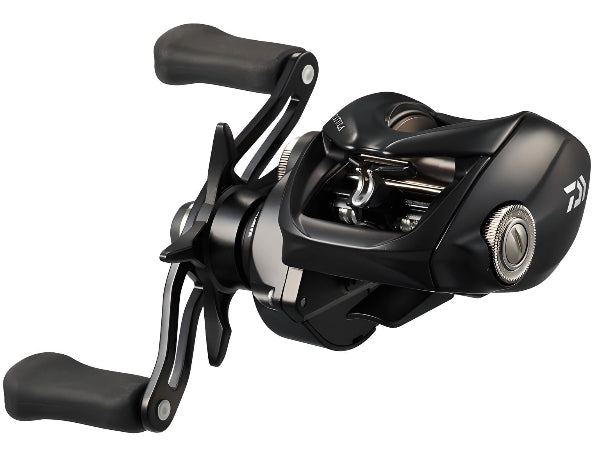
The 34 mm (1.34 in) spool and Magforce-Z braking move this model toward conventional versatility and line reserve. Compared with the shallower 32 mm SV version, it is better aligned with anglers who place less emphasis on the lightest plugs and more on general-purpose casting with midweight lures.
Light-versatile and shallow-spool choices
4. Daiwa 2024 Steez SV TW 100
The Steez SV TW 100 uses a 32 mm (1.26 in) SV Boost spool in a compact frame. Its technical role is light versatility: low spool inertia for smaller lures, with enough diameter to retain broader utility than a 28–30 mm BFS spool. It is best evaluated against the exact line load and lure profile you plan to use rather than extraordinary distance claims.

5. Daiwa Silver Wolf SV TW PE Special
Although designed for chinning, the original Silver Wolf's 34 mm (1.34 in) PE-focused SV Boost spool is relevant to light braided-line seabass presentations. The spool is deliberately shallow, so it should be chosen only when its line reserve fits the location and casting plan. Daiwa has since added a 30 mm (1.18 in) Silver Wolf CT model, but that newer reel is a different product and is not substituted into this source list.
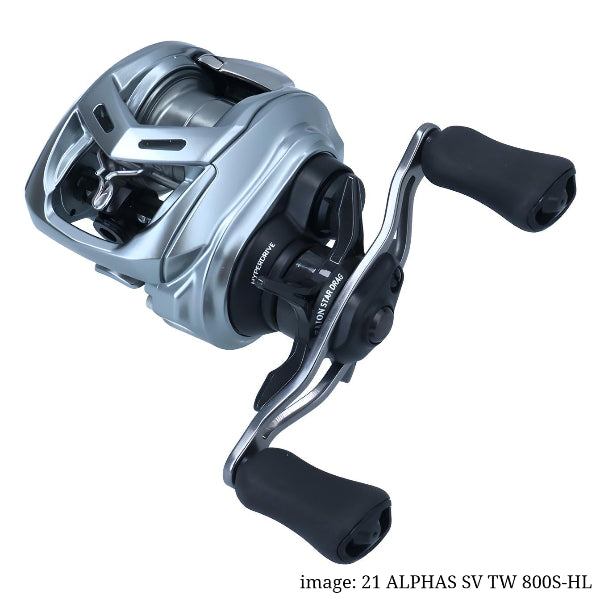
6. Daiwa Alphas SV TW 800S
The shallow-spool 800S version uses a 32 mm (1.26 in) SV spool. It occupies a similar light-versatile category but in a compact aluminum-frame platform. The shallow fill helps control rotating mass; it also means the angler must verify that a realistic casting reserve remains after removing any damaged line.
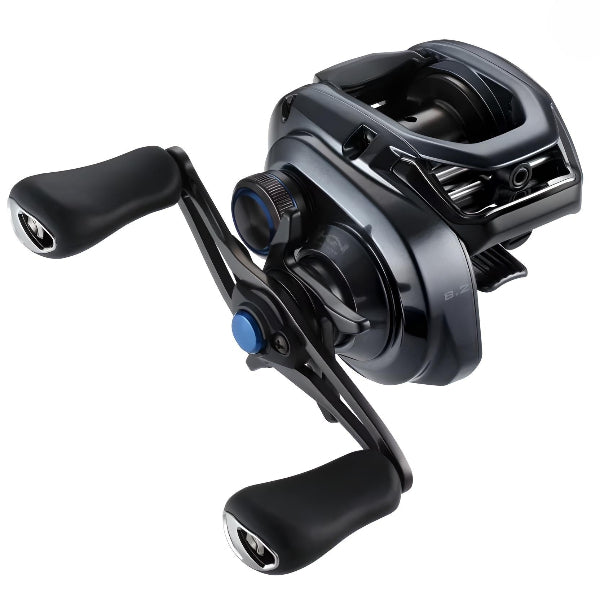
Shop the Gear
Finesse choices for micro-bait patterns
7. Shimano 2022 Aldebaran BFS
The Aldebaran BFS uses a 29 mm (1.14 in) MGL III spool and Shimano's FTB magnetic system, which places the brake magnets outside the spool to reduce rotating mass. It is the Shimano finesse specialist in this group. Its shallow capacity and small diameter favor close, precise work with very light lures; they are not intended to replace a larger-spool reel when long casts and reserve are priorities.

8. Daiwa 2020 Alphas Air TW
The 28 mm (1.10 in) Air spool is the smallest in this comparison. Low startup inertia makes it suited to micro plugs and finesse casting at short-to-medium range. Capacity is correspondingly limited, and its advantages diminish as lure mass, casting distance, and required line reserve increase.
Broader-range platforms
9. Daiwa Steez A II TW
The Steez A II TW combines a 34 mm (1.34 in) Mag-Z Boost spool with a rigid aluminum-frame platform. Its place in this list is conventional versatility: enough spool diameter and capacity for general seabass plugs, while retaining manageable response below the dedicated long-range 38 mm class.
10. Daiwa 2023 Saltist TW 150 PE Special
A 36 mm (1.42 in) Magforce-Z spool gives the Saltist 150 a distinct middle position. It carries more line per layer than the 32–34 mm group and is oriented toward saltwater use, yet it is less specialized than a 38 mm distance platform. It suits anglers whose lure rotation spans midweight plugs and occasional heavier offerings.

Distance and heavy-versatile choices
11. Daiwa IM Z TW 200-C
The IM Z TW 200-C uses a 38 mm (1.50 in) spool and electronically managed IM braking. Its large diameter and line capacity align it with open-water distance and heavier lure classes. The electronic system offers multiple brake profiles, but the physical match among rod, line load, and lure remains essential.
12. Shimano 2023 Antares DC MD
The Antares DC MD combines a 38 mm (1.50 in) MGL III spool with Shimano's 4×8 DC MD Tune braking. It belongs at the distance and big-lure end of the comparison. The deeper capacity and large spool are useful when heavier line and lure mass are part of the plan, but they are not optimized for the micro-bait role served by the Aldebaran BFS or Alphas Air TW.

Metric comparison
| Model | Spool | Brake | Source reference braid fill | Primary role |
|---|---|---|---|---|
| SLX 70 | 32 mm | SVS Infinity | Approx. 24 lb × 200 m | Light versatile |
| Tatula SV TW 100 | 32 mm | SV Boost | Approx. 30 lb × 150 m | Light versatile |
| Tatula TW 100 | 34 mm | Magforce-Z | Approx. 30 lb × 210 m | General purpose |
| Steez SV TW 100 | 32 mm | SV Boost | Approx. 30 lb × 120 m | Light versatile |
| Silver Wolf SV TW | 34 mm | SV Boost | Approx. 16 lb × 150 m | Shallow braided-line use |
| Alphas SV TW 800S | 32 mm | SV | Approx. 24 lb × 120 m | Shallow light versatile |
| Aldebaran BFS | 29 mm | FTB | Approx. 16 lb × 90 m | Finesse |
| Alphas Air TW | 28 mm | Air Brake | Approx. 16 lb × 90 m | Finesse |
| Steez A II TW | 34 mm | Mag-Z Boost | Approx. 40 lb × 150 m | General purpose |
| Saltist TW 150 | 36 mm | Magforce-Z | Approx. 40 lb × 200 m | Broad-range saltwater |
| IM Z TW 200-C | 38 mm | IM | Approx. 40 lb × 200 m | Distance and heavier lures |
| Antares DC MD | 38 mm | 4×8 DC MD Tune | Approx. 60 lb × 100 m | Distance and big lures |
Specifications in Pounds, Yards & Inches
| Model | Spool | Brake | Source reference braid fill | Primary role |
|---|---|---|---|---|
| SLX 70 | 1.26 in | SVS Infinity | Approx. 24 lb × 220 yd | Light versatile |
| Tatula SV TW 100 | 1.26 in | SV Boost | Approx. 30 lb × 165 yd | Light versatile |
| Tatula TW 100 | 1.34 in | Magforce-Z | Approx. 30 lb × 230 yd | General purpose |
| Steez SV TW 100 | 1.26 in | SV Boost | Approx. 30 lb × 130 yd | Light versatile |
| Silver Wolf SV TW | 1.34 in | SV Boost | Approx. 16 lb × 165 yd | Shallow braided-line use |
| Alphas SV TW 800S | 1.26 in | SV | Approx. 24 lb × 130 yd | Shallow light versatile |
| Aldebaran BFS | 1.14 in | FTB | Approx. 16 lb × 100 yd | Finesse |
| Alphas Air TW | 1.10 in | Air Brake | Approx. 16 lb × 100 yd | Finesse |
| Steez A II TW | 1.34 in | Mag-Z Boost | Approx. 40 lb × 165 yd | General purpose |
| Saltist TW 150 | 1.42 in | Magforce-Z | Approx. 40 lb × 220 yd | Broad-range saltwater |
| IM Z TW 200-C | 1.50 in | IM | Approx. 40 lb × 220 yd | Distance and heavier lures |
| Antares DC MD | 1.50 in | 4×8 DC MD Tune | Approx. 60 lb × 110 yd | Distance and big lures |
Reference braid fills are conversions of the source article's Japanese line-size examples. Breaking strength and diameter vary by line maker and construction. Use the reel manufacturer's published capacity and the selected line's actual diameter when spooling.
A practical selection sequence
- Write down the lure range. Include total rig mass and profile, not just the nominal sinker or jig-head mass.
- Choose the spool class. Favor 28–30 mm for finesse, 32–34 mm for broad everyday use, and 36–38 mm when reserve, distance, or heavier lures dominate.
- Confirm line reserve. Allow for the longest realistic cast, current, damaged line removal, and a safe remaining spool fill.
- Match the rod. A rod that cannot load with the lightest lure encourages a forced cast and increases backlash risk.
- Start with conservative brakes. Reduce brake force gradually after the line, lure, and wind conditions are proven.
Bottom line
The 12 reels do not compete for one identical role. The Aldebaran BFS and Alphas Air TW prioritize light-lure response; 32–34 mm platforms cover the broad middle; the Saltist 150 bridges toward larger-spool work; and the IM Z 200-C and Antares DC MD prioritize capacity, distance, and heavier lures. Start with the fishing situation, then choose the spool and brake system that solve it.